
MetLife (MET) Launches ChatGPT Pet Insurance Plugin, Is The 7% Discount Enough?
- United States
- /
- Insurance
- /
- NYSE:MET
MetLife's Move Into AI Pet Insurance
MetLife (MET) is using AI to help sell insurance in new ways. It has launched a ChatGPT plugin that lets pet owners get quotes suited to their needs, fill out applications, and follow a link to buy coverage, all in one conversation.
As MetLife launches this product, its shares are trading at US$99.58. The share price has fallen slightly over the past day and week, but it has risen 6.65% over the past 90 days and 23.98% since the start of the year. The total return for shareholders over the past year is 30.07%, and over the past three years it is 86.07%. These figures suggest that the shares have been gaining strength over time, even though recent news has included smaller updates, such as the latest confirmation of its dividend.
To compare MetLife's use of AI with other insurance companies using automation, see this list of 25 companies with strong balance sheets and solid financial fundamentals.
MetLife has recently seen strong share price gains and is now making a new move into AI-powered pet insurance. But is there still enough potential reward compared with the risk for people buying the shares at around US$100 each?
The Most Popular View: 7% Undervalued
MetLife's most-followed valuation estimate puts the fair value of its shares at about $107.38 each, compared with the latest closing price of $99.58. This suggests that the shares are worth somewhat more than their current price. The discount is not very large, but it could still matter to investors who plan to hold the shares for a long time.
MetLife continues to invest in technology and AI. It has spent more than US$3.2 billion over five years, and automation is being used in areas such as underwriting, claims, and processing requests for proposals (RFPs). These efforts could help lower the cost of each unit of work, support profit margins, and improve the quality of earnings.
See why 29 investors believe MetLife is 7% undervalued.
Result: Fair value of $107.38 (UNDERVALUED)
However, the investment case for MetLife could weaken if fee-based earnings at MetLife Investment Management continue to face pressure, or if the difference between the returns earned and the costs paid in its Retirement and Income Solutions business remains small.
Learn more about the main risks to this view of MetLife.
Another View: MetLife's Earnings Compared With Its Share Price
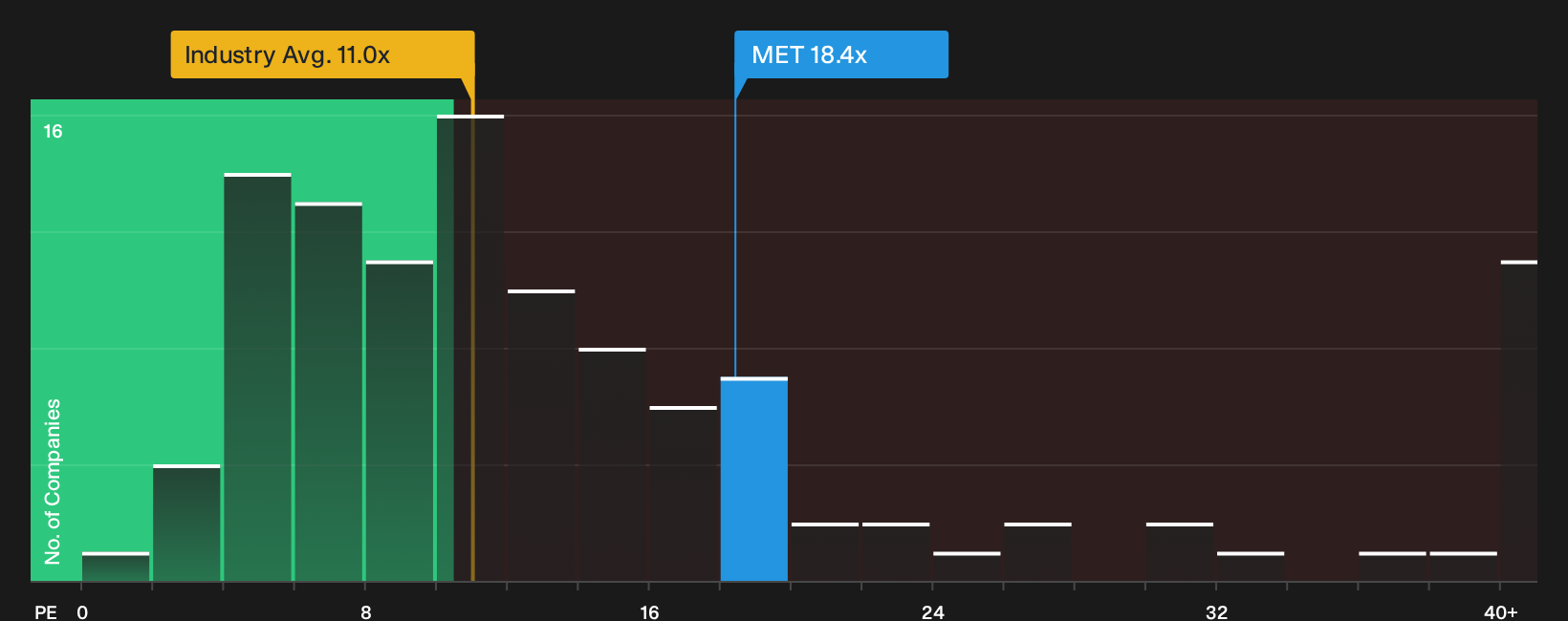
The picture changes when we stop using fair value estimates and look at how much investors are paying for MetLife's earnings. The stock has a price-to-earnings (P/E) ratio of 18.4 times. This compares with 11 times for the wider US insurance industry and 14.4 times for similar companies.
MetLife's estimated fair P/E ratio is 13.5 times. This means its current P/E ratio is well above both the industry average and the level that statistical analysis suggests it might move toward over time. Some investors may see this higher price as justified because MetLife is a strong company. Others may see it as a risk if investors become less confident about the stock. The key question is which view you think is more convincing.
See what the figures say about MetLife's share price in our valuation analysis.
What to Do Next
The case for investing in MetLife has both positive and negative points. If you want to look beyond the headlines and form your own view, start with the full analysis of three key reasons to be positive and one important warning sign.
Looking for More Investment Ideas Beyond MetLife?
If MetLife has made you more interested in investing in strong companies, there are other places to look. Using tools to search for investment ideas in a structured way can help you find opportunities you might otherwise miss.
- Look for companies that may grow steadily over time by searching the 32 resilient stocks with low risk scores. These companies combine strong finances with steady business fundamentals.
- Look for strong companies whose shares may be selling below their estimated value in the list of 35 high-quality undervalued stocks. This list focuses on solid businesses that may be worth more than their current share prices suggest.
- Build a list of companies that pay dividends by exploring the eight dividend fortresses. This list highlights companies with higher dividend payments, while also considering whether those payments can last.
This article by Simply Wall St provides general information. Our comments are based only on past data and analyst forecasts, using a method designed to avoid bias. Our articles are not financial advice. This article does not recommend buying or selling any stock, and it does not consider your personal goals or financial situation. We aim to provide long-term analysis based on basic financial information. Our analysis may not include the latest company announcements that could affect share prices or other information that requires judgment. Simply Wall St does not own a position in any of the stocks mentioned.