
Do Robots and Artificial Intelligence Need to Pay Social Security Contributions?
During China's 2026 Two Sessions, the Beijing Municipal Human Resources and Social Security Bureau released a labor dispute case. A technology company had switched entirely to AI for automated data collection. It closed its traditional data collection department and ended Liu's employment contract, saying that "major changes to objective circumstances" had made the change necessary.
The Beijing Municipal Labor and Personnel Dispute Arbitration Commission ruled that the company had acted illegally. It said that a company cannot pass the risks of normal technological change on to its employees and dismiss them for that reason.
The most important part of this case is not simply that AI has taken away a job. It reveals a basic weakness in the social security system: contributions have always been linked to workers' wages.
When companies replace human workers with machines, they pay less in total wages, so the amount of money used to calculate social security contributions also falls.
When workers move into platform jobs, gig work, or self-employment, the chain of social security contributions can break.
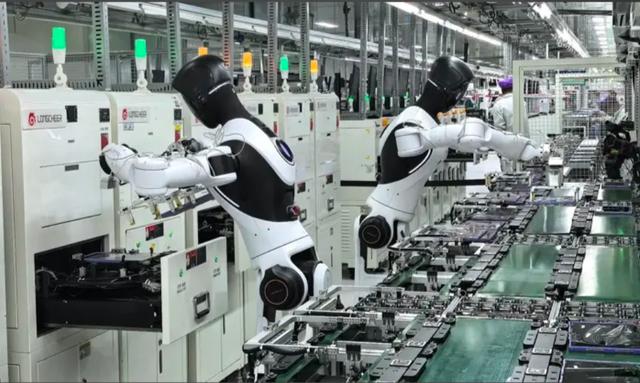
Robots are machines, and artificial intelligence is a technical system. Neither can legally act as a worker, so neither can directly "pay social security contributions."
Zhang Dongwei, an expert in the technology and internet industries, believes that the idea of "robots paying social security" is really asking a different question: should some of the money saved when companies replace people with machines go back into the social security fund?
This does not mean opening social security accounts for robots. It means making sure that workers who lose their jobs and public finances do not have to bear all the costs of replacing people with technology.
Social security has long been tied to workers' pay
China's modern social security system was first developed to support the reform of state-owned enterprises. The goal was practical: companies should no longer have to provide all social services themselves, and individuals should not have to depend entirely on their employers for these services.
Social security is a safety net for the market economy. But the system has always relied on employment relationships and wages to provide the money that supports this net.
China's urban employee pension insurance system combines a shared public fund with individual accounts. The money available to pay current benefits depends heavily on the steady flow of contributions calculated from workers' wages. Companies pay 16% of their total payroll, while employees pay 8%, which is deducted from their wages and transferred to the fund.
This system depends on three things: enough people paying contributions, a large enough total payroll, and contributions that continue without long breaks.
If any one of these three conditions is missing, the fund may not have enough money.

The planned revenue of China's national social security fund in 2025 was 12.6 trillion yuan. About 2.9 trillion yuan was expected to come from government subsidies, making up around 23% of total revenue. Revenue still exceeded spending that year.
However, this funding structure is already a reason for concern. Government subsidies are growing much faster than revenue from insurance contributions.
Another problem lies at the other end of the contribution chain. China has about 320 million people working in flexible jobs, but only around 70 million of them take part in the urban employee pension insurance system. This means the participation rate is below 30%. Among those who join, about 38% stop paying contributions before continuing their participation.
This is not just a small gap in the system. It means that money is continually being lost from the contribution base.
So the social security contribution base may begin to shrink before robots actually take away large numbers of jobs.
A more common situation is that jobs still exist, but the way people pay contributions changes. Payments that were once continuous become irregular. Contributions that employers once paid are now entirely the workers' responsibility, or people stop paying altogether.
The unemployment rate does not show this problem, but the social security fund's revenue does.
The old model of linking social security directly to wages has reached its limits.
Think about computers and the internet, not steam engines
Some people use an extreme comparison and ask why nobody questions whether steam engines or cars should pay social security contributions.
To understand how major technological changes affect social security, we need to look at a time when a social security system was already in place.
When steam engines and cars became widespread, the modern social security system had not yet been established. There was no comparable system linking contributions to benefits. So this comparison does not really help explain today's problem.
The computer and internet era is a much better comparison. Social security already existed, and these technologies both replaced some jobs and created new ones. But they also left behind a problem: many platform workers and people in flexible jobs have broken or irregular contribution records.
Zhang Dongwei has worked in related fields since 1995. He has seen computers and the internet become widely used and has drawn two lessons from this experience.
First, technological change has not caused the social security contribution base to collapse as a whole.
Jobs such as typists, telephone switchboard operators, and workers in traditional retail have disappeared. But new jobs have been created in information technology, online shopping, and platform businesses. At the same time, more people have moved to cities and more people have gained access to social security. Overall, the contribution base has continued to grow.
Second, one problem remains unsolved: platform workers and people in flexible jobs often have gaps in their contribution records.
Many food delivery riders, ride-hailing drivers, and freelancers earn money but do not make social security contributions regularly. The fact that fewer than 30% of flexible workers join the urban employee pension insurance system, and that 38% of participants stop paying, shows how serious this problem is.
AI and robots are likely to make both of these trends stronger at the same time.
First, they are replacing many standardized jobs that make up a large share of total payroll.
Large AI models can already handle customer service scripts, enter work orders, and answer standard questions. In warehouses, mobile robots and automated systems are taking over sorting work and the final stage of deliveries to customers.
These jobs are an important part of the social security contribution base. Together, they account for a substantial amount of wages, workers usually take part in social security through standard arrangements, and contributions tend to continue regularly.
Second, workers who lose these jobs may not become officially unemployed. Instead, they may pay less into social security or stop paying for a while.
The computer and internet era has shown that total employment can remain stable even when individual workers' contribution records develop gaps.
AI is now replacing some highly paid office jobs. If it spreads further into office jobs requiring medium or lower skill levels, as well as blue-collar jobs, broken contribution records could spread from the edges of the platform economy into the core of formal employment.
Therefore, Zhang Dongwei believes that robots and AI change not only the number of jobs but also how well those jobs support social security contributions.
The contribution base can shrink because of changes in how people participate in the system, not just because the total number of people working goes down.
The computer and internet era generally kept the contribution base growing, but it did not solve the problem of interrupted contributions. The question for AI is whether this old problem will become the main challenge.
Companies look at the immediate costs: replacing workers with machines saves money.
Society must look at the bigger picture: some of that saved money should go back into social security.
How can the system be improved?
When people turn the idea of "robots paying social security" into a policy proposal, the first idea that often comes up is a "robot tax."
This idea is not new, and there is no agreement on whether it should be adopted. In 2017, the European Parliament discussed giving robots legal status and taxing their owners, but the proposal was rejected. In 2018, South Korea cut the tax credit for large companies investing in automation from 7% to 3%. Some observers called this a "quasi-robot tax." Some studies suggest that South Korea's industrial robot installations later fell compared with Japan's.
So far, no country has formally passed a law imposing a narrowly defined tax specifically on robots.
This issue is worth discussing, but the debate should not focus only on physical robots.
It is difficult to define what a robot tax would cover. What counts as a robot? Should software that automates work also be taxed?
There is also a risk of taxing the same activity twice. Companies already pay value-added tax and income tax in connection with buying and using equipment.
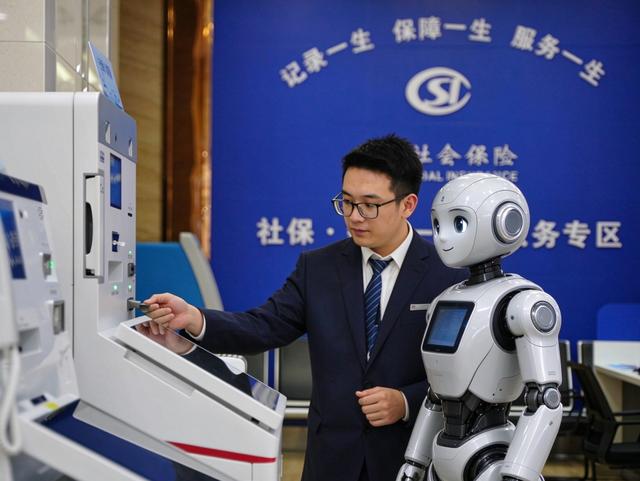
1. A more practical approach may be to focus on the social costs saved when machines replace workers and create a way to pay compensation.
During the 2026 Two Sessions, some delegates proposed creating a "special fund for technological transformation." It would provide subsidies for job transfers, support for workers who need to relocate, and rewards for finding new jobs in industries and companies where technology is replacing workers. They also proposed adjusting the tax burden appropriately for highly automated companies that replace large numbers of workers.
This approach fits China's policy environment better than a narrowly targeted robot tax.
2. Prevent contribution gaps among people in flexible jobs.
The key is not simply to call for "wider coverage." It is to lower the barriers to joining the system and allow people to pay contributions more flexibly.
When flexible workers join China's urban employee pension insurance system, they usually have to pay the full 20% of the local average wage themselves. Only 8% of that contribution goes into their individual accounts. In large and medium-sized cities, their yearly contribution costs generally exceed 10,000 yuan.
If this cost is not meaningfully reduced, it will be easy to increase the number of people who join but difficult to stop them from interrupting their payments.
The problem of broken contribution records left by the computer and internet era must be given priority as this new wave of technological change replaces workers. It cannot be put off any longer.
3. Deal with existing funding gaps while also rebuilding the flow of contributions.
For many years, China has transferred state-owned assets into the social security fund to help cover past obligations and existing funding gaps.
But sharing the gains from automation must address the ongoing flow of money into the system. As value creation shifts from human labor toward capital, data, and technology, the way social security contributions are collected must also change to match this new structure.
Using a broad tax base to direct part of the additional gains from automation into social security is more reliable than creating a new, narrowly focused tax on "robots."
Key lessons from Dongwei
Robots will not pay social security contributions. But companies should not keep all the money they save by replacing people with machines as extra profit.
The money needed to support society's safety net must also come from new ways of producing goods and services.
First, robots cannot make social security contributions themselves, but workers who lose their jobs and government subsidies should not have to bear all the social costs of replacing people with technology.
Government subsidies made up about 23% of the planned revenue of China's social security fund in 2025. These subsidies can provide more time to deal with problems, but they cannot replace the need to build a strong contribution base.
Second, social security funding needs to move away from depending mainly on wages and toward a wider range of sources.
The falling ratio of contributors to people receiving benefits within the system, the participation rate of less than 30% among flexible workers, and the 38% rate of interrupted contributions all point to the same problem: wages are becoming a less reliable single source of funding.
The computer and internet era kept the overall contribution base growing, but left platform workers with gaps in their contribution records. If AI spreads into the core of formal employment, this old problem could become the main challenge.
Third, the most practical short-term starting point is not a robot tax. Instead, three measures should be taken together: create a way to compensate society for the costs of replacing workers with machines; greatly lower the cost and barriers to making contributions for flexible workers, giving priority to keeping contributions continuous rather than simply increasing participation; and use a broad tax base to direct some of the extra gains from automation into social security funding.
Let social security contributions follow where value is created instead of tying them rigidly to payroll.
The benefits and costs of replacing people with technology should be brought back into balance under the same social agreement.
This article comes from the WeChat Official Account "Zhang Dongwei". It was written by Zhang Dongwei and published by 36Kr with authorization.