
‘Freeze AI Now:’ Bay Area Activists Rally Outside OpenAI Headquarters | KQED
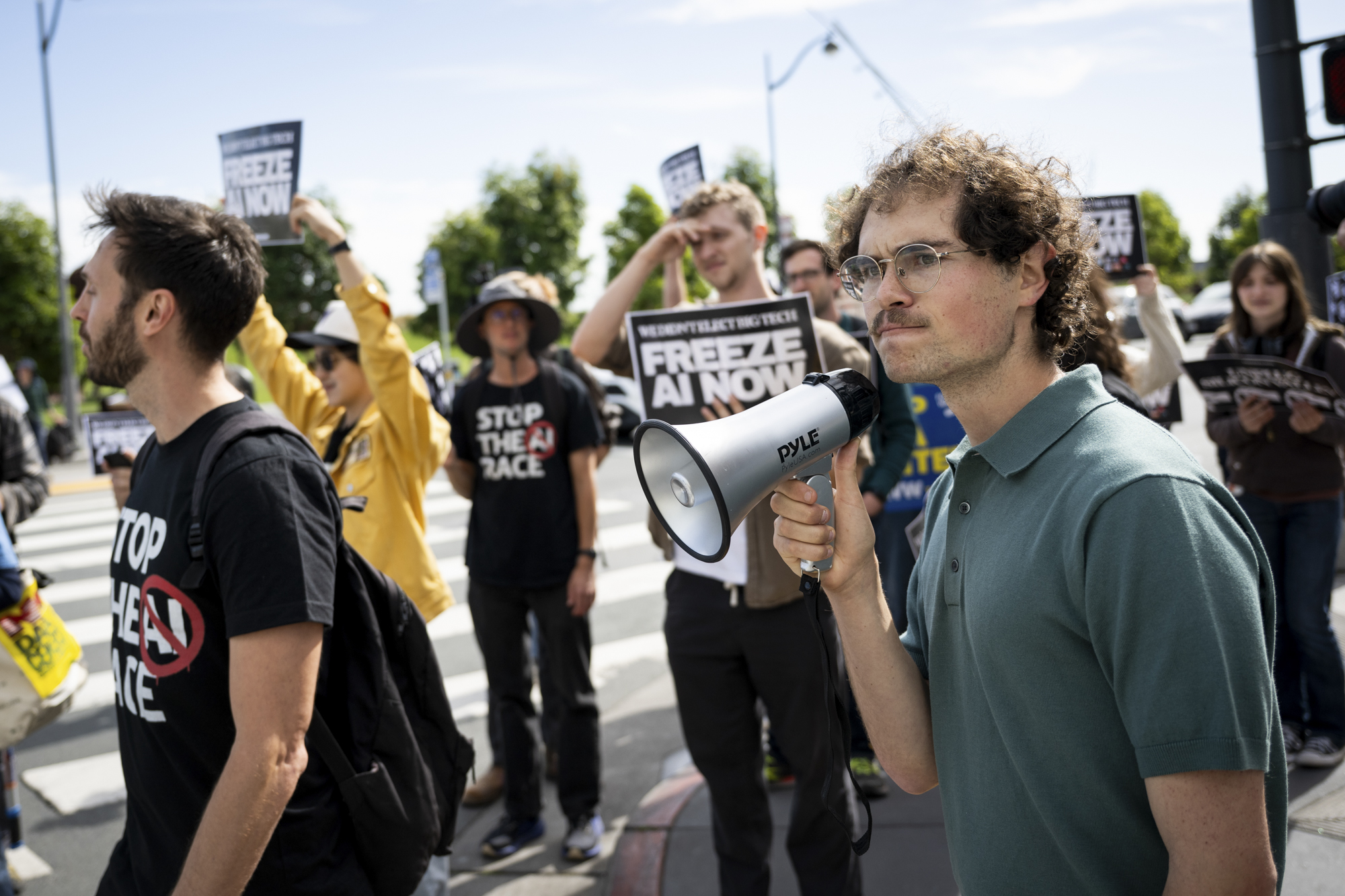
Activists in the Bay Area joined a nationwide walkout on Tuesday to call for a pause in the development of artificial intelligence. They said the pause would give the public and Congress time to set rules for how the technology is developed and used.
About two dozen protesters stood outside OpenAI’s office in San Francisco’s Bayview district. They held signs that read “We Didn’t Elect Big Tech” and “Water For People, Not Data Centers.”
They joined activists in 50 U.S. cities and on college campuses, including in Los Angeles, New York and Florida. The nonprofit group Irreplaceable organized the rallies.
Several climate activists, leaders of civil rights groups and national labor unions founded Irreplaceable. The group started in August to “give voice to anxiety and anger about AI” and encourage the federal government to pass laws regulating the technology.
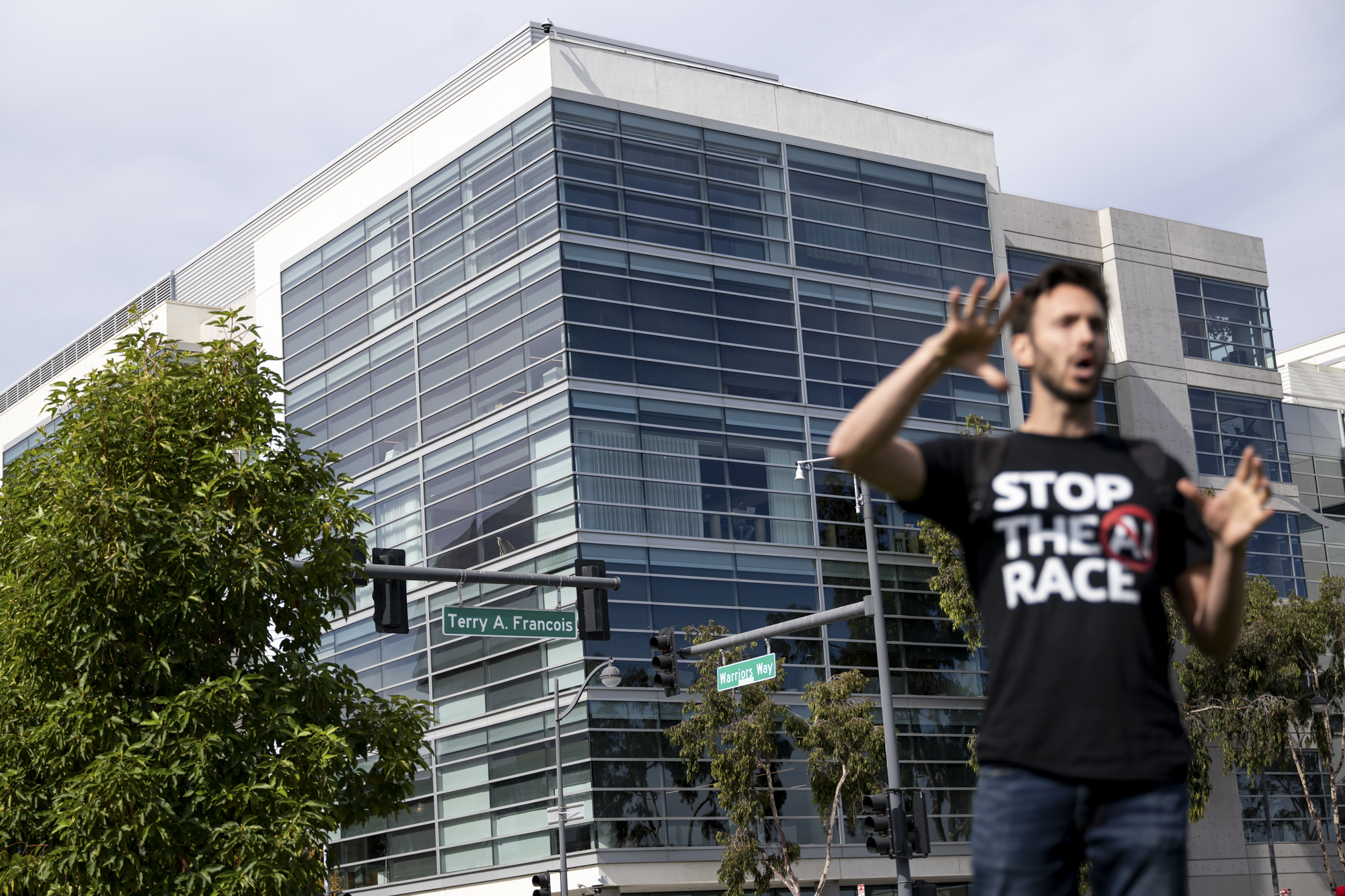
Jeremy Ornstein, an organizer with Irreplaceable, spoke to protesters outside OpenAI’s office. “The world is about to change,” he said. “AI is being developed so quickly, [and] the people building it know that disasters, major disasters, are going to affect everyday people as soon as next year.
“But there’s another kind of change that’s coming too,” he continued. “There are thousands of people who are demanding … a freeze on AI until the public can control it and it can benefit us.”
Irreplaceable’s website argues that people are “irreplaceable by AI.”
The group’s executive director, Phil Aroneanu, previously helped found 350.org, a grassroots climate movement that works to replace fossil fuels with renewable energy.
“We’re building a movement to Freeze AI Now. It’s time for the people to decide AI’s future, not big tech CEOs,” Irreplaceable’s website says.
The group has shared a three-year plan. In 2026, it wants to bring together Americans who are angry or worried about AI development. In 2027, it plans to create a “shared federal agenda on AI.” In 2028, the year of the next presidential election, it plans to put pressure on politicians.
But the group has not explained exactly what rules or laws it wants politicians to pass. In August, The Atlantic reported that William Lawrence, a co-founder of the Sunrise Movement and another climate activist involved in the project, said a detailed plan would come later.
So far, people do not seem to agree on what that plan should look like.
Even sisters Junia and Gwen Martens, who came to the San Francisco protest from Berkeley High School, have different views on how strict the rules should be. Gwen, 14, thinks “AI should be stopped,” while Junia, 16, wants rules for AI and more education about the technology in schools.
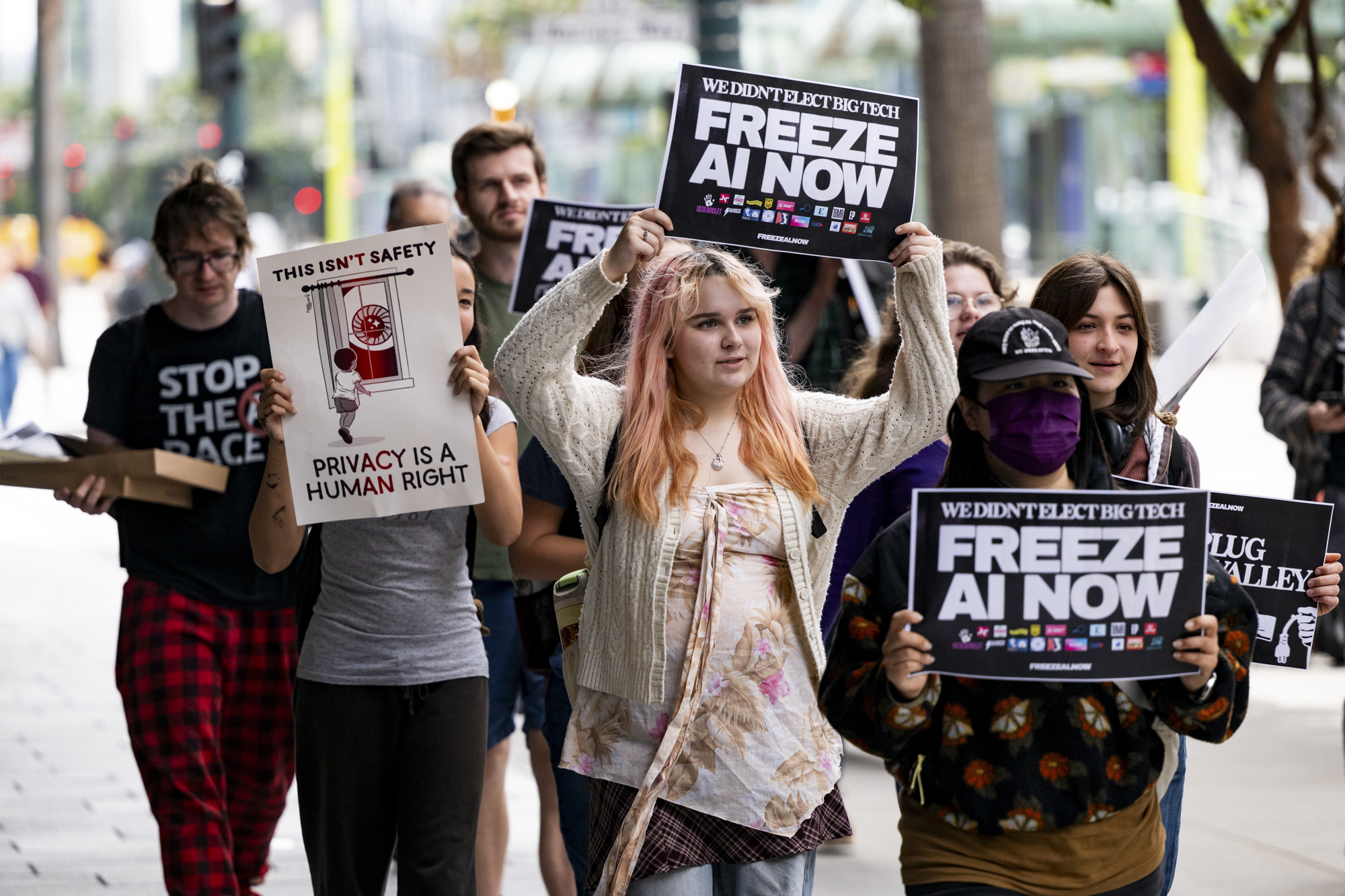
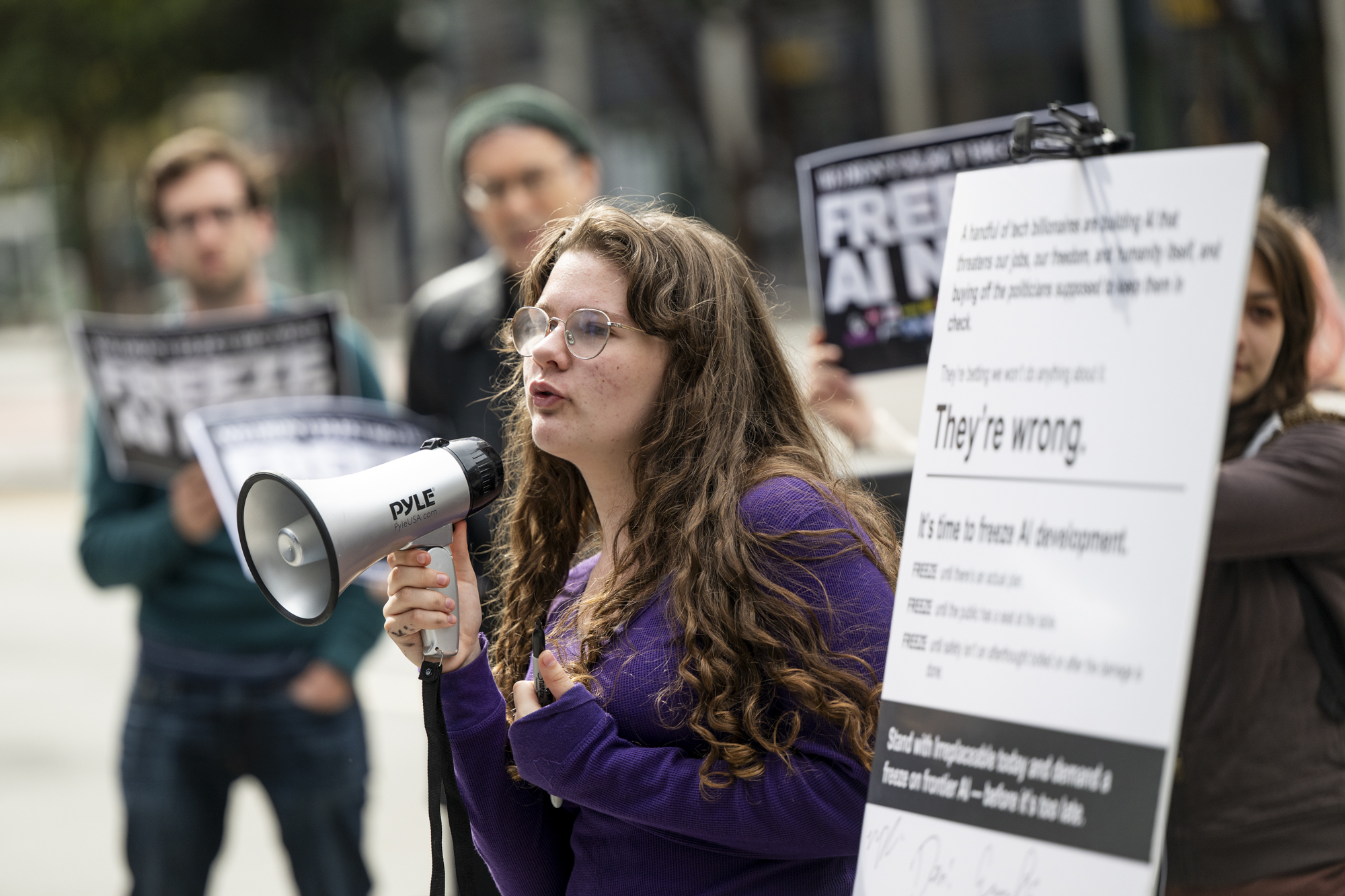
“I kind of disagree with my sister. I think that AI can be helpful in a lot of different situations,” Junia told KQED.
Junia and a classmate lead a club at Berkeley High called AI Effects and Consequences. The club talks with elementary and middle school students about AI and how it affects people.
That approach “lets the students form their own opinions,” she said.
However, the sisters agree that schools should use AI less.
“I don’t use generative AI,” Gwen said. “It really stops you from thinking, which is how you learn. That is my worst fear, I would never want to weaken my education.”
She said that “few” of her other classmates share her view.
KQED’s Sara Hossaini contributed to this report.