
One in three people globally now use Gen AI, as social media users reach 5.81 billion – Marketing Communication News
We Are Social, a creative agency that focuses on social media, and Meltwater, a global leader in providing useful information to public relations, communications, and marketing teams, have released Digital 2027, their latest yearly report on social media and digital trends around the world.

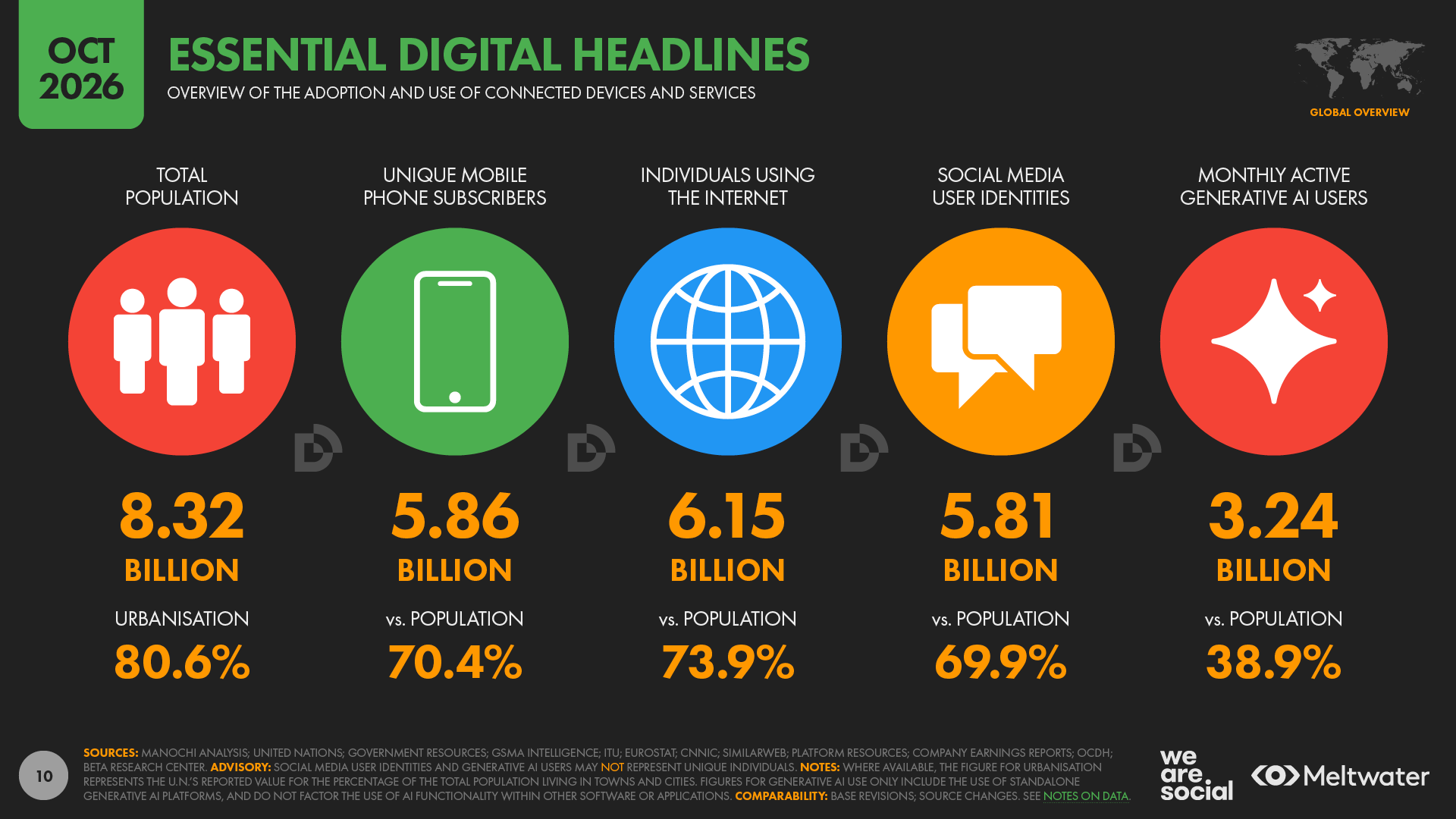
Digital 2027 reports major changes in the use of artificial intelligence and social media. More than one-third of people worldwide now use generative AI tools every month, and social media user identities have reached nearly 70 percent of the world's population. The report also shows that people are changing how they use the internet. Traditional website traffic is falling as people spend more time on social platforms, use apps made for mobile phones, and turn to AI-powered services.
Generative AI use is growing quickly
The Digital 2027 report estimates that 3.24 billion people actively use generative AI tools. That equals 38.9 percent of the world's population. The number of active users grew by 57.2 percent over the past 12 months, adding 1.2 billion new users.
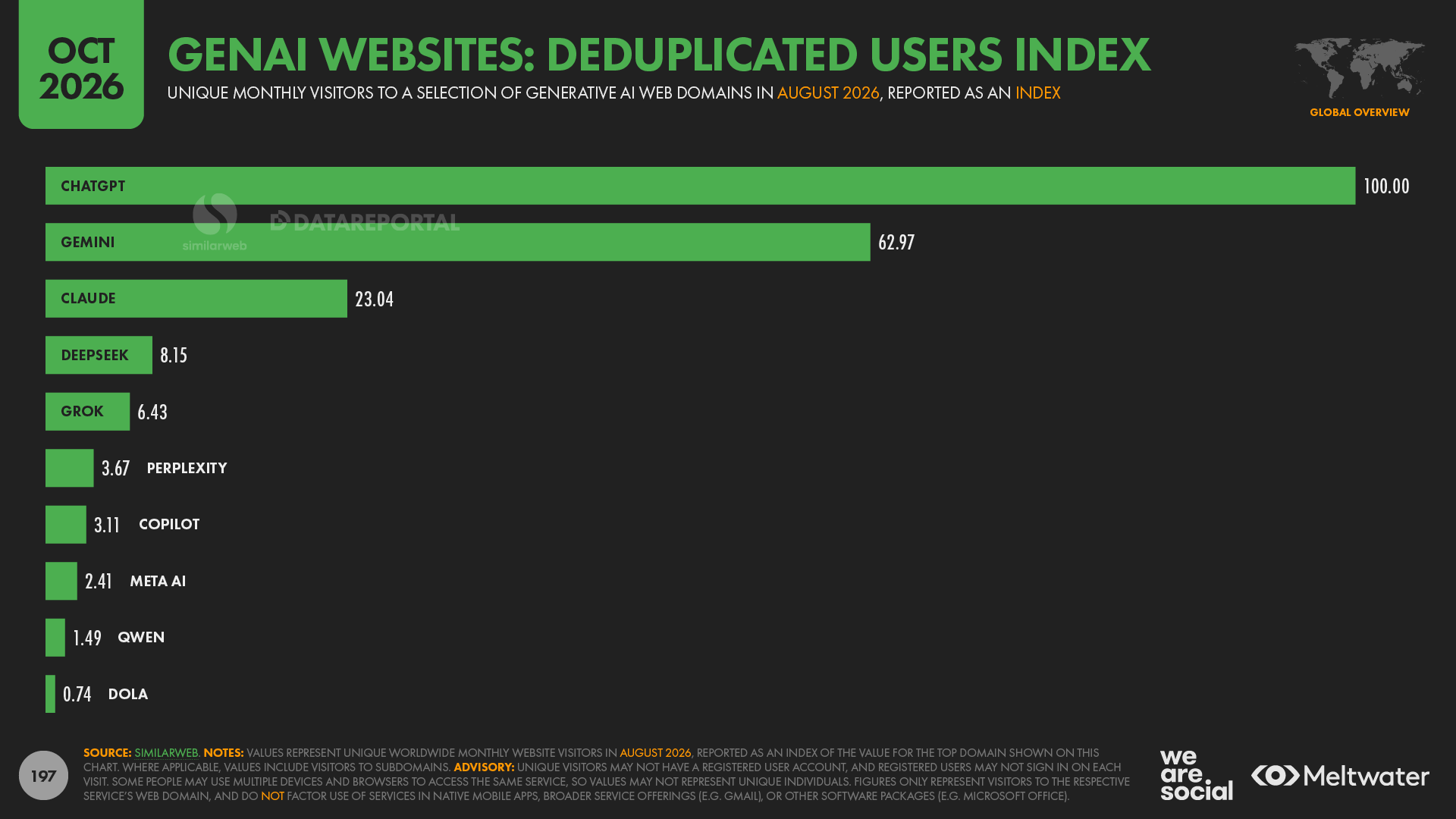
ChatGPT remains the leading generative AI service, with twice as many monthly active users as its closest competitor. However, Google's Gemini and Anthropic's Claude are also growing quickly. The number of active users of Gemini's mobile apps has quadrupled over the past year, and its website now has a user base that is more than 60 percent as large as ChatGPT's.
People spend more time on social media and stay loyal to their favorite platforms
There are now 5.81 billion social media user identities worldwide, equal to 69.9 percent of the global population. This total grew by 2.7 percent over the past year, with 151 million new user identities added.
This matters to brands because people are spending more time on social networks. Over the past year, the average internet user increased the time they spend on social media and online video platforms by 3.8 percent, reaching 19 hours and 18 minutes per week.
YouTube gets the largest share of total time spent on social media worldwide, followed closely by WhatsApp and Instagram. However, when looking at the average time each active user spends on a platform, TikTok comes first, at 1 hour and 55 minutes per day.
Social networks are also an important place to discover and research products, especially for younger people. Among internet users aged 16 to 24, 46.9 percent use platforms such as Instagram and Facebook as their main source of information when researching brands and possible purchases.

Online habits are changing
Digital 2027 explains how AI and apps designed for mobile phones are changing the way people use the internet. Across the world's 10,000 most visited web domains, total monthly website traffic has fallen by more than 10 percent since ChatGPT became publicly available. The total time people spend using the web has also dropped by 11.2 percent in just the past 24 months. However, even with AI growing quickly, adults who use the internet are still 74 percent more likely to say they visit search engines than AI platforms when researching brands. AI is not the only reason people's online habits are changing.
Digital 2027 is a detailed, 900-page report about the whole online world. It includes data from GWI, Similarweb, Statista, and other sources. Other important findings include:
- People use many different marketing channels: The average adult who uses the internet now relies on 5.8 different channels to discover new brands.
- More people are online: The number of internet users has reached 6.15 billion. This means 73.9 percent of the world's population now uses the internet.
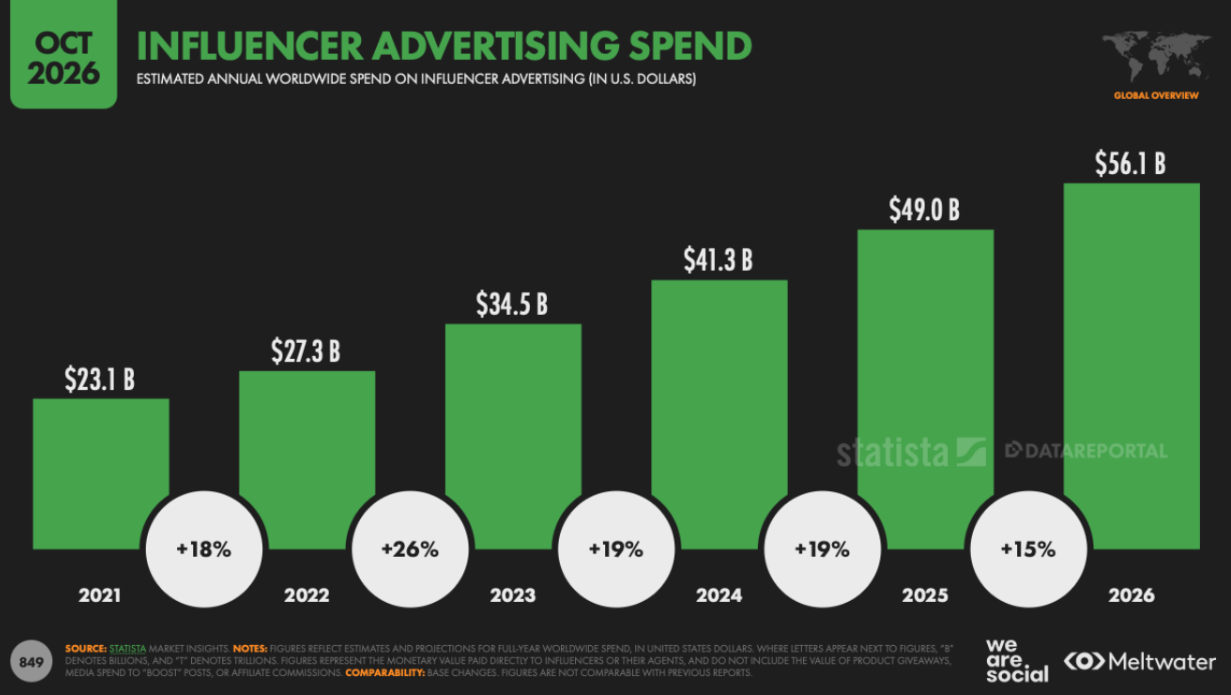
- Digital advertising continues to grow: Spending on digital ads rose by 8.7 percent over the past year. Spending on social media ads increased by 18 percent, while spending on influencer ads rose by 15 percent.
- The big debate about the web: Google search data confirms that cats still lead dogs on the internet at the end of 2026. Searches for cats returned 4.15 billion results, compared with 4.02 billion for dogs.
Mobbie Nazir, Global Chief Strategy and Growth Officer at We Are Social, said: “The data in Digital 2027 shows that the way people behave online is changing in a major way. Social media use has reached 5.8 billion people, and generative AI is now part of the daily lives of more than one-third of the world's population. This means the fight for people's attention is stronger than ever.
“For marketers, the traditional web no longer plays the same role it once did. Brands need to reach people where they spend their time, including social media feeds and AI tools. To stand out among so much content, brands must create interesting ideas that connect with the culture and that people genuinely want to engage with and share.”
“People no longer discover brands, research them, or make decisions about them in just one place. They move between news sites, social platforms, mobile apps and, more and more, AI assistants. Generative AI use has grown by nearly 60% in just one year, so large language models (LLMs) have quickly become places where people form their first impressions. For marketers and communications teams, being visible is no longer just about appearing in different places or counting how many people they reach. It means understanding how a brand appears in each setting, which sources and stories shape people's views, and where a brand can have a real and trusted effect on the conversation. The teams most likely to build trust and stay relevant will be those that understand how people discover, discuss and choose brands. They can then use this knowledge to focus their plans and make decisions with confidence,” said Alexandra Bjertnæs, Chief Strategy Officer at Meltwater.
Source: We Are Social