
Former U.S. officials urge D.C. Circuit to reconsider decision in Anthropic-Pentagon fight
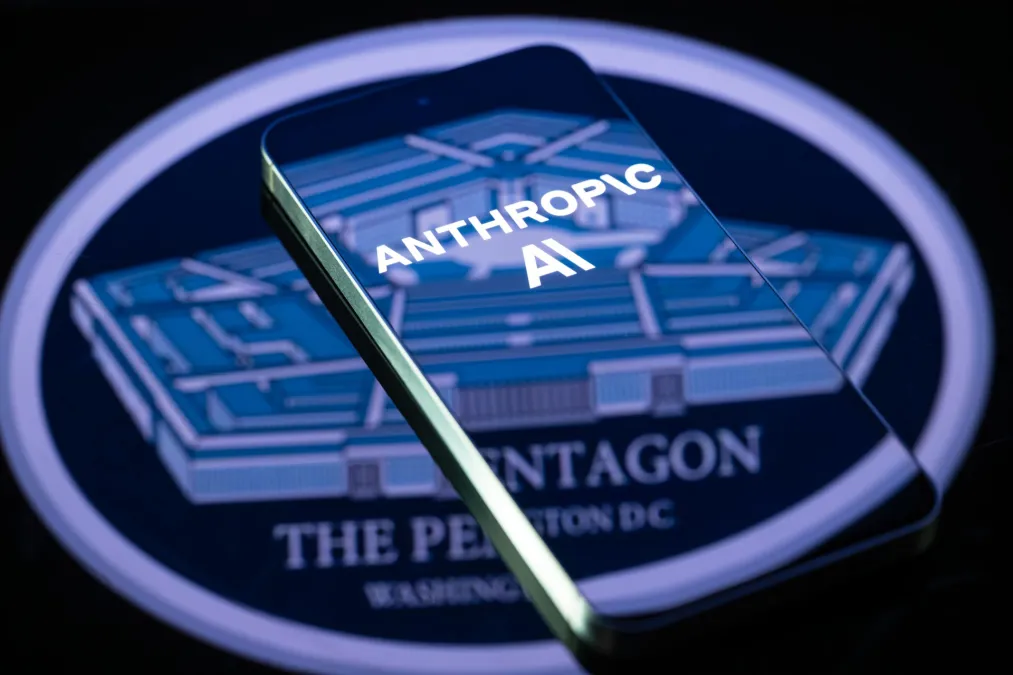
A group of 17 former senior national security officials, diplomats and intelligence experts from both major U.S. political parties filed a legal brief on Tuesday. They asked the U.S. Court of Appeals for the D.C. Circuit to review its decision again in Anthropic’s challenge to the Pentagon’s decision to label the company a supply-chain risk.
“If that ruling is allowed to stand, it will threaten all defense contractors,” they wrote in the 26-page document.
The brief is the latest development in the ongoing dispute between the Defense Department and Anthropic. The two sides still disagree about safety rules and whether the military should be allowed to use the company’s most advanced AI models without limits.
From 2024 to the middle of 2025, Anthropic was one of the U.S. government’s leading AI partners. Working with Palantir and Amazon Web Services, the company made its Claude AI model the first advanced AI model to be used inside highly restricted, classified government computer networks. The companies described their partnership as a way to support government intelligence and defense work.
But the relationship between the Defense Department and Anthropic broke down in early 2026.
Anthropic’s leaders refused to accept new demands from Pentagon officials that would let the military use commercial AI models for “all lawful use cases,” without additional limits. In particular, Anthropic objected to the possibility that the government could use its models to carry out mass surveillance of Americans or operate autonomous weapons that can attack targets without a human deciding when to strike.
After several unsuccessful rounds of talks, Defense Secretary Pete Hegseth officially labeled Anthropic a “supply-chain risk to national security” in February. This serious government label is usually used for foreign groups considered hostile. In practice, it prevents defense contractors and their suppliers from doing commercial business with Anthropic.
The company then sued the federal government.
This summer, a federal judge in San Francisco ruled in Anthropic’s favor, saying the Pentagon’s actions against the company were troubling and appeared to be retaliation. However, last month, a federal appeals court in Washington, D.C., ruled 2 to 1 in favor of the Pentagon in a separate but related challenge.
In their new brief, the 17 former officials explained that Congress gave this particular appeals court the sole authority to review decisions labeling companies as supply-chain risks. That means its ruling sets the legal standard across the country.
“No other court can revisit it,” they wrote. “If it stands, it will establish how DOD may deal with every defense contractor from here on out. Few questions could be of more exceptional importance for this Court to rehear en banc.”
The experts behind the brief said they have “decades of combined experience” in federal government purchasing, supply-chain security and protecting America’s technological advantage in national defense. Many previously held senior positions in both Republican and Democratic administrations. Their roles included work at the White House, National Security Council, Departments of State, Defense, Justice and Homeland Security, the Office of Management and Budget, and other national security and intelligence agencies. The brief says they helped carry out or advise on the laws and constitutional powers involved in this case.
Some of the best-known members of the group are former Director of National Intelligence Avril Haines, former National Security Advisor Susan Rice and former National Security Advisor Jake Sullivan.
The officials warned that if the court does not review the case again, its decision “would set a dangerously erroneous standard” for future decisions about supply-chain risks.
One of their main arguments is that the Pentagon used national security concerns as an excuse to punish Anthropic. The brief points out that the Defense Department announced the penalty and publicly criticized the company on social media before taking administrative steps or providing formal reasons for its decision.
The experts also argue that the Pentagon labeled Anthropic a risk to retaliate against the company for its leaders’ public statements, policy positions and refusal to accept certain government demands. In their view, the action also sent an unconstitutional warning to other military contractors and companies developing advanced AI.
“Further, had DOD engaged in a lawful process, it would have considered the specific risks posed by the two capabilities Anthropic refused to provide: mass domestic surveillance and lethal autonomous weapons. DOD has not explained why DOD should have the first, much less how it could exercise it lawfully. Nor has DOD reconciled the second with the United States’ commitment that [its military use of AI be in compliance with applicable international laws],” the brief stated.
In the end, the former officials argued that if the appeals court’s decision stands, it would approve what they called a fake legal process. They warned that this would weaken national security and give the current and future administrations permission to punish any company that loses the government’s favor.
Pentagon spokespersons did not immediately respond to requests for comment before the article was published.
FedScoop Senior Reporter Madison Alder contributed reporting.