
😺 New Claude Duet works while your phone's off
Welcome, everyone.
It seems that every chatbot has a favorite country, and that country is Japan. Researchers at the University of the Basque Country and Cardiff University asked large language models (LLMs) open-ended questions about culture. They found that the models often favored countries such as Japan. When the researchers used English prompts, the answers covered a wider range of countries.
The authors say this preference first appears during supervised fine-tuning. This is the stage when a model is trained to be helpful and polite. They say the preference does not appear while the model is reading information from the internet. Somewhere, a chatbot is being asked what toppings to put on a pizza and is recommending a Japanese tea ceremony.
The paper was published in April, and a version that went viral today includes claims that are not in the paper's abstract. One example is that quantization, which makes a model smaller, makes the problem worse. These claims have not been confirmed, so they should be treated as uncertain until someone checks the full paper.
Here is what happened in AI today:
😺 Anthropic launched Claude Duet, an AI agent that keeps working while you are away.
📰 ChatGPT ads expanded to 89 countries.
📰 A modified version of LiteLLM stole login details and other secrets for two hours.
🍪 Notion Auto chooses cheaper AI models when possible, helping users make their agent credits last about 10 times longer.
🎓 Learn how to run three coding agents at the same time using Git worktrees.
😺 Anthropic's New Claude Duet Works While Your Laptop Is Off, But Must Ask Before Spending Your Money
Claude Duet is a new app that lets Claude work on tasks without waiting for you to tell it what to do each time. It sends you a summary in the morning, checks your connected apps every few hours, and sends you a message only when something needs your attention. It is being tested in the United States by Pro and Max subscribers who join a waitlist. It is built around Claude Opus 5.5 and uses the same usage limits as your existing plan.
How can it check things when my phone is in my pocket? Duet runs on its own virtual machine. Think of this as a small computer in the cloud that Claude can use, including a web browser. This lets it keep working even when your phone and laptop are turned off. It can also use your existing Claude memory, skills, and connected apps. Anthropic lists more than 6,000 connectors, including QuickBooks, Stripe, Gusto, Docusign, HubSpot, and Shopify.
An AI agent that acts when you are not watching raises an obvious question: how do you stop it from making a bad decision? Anthropic has built several safety checks to help prevent this.
Duet shows you exactly what it plans to do and waits for your approval before sending a message, making a payment, signing a document, or deleting anything.
It cannot trade securities or move money between accounts, even if you give it permission.
It handles login details using Anthropic's Managed Agents design. This means Duet does not see your passwords or access tokens. Even if Claude gets confused, it cannot reveal information it never sees.
A new safety checker blocks the sharing of very sensitive information, such as credit card numbers and government ID numbers. Health and financial details can be shared only when you clearly tell the agent to do so.
For payments, Duet can use Link, Stripe's digital wallet with a virtual card, and Shop Pay. So yes, an AI can now buy things for you. Read the approval screen carefully.
Anthropic is also clear about what Duet cannot do well yet. It might misunderstand a conversation or get the level of urgency wrong. It is less capable at personal errands than at work tasks, and it cannot yet show you its browser. The last point is especially worth noting: checking things in the background and doing large tasks both use up your plan's usage allowance. An assistant that never sleeps can also use up your quota while you sleep.
One important thing to watch is how often Duet sends alerts. If it sends too many, it becomes like a coworker whose messages you mute. If it sends too few, you might miss something important, such as a property viewing scheduled for the wrong day. Anthropic admits that judging urgency is a weak point. One useful measure from testers would be how often an alert was actually worth their attention.

🎓 AI Skill of the Day: Run Three Coding Agents at Once Without Them Overwriting Each Other
You ask an AI coding agent to build a login page, and then you wait ten minutes while it works. Meanwhile, you have a bug to fix and documentation to update. You might try opening a second agent in the same project folder, but then both agents could edit the same files on the same branch. This can cause one agent's unfinished work to overwrite the other's changes.
The solution is a Git worktree. Usually, a Git repository has one working folder with one branch selected. A worktree creates another folder from the same repository, with its own branch. This gives each agent a separate place to work while letting them share the same project history. Think of it as one kitchen with separate cutting boards. Changes that have been committed are visible across the worktrees, but changes that have not been committed are kept separate. That is the main benefit.
Give each agent its own worktree. In Claude Code, run
claude --worktree feature-authin one terminal, then run the same command with a different name in a second terminal (documentation). The repository must have at least one commit. Codex CLI does not have a worktree flag, so rungit worktree add ../project-bugfix -b bugfix-123, move into the new folder withcd, and startcodex, as explained in this guide.Give each agent a different part of the job. For example, one can write tests for module A while another updates the documentation for module B. These tasks are unlikely to interfere with each other. However, two agents changing the same widely used data type can still cause conflicts.
Merge the changes one at a time. After the pull requests are open, start a new session to decide which order to merge them in and resolve any conflicts. Stian Frøystein from Intility uses this method and says Claude handles the conflicts well.
List the open pull requests in this repo using the gh CLI. For each one, summarize which files it changes. Tell me the safest order to merge them, flag any that will conflict, and resolve conflicts as you merge. Run the tests after each merge and stop if anything fails.The final sentence of that prompt is an addition to the original approach. There are still three problems to watch for. Each worktree needs its own software installation, such as npm ci. Two development servers using the same port will clash. And if the agents share a database, their data is not isolated. Another limit is your own time: worktrees prevent file conflicts, but they do not reduce the amount of work you need to review. Start with two or three agents. When you finish, remove the extra worktrees with git worktree remove.
📰 Around the Horn
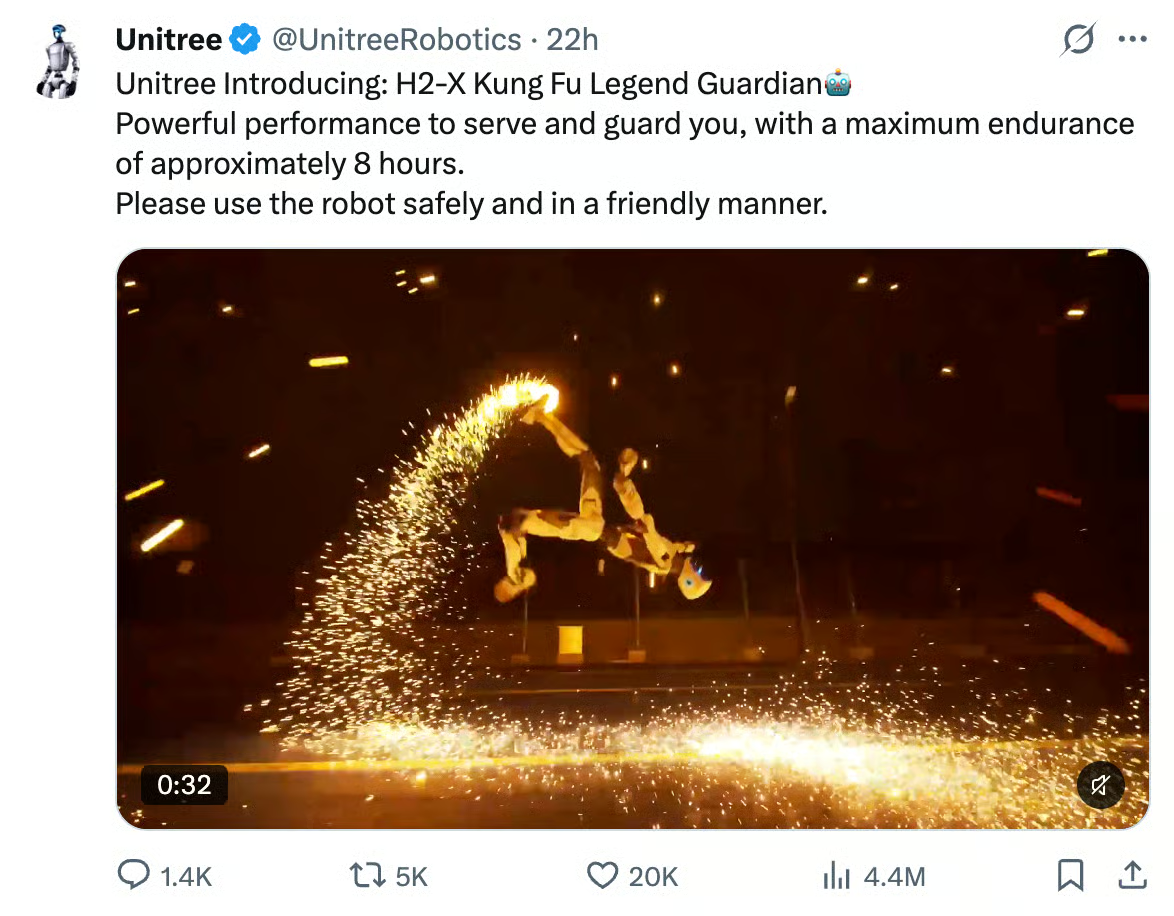
This is impressive, but also a little scary. Watch the video on X.
OpenAI said its models and Codex are coming to Google Cloud. GPT-Astra, GPT-6.1 Sol, and GPT-6 Luna are in private preview for selected business customers.
OpenAI expanded ads in ChatGPT to 26 more countries, bringing the total to 89 countries and the number of advertisers to more than 100,000. Ads are shown only to users on Free and Go plans.
OpenAI, PerturbAI, and Scripps ran 1,946 GPT-Rosalind agents at the same time to study mouse brain data. The agents ranked possible drug targets in 32 minutes. The work is a preprint, meaning it has not yet completed the usual scientific review process, and the results have not yet been tested in a lab.
LiteLLM, a popular tool that connects apps to AI models, confirmed that a modified version of its software was available for two hours on October 21. SafeDep says the modified version stole login details and other credentials.
Nvidia introduced OpenShell, a plan for keeping AI agents inside controlled environments and setting rules about what they can access. Anthropic, OpenAI, and Microsoft are among its first partners.
Reuters reported that OpenAI president Greg Brockman and his wife gave $25 million to Leading the Future, a group opposing AI regulations in more than 48 congressional races. OpenAI said the donation was made personally.