
AI Data Centers: Is a Temporary Job Boom Worth It?
Point of View
The short-lived increase in jobs created while AI data centers are being built gets very little attention in the news. There is a good reason for that.
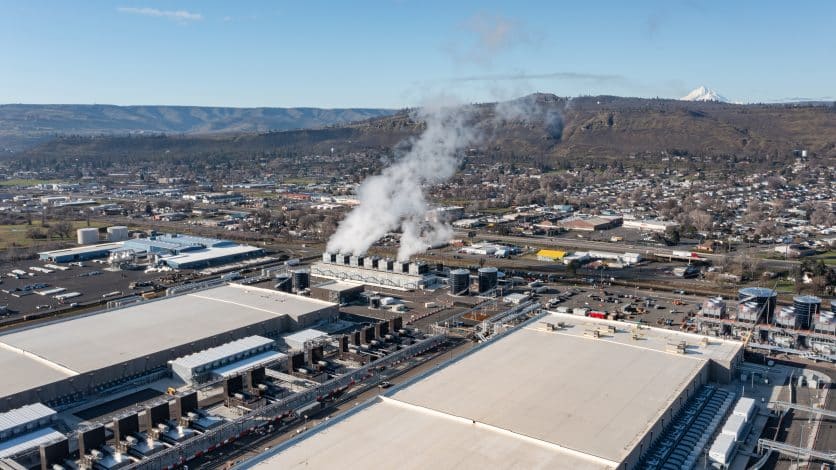 (Shutterstock)
You may have heard about artificial intelligence (AI) data centers in the news. But what are they? They are large buildings filled with powerful computers that train, provide, and run AI models. They have been built because AI technology is growing quickly and is being used in many industries. Data centers are now an important part of the modern technology world.
Traditional computer systems use parts called central processing units (CPUs) to handle general tasks one step at a time. But data centers use a lot of energy, much of which comes from fossil fuels. Burning fossil fuels is a major cause of climate change. Data centers often depend on natural gas to produce the power they need. Concerns about energy use and health have led people across the United States to protest against building new data centers. The large amounts of energy these facilities need add to these concerns.
Economy versus environment
In Holly Ridge, Louisiana, a small community with fewer than 2,000 people, the Richland Parish Data Center, nicknamed “Hyperion,” is being built. Construction workers who have come from other places to work on the project have disrupted parts of daily life. However, their presence has also helped the area's mainly farming-based economy. As AI continues to grow, people are debating how large building projects affect small towns. Communities are also weighing the possible economic benefits against the risks to the environment. People in Holly Ridge have faced water that is unsafe to drink, smells like bleach, and may make people and animals sick.
Meet Joe and Robin Williams of Holly Ridge, Louisiana.
— John Sherman (@ForHumanityPod) May 22, 2026
Meta is building its Hyperion data center, which is bigger than Manhattan, next to their property.
Their water often smells like bleach and looks like coffee.
They gave their dog tap water, and she became very sick.
She got better… pic.twitter.com/nvFIPvGjYA
In a May 2026 post on Twitter, John Sherman, the founder of The AI Risk Network, drew attention to one of the people affected. Makayla, a pregnant mother of three who lives in Holly Ridge, told him directly that AI was getting out of control in her community. In his post, Sherman said that no one wants humans to become extinct, machines to take every job, or teen suicides involving help from AI models. But people who develop new technology must understand its possible dangers. They should aim to improve people's lives while causing as little harm as possible to nearby communities and the environment.
The spill in Sack Creek
On September 11, an Equinix data center in Secaucus, New Jersey, leaked about 5,000 gallons of diesel fuel. Equinix took responsibility for cleaning it up. New Jersey’s Department of Environmental Protection says most of the fuel has been recovered, with no impact on the nearby… pic.twitter.com/QF8uXGCYOF
— The Associated Press (@AP) October 7, 2026
In September, thousands of gallons of diesel fuel leaked from the Equinix data center in Secaucus, New Jersey. A computer error caused the fuel to spill into Sack Creek, a smaller stream that flows into the Hackensack River. In another part of New Jersey, people in Kenilworth have been protesting plans to build a data center called CoreWEAVE. Building data centers may create a small, temporary increase in jobs in places like Holly Ridge. But after construction ends, these facilities can continue to harm the surrounding environment. This has made the debate about AI projects heated. So, is a short-lived increase in jobs worth the cost, especially when news reports about data centers rarely discuss these jobs?
Environmental concerns around AI
One of the biggest worries about data centers is the damage they can cause to the environment. The diesel fuel spill into Sack Creek is one example. The environmental effects of data centers have also drawn attention from lawmakers and people who campaign for change.
Things became heated last night in Kenilworth, NJ, as residents spoke out against a new $1.8 billion data center. The mayor decided to leave the meeting after people accused her of treating residents unfairly. Status Coup's @JordanChariton was there to speak with… pic.twitter.com/18rPpbFigt
— Status Coup News (@StatusCoup) September 3, 2026
The proposed CoreWEAVE project in Kenilworth, New Jersey, is outside the borders of Union Township. Even so, residents of Union and nearby communities filled a Union Township Committee meeting on October 13 to speak against the project. Union Deputy Mayor Joseph Florio recognized their concerns at the start of the discussion. He said Union was working to understand the possible effects and find ways to protect residents. He also described steps the town was taking, including banning very large data centers within its borders and checking whether environmental justice laws could apply to parts of the Kenilworth project.
At a Kenilworth town meeting about the proposed data center, Mayor Linda Karlovitch allowed a friend from outside the town, who reportedly cuts her hair, to speak longer than local residents. Officials defended this decision by saying the woman had asked for an accommodation under the Americans With Disabilities Act (ADA). But Kenilworth residents said their similar requests had been refused. The mayor eventually left the room after the argument turned into loud shouting.
Health concerns around AI
Many protests against data centers focus on damage to the environment. But worries about public health also encourage people to join these protests.
The average data center is almost as large as two football fields.
— Kentucky Girl (@Kentuckygirl1) September 1, 2026
Bigger data center sites can be as large as 17 football fields.
Possible problems include dirty air and breathing difficulties, long-lasting noise and very low-frequency sound pollution, chemicals used to treat water and polluted water runoff, and exposure to electromagnetic fields…
Research from Virginia Commonwealth University shows that air pollution linked to data centers has risen sharply in Northern Virginia as more facilities have been built there. Even more concerning, estimates from Caltech and the University of California, Riverside, suggest that this air pollution will contribute to 1,300 early deaths in the United States by 2030. Some low-income communities face a greater share of these effects.
The healthcare system already has many problems, including overcrowded hospitals, an aging population, and unequal access to medical care. Communities already dealing with more pregnancy complications and other health problems may see their quality of life get worse. In places where water is scarce, people may have to mix treated wastewater with drinking water as data centers use up this limited resource. AI can help healthcare systems, such as hospitals, but projects that support AI can also harm people's health.
The temporary job boom
News reports about data centers have drawn attention to health and environmental problems that have led to protests. But they have mostly overlooked the small, temporary increase in jobs that comes while these facilities are being built.
Meet Makayla, a pregnant mother of three in Holly Ridge, Louisiana.
— John Sherman (@ForHumanityPod) May 22, 2026
Meta is building Hyperion, a data center as large as a city, near her home.
Her tap water cannot be safely drunk, just like everyone else's in town.
The water was fine before Meta arrived more than a year ago.
Now it can look… pic.twitter.com/E3dEsVIyBL
Before Meta came to Holly Ridge to begin building the Hyperion data center, Richland Parish had gone through years without much economic growth. In nearby Rayville, restaurant owner Tim Allen had watched business decline for several years. Many families moved away, and many businesses in the town center closed until only a few remained. Allen and his family were among those who saw Meta's announcement of the Hyperion project in 2024 as a chance to improve the local economy.
However, as a Caltech report explains, early deaths and other health costs linked to data centers include known risks from air pollution produced by power plants and backup diesel generators. The facilities may be new, but the harmful effects of this pollution have been known for a long time. The increase in jobs is small, and data centers need very few workers once they are running. This means that most of the jobs created during construction disappear when the work is finished. And that is before considering the harm these facilities can cause to public health and the environment.
How AI data centers reinforce racism
In the 1930s, long before AI existed, a discriminatory practice called redlining kept people in certain neighborhoods from getting financial services, such as home loans, because of their race or ethnicity. The Fair Housing Act banned redlining in 1968, but the social divisions it created remain. These include differences in wealth between racial groups, less investment in minority neighborhoods, and unequal health outcomes.
Just like Project 2025, take a look at Winning the RACE 🤔🤨: America’s AI Action Plan and the ongoing harm to Black Americans.
— BMB Empower Network (@Bmbempower) October 7, 2026
Civil rights groups, research organizations, and policy experts have raised several serious concerns about how “Winning the Race: America’s AI Action… pic.twitter.com/dQjbkSgHVD
In his research paper Digital Redlining: AI Infrastructure and Environmental Racism in Contemporary America, Dr. Mario DeSean Booker explains that choosing where to build AI data centers can repeat patterns from redlining by placing them in communities that already face greater health risks. For example, xAI's Colossus supercomputer was built in South Memphis, Tennessee. The area has suffered from decades of pollution caused by heavy industry, and about two-thirds of its residents are Black. Depending on where they are built and how they affect nearby people, AI data centers may also continue existing social and racial inequalities.
Conclusion
There is a reason news coverage of AI data centers often leaves out the short-lived increase in jobs during construction: the increase is small. What happens after construction is over matters much more. Data centers can harm people's health, damage the environment, and use large amounts of valuable energy. People who have faced unfair treatment for centuries are often among those most affected. This begins with decisions about where data centers are built. Those decisions are not random; they are connected to a long history of inequality in America that the country has yet to fully address.
All of this helps explain why people across America have been taking to the streets to protest data center projects. Like almost any technology, AI can do amazing things when used properly, such as helping doctors find diseases early and tracking dangerous weather. But it can also harm human health and the environment.
AI is still a fairly new technology, and there is much we do not know about it. We need to learn more and understand the risks before it is too late. Experts have warned that AI could cause the end of the human race within the next decade. The fact that this is considered a possibility shows the risks of AI, especially if people use it for harmful purposes. Perhaps this should be a warning that we need to limit our use of AI or stop using it altogether.
In the right hands, AI can do many amazing things. But if it can also cause harm, from making people sick through pollution to possibly ending human life, does that mean we do not need it?