
Mission District Building That Housed OpenAI and xAI Hits Market as Exa Moves In
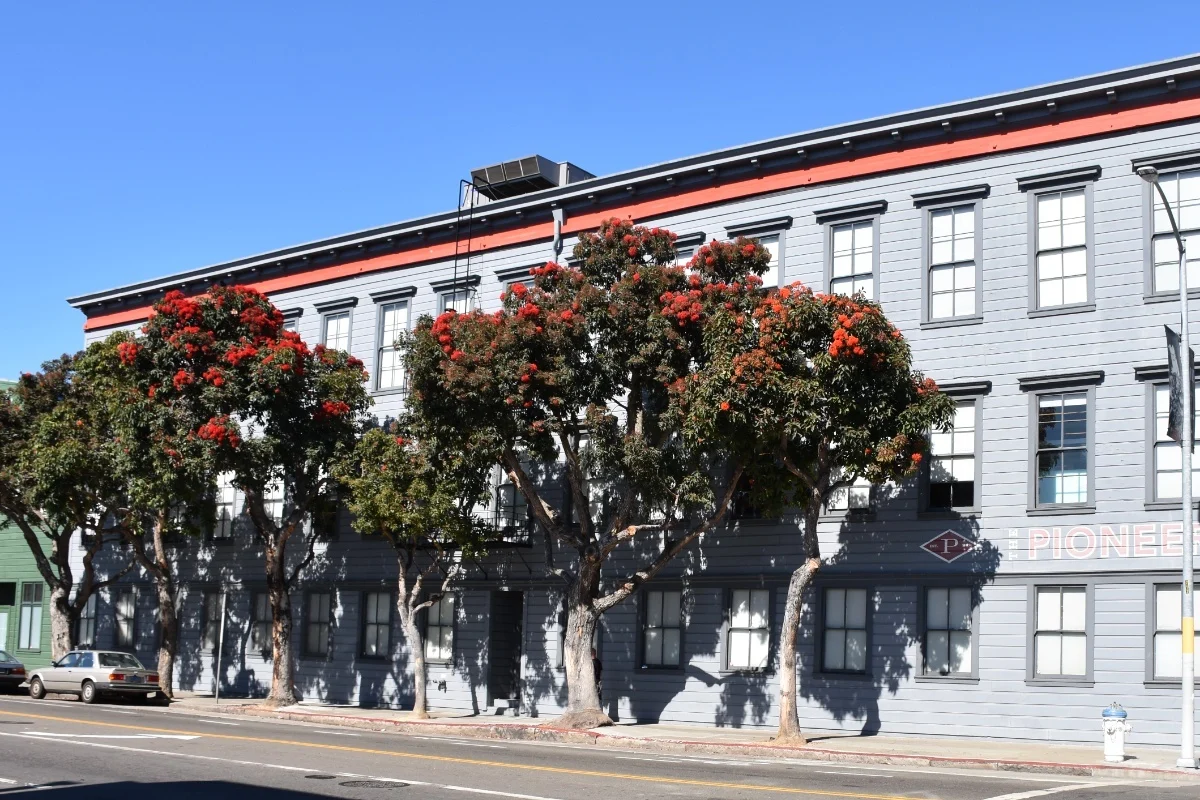
 Source: HaeB / Wikimedia Commons

An office building in San Francisco's Mission District that is more than 100 years old is now for sale. OpenAI and Elon Musk's AI company, xAI, once worked there. Now, another artificial intelligence (AI) startup is getting ready to move in. The building, called the Pioneer Building, has been an early home for some of San Francisco's most famous AI companies. It is being put up for sale as growing AI companies continue to change the city's office market.
According to CoStar, the historic building is going up for sale just as a startup called Exa Labs gets ready to move in. The building is at 3180 18th Street, according to Harvest Properties. The company says the building is in the heart of the Mission District.
The building has a long history. Harvest Properties says the Pioneer Building was first built in 1902. It was later updated to become office space for creative businesses. Harvest Properties also says Stripe and OpenAI once used the building as their main offices.
From OpenAI to Musk's xAI
OpenAI moved out of the Pioneer Building in 2024 after signing a major agreement to rent office space in San Francisco's Mission Bay neighborhood, according to the San Francisco Chronicle. Elon Musk's company, xAI, later moved into the building. Because several well-known AI companies have used the building, it has become a symbol of how AI businesses are bringing new activity to San Francisco's office market.
Now Exa is moving in. The AI search startup has agreed to rent the building, which has about 40,000 square feet of space, for at least seven years, according to the Chronicle.
A Busy AI Office Market With Limited Choices
Companies rented 12.1 million square feet of office space in San Francisco during the first nine months of 2026. That was 49% more than during the same period in 2025. Of that total, companies signed leases for 3.9 million square feet during July, August, and September alone, according to Bisnow.
But even though more companies are renting offices, San Francisco still has many empty office spaces. The problem is that some types of buildings are much more popular than others. Bisnow reported that 28% of the city's office space is empty. However, people speaking at an industry discussion warned that this number includes old office spaces that may never find renters again. During the second quarter of 2026, about 12% of the highest-quality office buildings, known as Class-A buildings, were empty. In comparison, more than 31% of Class-B office buildings were empty. Class-B buildings are generally older or less desirable. According to Bisnow, rent in Class-A buildings was 54% higher than rent in older, lower-quality office spaces.
Startups Compete for Office Space
Exa's seven-year rental agreement means the company plans to stay in the Pioneer Building for a long time.
Other AI companies have found different ways to get office space in San Francisco. According to the Chronicle, OpenAI has rented several large spaces in Mission Bay. In 2023, it took over two buildings that Uber previously used, with a total of 486,000 square feet. It also signed a lease for 315,000 square feet at 550 Terry A. Francois Boulevard. In another deal, OpenAI agreed to rent 280,000 square feet at 1800 Owens from another tenant. Elsewhere in the city, Cognition took over a building in the SoMa neighborhood that Cruise had previously used, agreeing to stay for five years. Anthropic first rented office space from Slack before changing that arrangement into a long-term agreement, according to the same Chronicle reporting.
For now, the next big question for the Pioneer Building is who will buy it. That has not been decided as the property goes up for sale. What is known is that the building, which is more than 100 years old and was once a factory that made trunks, is getting ready to welcome another AI startup. The building has become a symbol of the rapid growth of San Francisco's AI industry, and Exa is the latest company hoping to become part of its history.