At Miami AI Summit, Hugging Face CEO Clem Delangue predicts every company will become an AI builder -
The daylong summit was packed, with 800 founders, investors, business leaders, and national security experts attending. Here are some key moments.
Within the next 24 months, most companies will do more than just use artificial intelligence (AI). They will build their own AI systems, changing, controlling, and running their own models.
Clément Delangue, co-founder and CEO of Hugging Face, made this prediction during his keynote speech at the Miami AI Summit on October 23. He spoke to a packed room after Hugging Face's major $12.9 billion deal to join Nvidia the previous month. Delangue urged business leaders not to depend only on closed-source APIs, such as those offered by OpenAI and Anthropic. He called this a "scary path" because it gives too much power to a small number of companies.
"When you are thinking about building versus buying, fight the urge to just rent from OpenAI or Anthropic," Delangue told the audience. "Instead, create the conditions for your teams to feel comfortable building AI themselves with open source."
Delangue warned that keeping most AI technology in the hands of a few leading companies that keep their systems closed could threaten economic stability and national governments' ability to make decisions. "When you think about the economy, what happens if most of the benefits of AI are concentrated in two or three frontier labs?"
"Working to have a much more decentralized, distributed AI sector is really, in my opinion, one of the most important topics that we can work on right now," he said.
An exciting scene in Coral Gables
Delangue's ideas set the tone for an energetic day at the conference center of the Lowes Coral Gables Hotel. The summit was organized by eMerge Americas and led by Chief AI Officer Burhan Sebin. It brought together 800 founders, investors, business leaders, and national security experts. People traveled from California, New York, Colorado, and Canada to attend. While speakers gave talks on the main stage, hundreds of people filled the nearby halls, talking, making connections, and discussing business deals.
For eMerge Americas CEO Melissa Medina, the event's ability to attract people from across the country shows that South Florida has already become more than just a region with potential. "The intellectual capital that we have at this event today is proof that the region is a tech hub, with all the ingredients to keep growing and attracting more people and more funding," Medina told Refresh Miami. "All these people are here in Miami because they want to be a part of this ecosystem. It's not just hype."
Before the event, Medina spoke on iHeart Radio's CEOs You Should Know about how Miami has changed over time. She explained that cooperation between the public and private sectors across five key areas—entrepreneurs, investors, corporate leaders, universities, and government—created a strong foundation for growth. After 2020, more money and skilled workers moved to the region, helping Miami enter a period of rapid growth that she described as a "J-curve."
Open source as the strongest line of defense
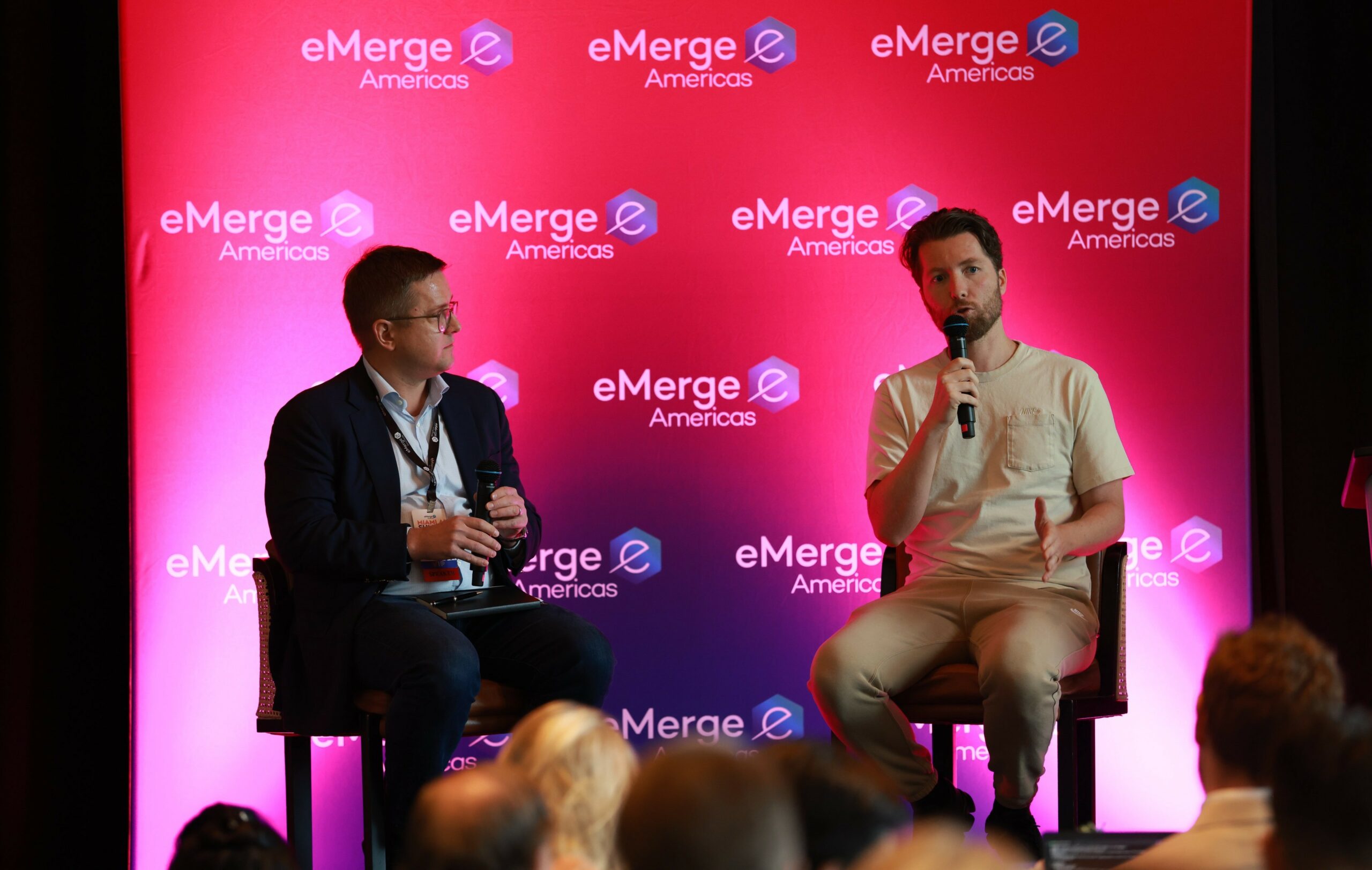
During a fireside chat with Derick Duchodni, managing director at J.P. Morgan, Delangue challenged claims that open-source technology increases cyber risks. He said Hugging Face faced a cyberattack by an autonomous AI agent earlier that year. During the attack, safety limits built into proprietary APIs stopped defenders as well as attackers. To stop the threat, Hugging Face used open models, including a model called GLM 5.3 developed in China and running on Nvidia systems, to protect its systems.
"Most defense will be provided by open source," Delangue said. He argued that using open-source models to protect computer systems can make society much stronger than relying on secretive leading AI companies.
Another speaker many people looked forward to hearing was Kamyar Azizzadenesheli from Prometheus. The startup, co-founded by Jeff Bezos and Vik Bajaj, is developing AI tools to make engineering faster and help turn ideas into physical products. Bezos has described its long-term goal as creating an "artificial general engineer."
How companies use AI tokens and the Pentagon's approach
The move toward open AI systems also came up in discussions about how businesses use AI. During a panel about the growth of AI agents and how companies are changing their work processes to use them, Augusto Marietti, CEO of API infrastructure company Kong, said that businesses' use of open-weight models had grown from almost zero six months earlier to 30% of total token use. This change came as chief financial officers demanded tighter control over token budgets. Will Koffel, director of Nvidia's Inception startup program, said autonomous AI agents are changing how startups are created. He noted that Nvidia had recently changed its startup program rules to allow solo founders who manage "an army of agents" to run companies worth more than $100 million.
"We need to appreciate the diversity of startup opportunities. We commoditized the intelligence part; the human part is now judgment and taste," Koffel said.
At a panel on national security, defense leaders showed how the military is using more automated work processes. Representatives from the Pentagon's Chief Digital and AI Office (CDAO) discussed GenAI.mil, a program that has made large language models (LLMs) available to nearly 2 million Department of Defense users through 500,000 custom AI agents. Matt Suma, a former CIA officer who represented Cognition AI, the company that created the autonomous software engineer Devin, described the change in thinking this requires: "The military should get out of the mentality of strictly being buyers and get back into the mentality of being builders"
Young founders and a 30-year vision
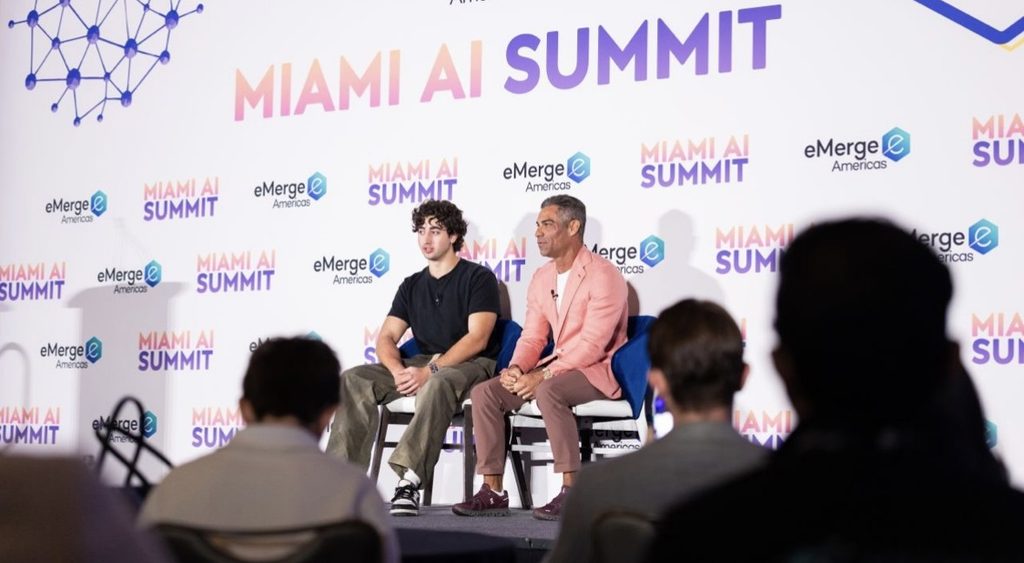
The summit ended with an lively fireside chat between former Miami Mayor Francis Suarez and 19-year-old founder Zach Yadegari. The audience burst into laughter when Suarez joked about the difference between their generations. Yadegari taught himself to code and built popular online projects when he was 13. He later grew his calorie-tracking app, Cal AI, to 15 million users and $30 million in revenue. He then moved to Miami and started a new AI assistant company called Persona.
Asked to imagine the future 30 years from then, when he will be 49, Yadegari said he hoped to lead a large technology company working on advanced AI and brain-computer interfaces. "Ideally, I would be running a very large-scale company with thousands of people working on the frontier of technology," he said.
Smaller workshops throughout the day gave attendees practical advice and feedback from people working in the field. The session "AI Teammates That Get Work Done with SpaceX" shared tips for building with Grok, while "Build What Doesn't Exist" featured Base44 teaching people how to turn ideas into working products.
As the summit ended, attendees gathered on the hotel's rooftop terrace, which overlooks Coral Gables, for a sunset happy hour. They ate traditional Spanish paella and tapas while listening to a live bossa nova trio. Founders and investors celebrated a day that strengthened Miami's position as a major center of the open-source AI movement.