
AI-generated references plague peer-reviewed paper on Z-Library



A study about online libraries that share books without permission, published in New Review of Academic Librarianship, lists sources that do not exist. These include a made-up TorrentFreak article and research papers credited to the wrong sources. The authors said they used Consensus AI and ChatGPT during their research. Publisher Taylor & Francis has started an investigation into possible ethics problems.
A study about Z-Library appeared this month in New Review of Academic Librarianship after being reviewed by experts. It lists at least 10 sources that researchers could not find. Two librarians working at Nigerian universities wrote the study. It asks whether Z-Library helps more people get knowledge or harms the rules that protect copyright.
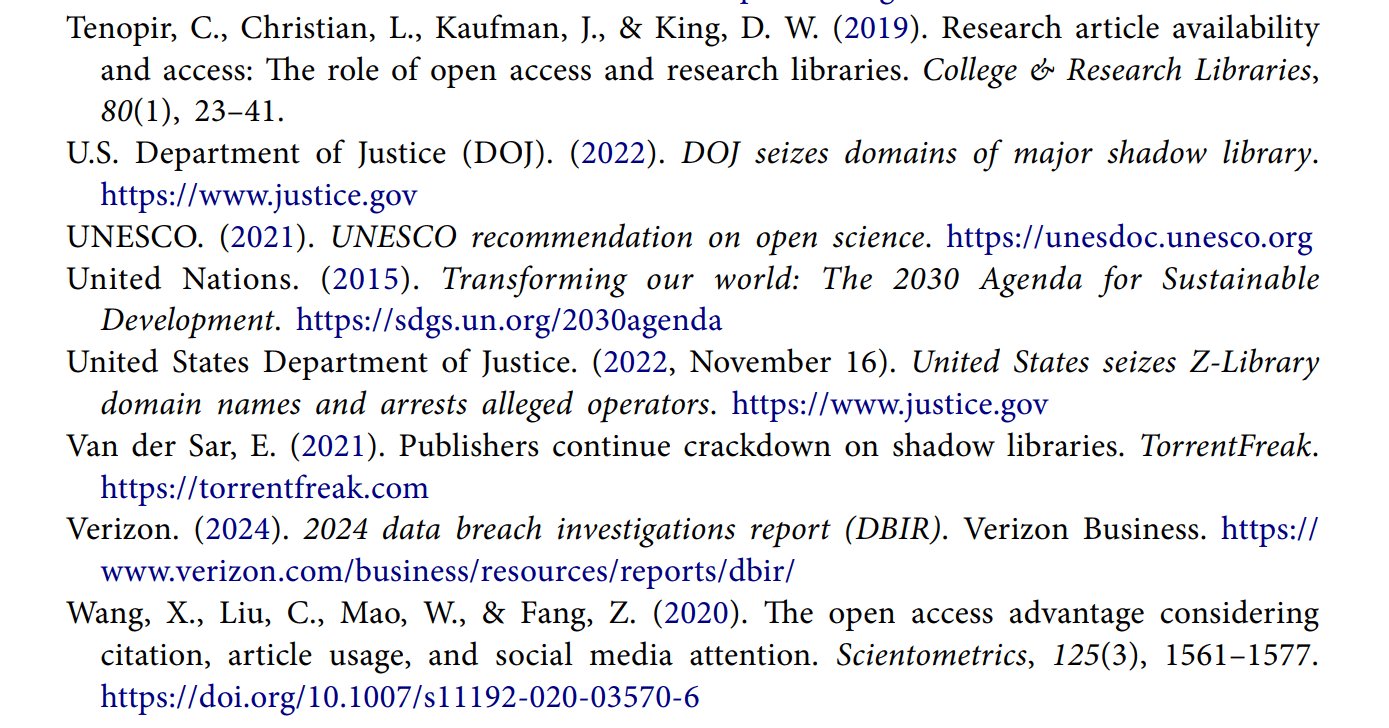
The first problem is a reference to TorrentFreak. When discussing legal actions, the authors say major publishers, including Elsevier and Springer Nature, took legal action against Z-Library. They cite a 2021 TorrentFreak article called "Publishers continue crackdown on shadow libraries." But TorrentFreak never published an article with that title. The reference links to the site's homepage, and the legal action described does not match any reported case. TorrentFreak did report on UK orders to block Sci-Hub and temporary suspensions of Z-Library domains, but it did not report the specific lawsuit described in the study.
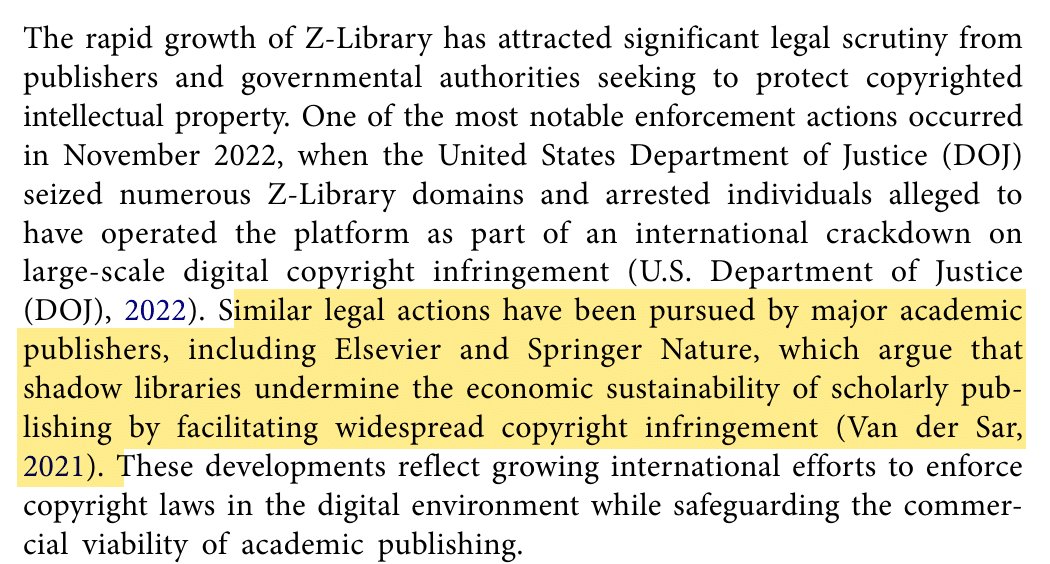
The authors also describe a case brought by the U.S. Department of Justice inaccurately. They say officials "arrested individuals" in 2022, but the department's press release says people were arrested in Argentina at the request of the United States. The title the authors give the press release does not exist either.
Other references that cannot be found include a supposed 2019 article in the Harvard Journal of Law & Technology, credited to intellectual property professor Daniel Gervais. Its title is "The future of intellectual property in the shadow of shadow libraries." The issue cited contains no such article, and the page numbers belong to unrelated papers. Another supposed article from 2019, credited to Carol Tenopir and colleagues and said to appear in College & Research Libraries, is also missing from the cited issue. Tenopir did co-write a study on a related subject in 2019, but it appeared in a different journal and had a different title. Other missing sources are credited to Björn Brembs and people named Smith, Piper, Okike, and Aronson. The list also includes a Kaspersky report about hidden dangers of online libraries that share books without permission.
The acknowledgements in the paper offer a possible explanation. The authors say they used Consensus AI to search research papers and collect information. They also say ChatGPT helped improve the wording of some parts of the paper. AI chatbots can invent references with believable titles and the names of real experts. That is similar to what happened here. A tool called Pangram, which tries to detect AI-written text, rated the paper's abstract and conclusion as 100% AI-generated. Such tools can wrongly flag human writing, but this result fits the pattern of made-up references.

There is another contradiction. The authors warn that Z-Library takes money away from publishers, which use that money to pay for peer review and editing. But they do not mention that peer reviewers work without pay. This issue is central to recent lawsuits against major publishers, including Taylor & Francis. At the same time, copyright owners are suing AI companies for training their models on online libraries that share books without permission, including Z-Library. A peer-reviewed journal article about that very library may itself have used AI to create its references.
Taylor & Francis said it had sent the matter to its Editorial and Publishing Ethics & Integrity teams. A spokesperson said, "I can confirm that this has been referred to our Editorial and Publishing Ethics & Integrity teams, who will investigate the concerns you have raised," The publisher declined to say more while the investigation continues. The lead author shared an early copy of the paper but did not answer follow-up questions about the references. Gervais, Brembs, and Tenopir did not respond to questions about the papers listed under their names.
It is not yet clear whether the journal will correct the paper or withdraw it. The study is called "Z-Library and Full-Text Access: Democratizing Knowledge or Undermining Copyright Ethics?" It is available through the journal.
Source:torrentfreak.com