
Runcie Chidebe: Can AI-Generated Cancer Education Materials Match Clinician-Authored Content in Nigeria?
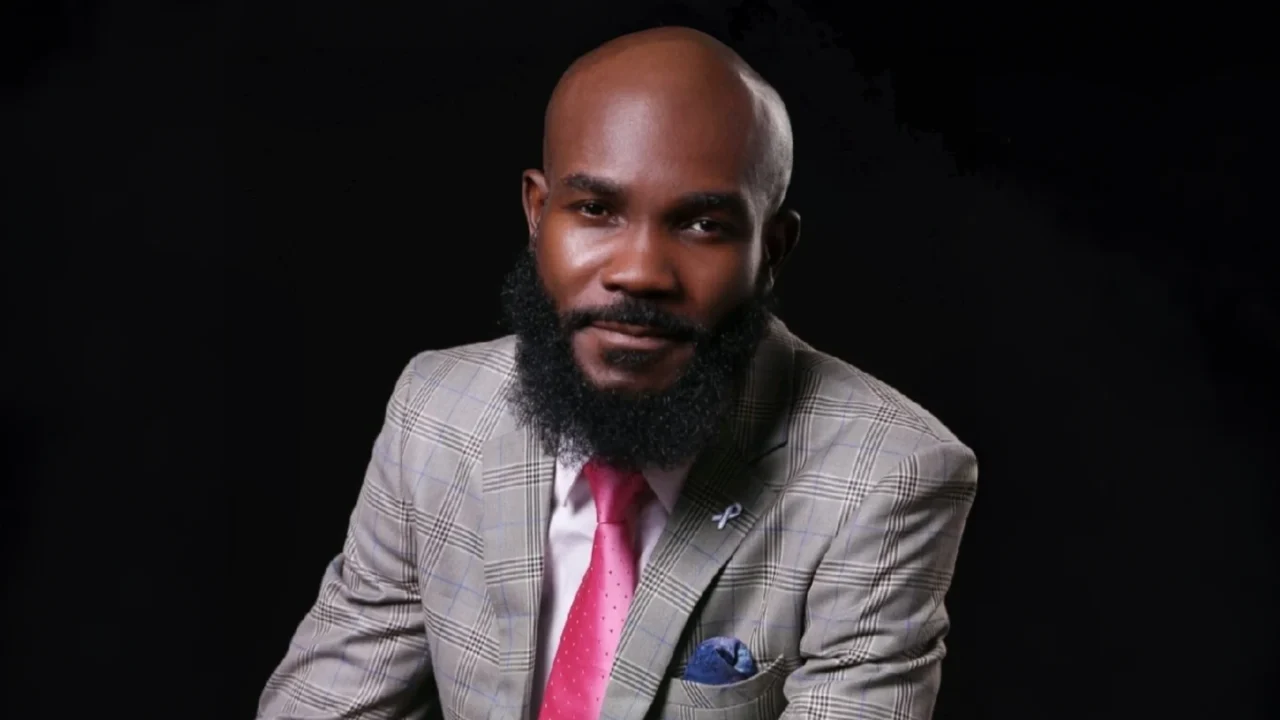
Runcie C.W. Chidebe, an Education Administrative College Intern in Interprofessional Learning at Cleveland Clinic, shared the following on LinkedIn:
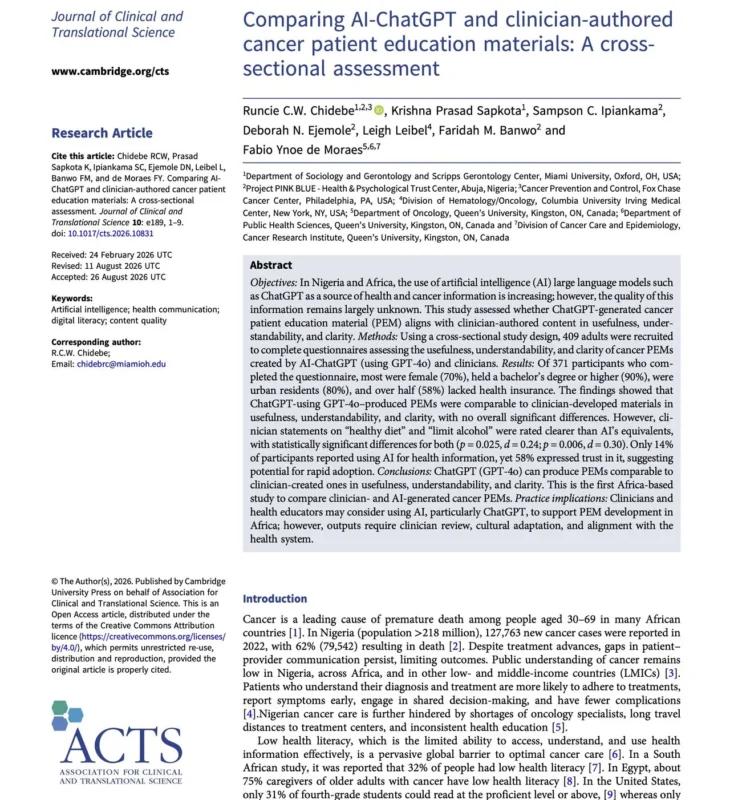
“A few days ago, our article, ‘Comparing AI-ChatGPT and clinician-authored cancer patient education materials: A cross-sectional assessment,’ was published in Cambridge’s Journal of Clinical and Translational Science. To our knowledge, this is the first study to examine the use of cancer prevention materials created by artificial intelligence (AI) in Nigeria and across Africa.
Digital tools have helped make cancer information more personal and better suited to patients’ needs, especially in places where healthcare services are limited. AI tools, including large language models (LLMs) such as ChatGPT, are a new type of digital tool that can give flexible answers to patients’ questions.
Earlier studies suggest that AI tools such as ChatGPT can create cancer education materials that patients can understand and find acceptable. However, research and evidence about AI-generated cancer patient education materials (PEMs) in low- and middle-income countries (LMICs) and Africa are limited, and this research is still developing. To help fill this gap, we compared AI-generated PEMs with materials written by clinicians in Nigeria. We looked at how clear, useful, and easy to understand the materials were. We expected ChatGPT-generated materials to perform as well as clinician-written materials in all three areas.
Our findings showed that:
- Materials created using ChatGPT with GPT-4o performed similarly to materials written by clinicians in usefulness, ease of understanding, and clarity. There were no significant overall differences between the two groups.
- However, participants rated clinicians’ statements about a ‘healthy diet’ and ‘limit alcohol’ as clearer than the matching AI-generated statements. The differences were statistically significant for both statements.
- Only 14% of participants said they used AI to find health information, but 58% said they trusted it. This suggests that people could start using AI quickly.
- When looking for health information, 73% relied on doctors, 52% used Google, 36% used other social media, 22% turned to ‘Aproko Doctor’ (a Nigerian physician and social media influencer), and 14% used AI tools such as ChatGPT.
- Most participants (95%) accessed the internet using smartphones, while 49% used laptops.
- For technology use, 30% of participants used wearable fitness devices.
- Another 36% used mobile apps related to health, while only 4% used apps related to cancer.
- A total of 90% said they were interested in using cancer apps for prevention and care.
We argued that AI use is growing across Africa. This makes it urgent to include more evidence-based information from Africa that reflects local cultures in AI-generated answers. Doing so can help prevent misinformation from spreading among African people.
Learn more.
Special thanks to my co-authors, Miami University, and Project Pink Blue.
Let me know what you think in the comments. Let’s also work together to repeat this study in other African countries. Please connect with me.”
Other articles featuring Runcie Chidebe on OncoDaily.