
To make AI morally good, tech companies are turning to religion. But some say it isn't that simple
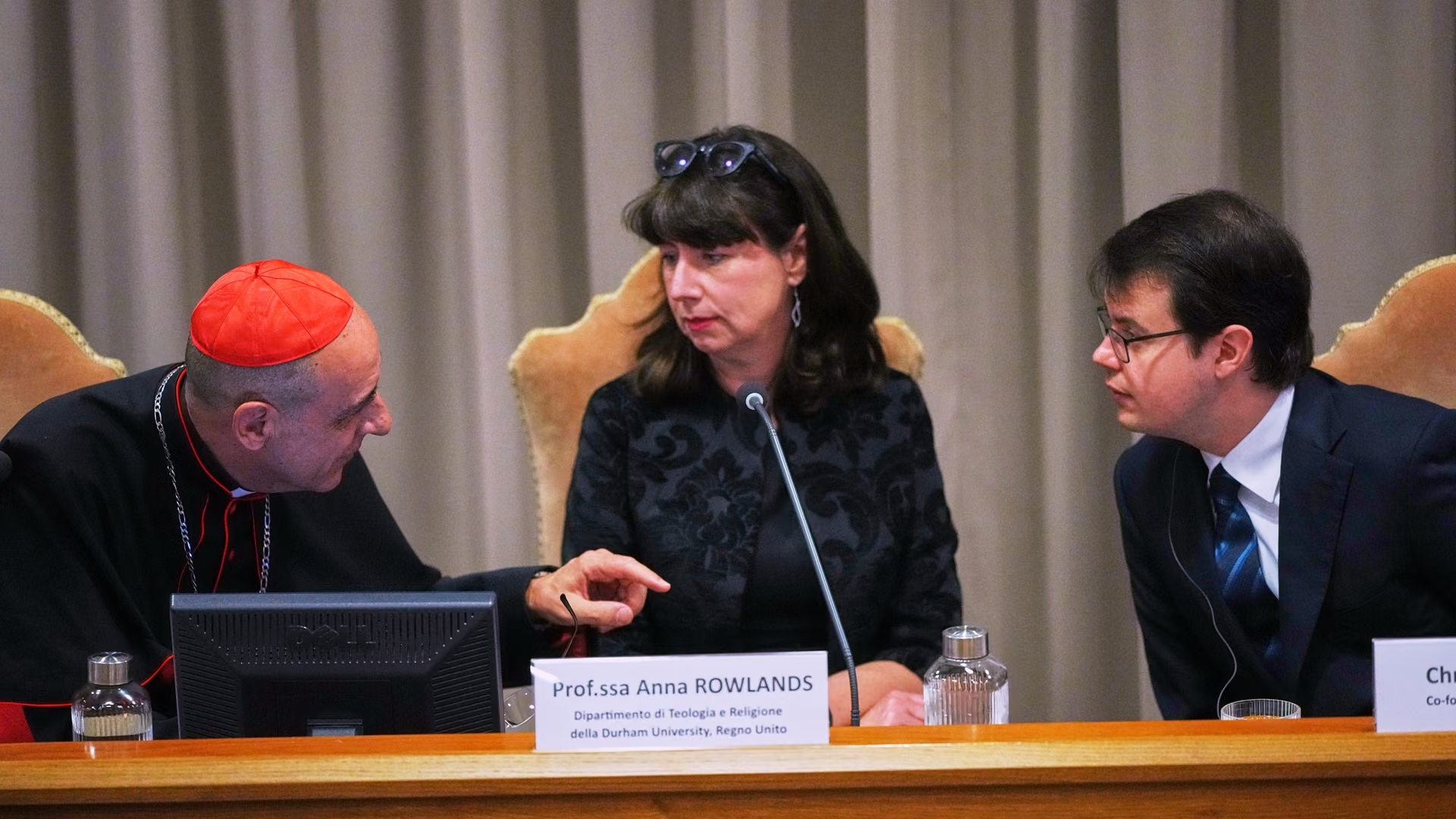
Cardinal Víctor Manuel Fernández, who leads the Vatican office responsible for Catholic teaching, talks with theologian Anna Rowlands and Anthropic co-founder Christopher Olah. They attended the presentation of Pope Leo XIV's first official teaching letter, titled "Magnifica humanitas: On Safeguarding the Human Person in the Time of Artificial Intelligence," at the Vatican on May 25, 2026. Credit: AP/Alessandra Tarantino
LOS ANGELES — Technology companies are racing to build more powerful artificial intelligence (AI). At the same time, some are asking how to teach chatbots the difference between right and wrong. Their answer? Religion.
"These are not questions a lab can answer," Anthropic co-founder Chris Olah said earlier this year at the Vatican, during the presentation of Pope Leo XIV's teaching letter about AI. "They are questions traditions like yours have carried for millennia."
As technology companies turn more often to religion, few people have publicly examined what these companies think religion is or, perhaps more importantly, what they want to gain from it.
Company leaders have warned about the possible dangers of AI and debated how to build AI systems that behave morally. They are increasingly asking philosophers and religious leaders for advice. Their thinking is that religion can help AI learn to make good choices, at a time when fears about AI, both real and unfounded, are spreading through society.
Because these companies do not follow one particular religion, they often want to bring together moral ideas from many sources and use them to guide their AI systems. "What I think ChatGPT should do is reflect that weighted average, or whatever, of humanity's moral view," OpenAI CEO Sam Altman said last year.
But experts and religious believers warn that this approach does not fully consider how different religions and worldviews can disagree with one another. They say that treating religion as a collection of moral rules misses how religion actually works.
Religion is more than a set of rules to follow
For decades, scholars have challenged the common idea that religion is simply a set of rules or beliefs that can be separated from the complicated, practical and sometimes unpredictable ways people live, says Webb Keane, an anthropologist at the University of Michigan.
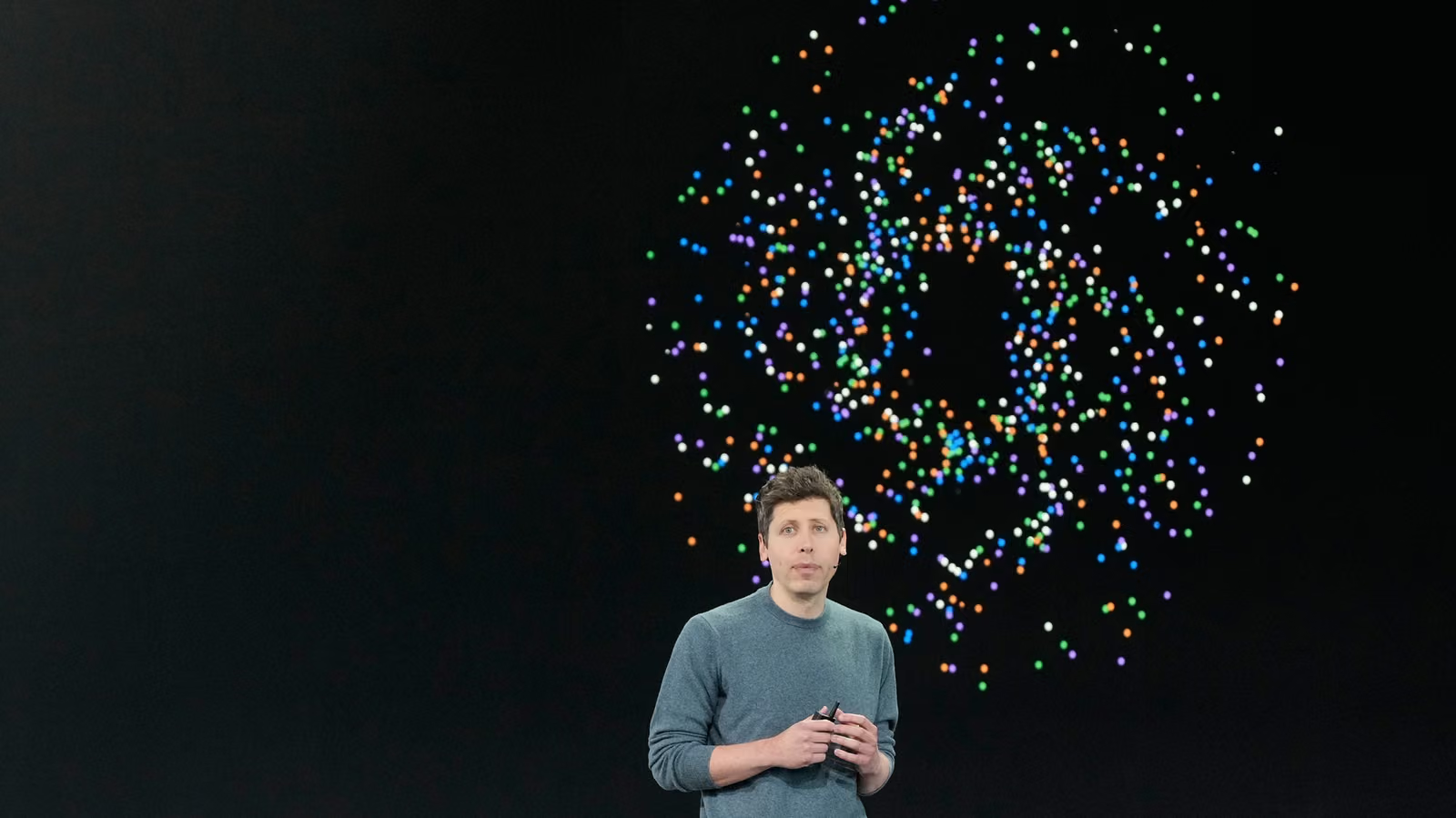
OpenAI CEO Sam Altman speaks at the OpenAI DevDay 2026 conference in San Francisco on Sept. 29, 2026. Credit: AP/Jeff Chiu
The idea that religion can be separated from culture and politics remains common, even though religion influences both in many ways. Some experts worry that when AI companies ask religious leaders to answer questions about right and wrong, they may strengthen an understanding of religion that overlooks the importance of religious teachings, rituals and relationships.
Keane explains the problem this way: If companies assume that all religions offer a separate set of moral rules that can be taken out and used on their own, training AI with those rules could favor some religions and misrepresent others. This is especially a concern for faiths that do not mainly see themselves as systems for teaching right and wrong.
"There's a very conventional way of thinking of religion as a rule book," he said. "It is certainly very tied to scriptural religion, and the scriptural religions at the end of the day really turn out to be the Abrahamic religions."
Believers say tech companies are making an effort
This does not mean the meetings between technology companies and religious leaders have lacked different points of view. Nor does it mean that the companies have failed to take religion seriously, says Meghan Sullivan, a philosopher of religion who leads an initiative on ethics and AI at the University of Notre Dame.
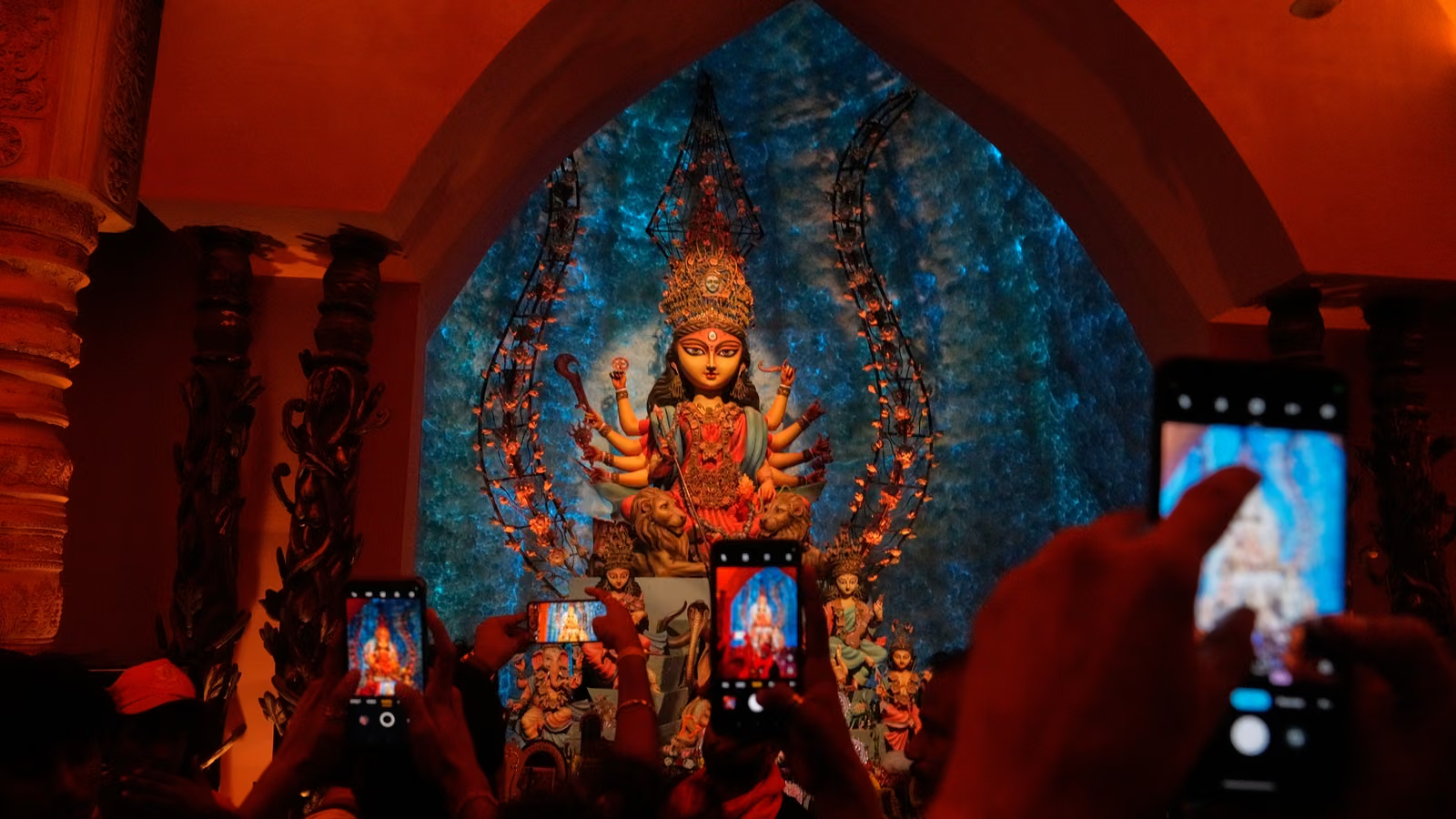
People take photos of an idol of the Hindu goddess Durga at a temporary place of worship on Oct. 21, 2026, the final day of the Durga Puja festival in Kolkata, India. Credit: AP/Bikas Das
In a blog post in May, Anthropic said it had met with "scholars, clergy, philosophers and ethicists from more than 15 religious and cross-cultural groups." The company did not list the groups it had consulted, but said it hoped to include more viewpoints in the future.
Earlier this year, Sullivan attended one of Anthropic's meetings. The group included Christians from different denominations. She said the discussion showed a deeper and more careful understanding of religion than meetings she had attended with other technology companies. Anthropic is widely seen as the AI company that takes ethics and safety most seriously.
"The culture inside the company is similar to that on a good college campus in the sense that you've got a collection of very intellectually curious people," she said. "These meetings are pretty nerdy — I don't know if that's the best way to put it — in a good way."
The meeting had two parts, Sullivan said. First, the company explained how its AI models worked in simple terms. Then religious leaders gave feedback and discussed the questions the technology raised. These questions covered everything from whether humans have souls to whether children in third grade should be allowed to use chatbots to help them learn to read and write.
Representatives from Meta, Google and Amazon have also met with the Vatican. Microsoft has also made a strong effort to engage with religious groups.
Religion is ancient. The study of it is not
Religion is often thought of as something that has existed everywhere throughout human history. The late scholar Jonathan Z. Smith, an influential researcher in the field, accepted that this idea was true in some ways. But he argued that it did not tell the whole story.
"Man has had his entire history in which to imagine deities and modes of interaction with them. But man, more precisely Western man, has had only the last few centuries in which to imagine religion," Smith wrote in 1982.
Many scholars of religion today share Smith's view. They question the idea that religions are separate systems that can easily be compared with one another. They say this way of thinking is relatively modern and can be traced back as far as the 19th century.
For example, people who practiced Buddhism and Hinduism did not always see their beliefs as clearly separate traditions before European scholars began studying and classifying them, says Tomoko Masuzawa, a religious studies scholar who wrote the book "The Invention of World Religions." Masuzawa said, "All these categories were not native."
Western academics helped establish these categories over many years. They only began seriously questioning them in the second half of the 20th century.
These long-standing ideas about religion help explain why companies in Silicon Valley may not feel the need to clearly define what they mean by it. Religion can seem like an easy way to show that a company is considering many different points of view.
"Somehow, religion becomes a way of kind of mapping out the world," Masuzawa said. "It's as if the whole world has kind of bought into it."
Some worry that combining different kinds of wisdom will erase their differences
Some people want technology companies to explain more clearly what they mean when they talk about religion and what they hope to learn from it.
"This work isn't about aligning our models with any one tradition's worldview. We want Claude to draw from a full range of viewpoints — religious, secular, political — with equal depth and rigor," Anthropic said in its blog post. "What we're after in these conversations is careful, accumulated thinking on how good character actually forms."
Large language models work by repeatedly predicting which word should come next in a sentence. They learn patterns from huge collections of writing created by people, including religious texts.
Paolo Carozza, a member of Meta's independent Oversight Board and a legal expert who studies Catholic social thought and technology, worries that trying to combine ideas from many sources could erase what makes each tradition special. The result could become a blended set of beliefs that favors middle-ground views or even gives Western religions more influence.
"Any living, sophisticated tradition over time is capable of interacting with others outside of it and absorbing some new knowledge and growing. But it does so in this organic way," he said. "What AI, I think, often does and potentially does, is not in an organic way, but in a way that just throws it all together, mixes it all up, and therefore makes sense of none of it."