
2 AI Blocs: Pax Silica Edges WAICO [2026]
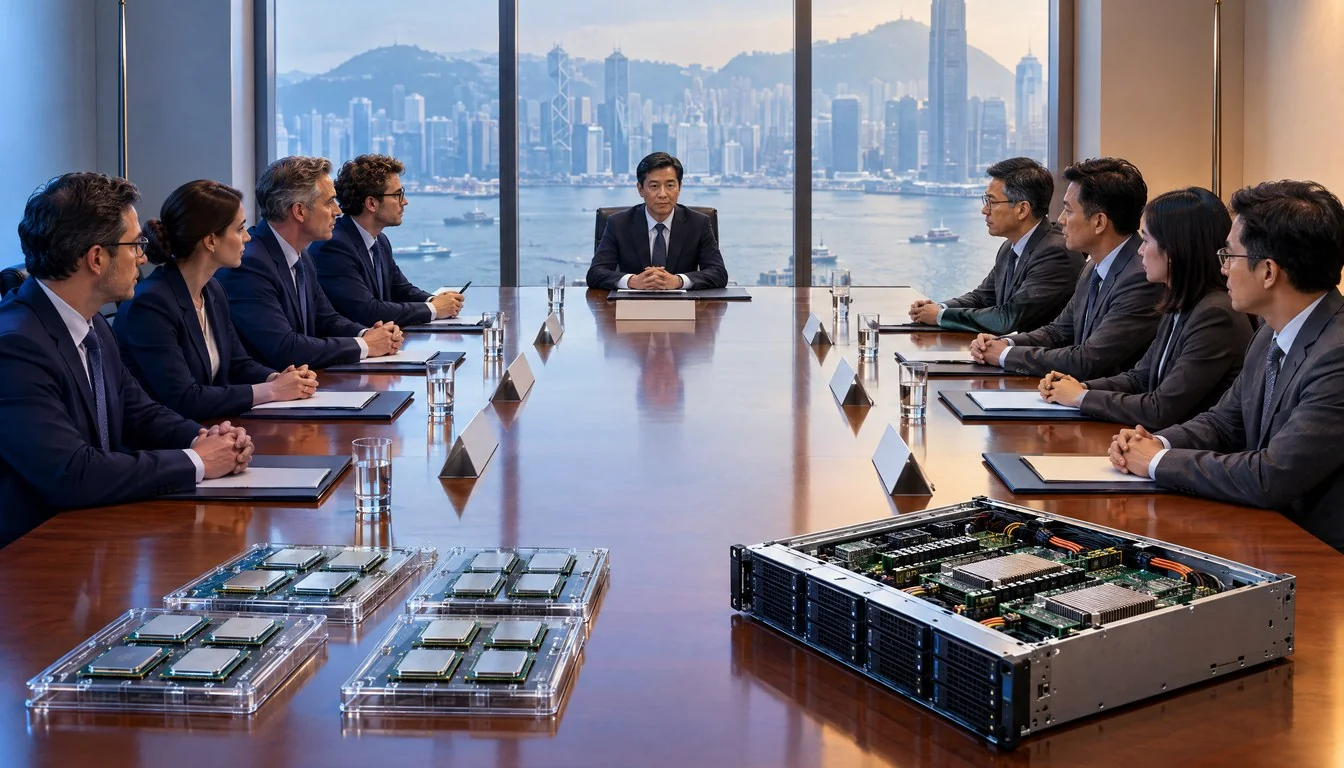
Governments that wanted to stay neutral on artificial intelligence (AI) have less room to do so. According to an Associated Press report published from Hong Kong on October 25, 2026, the United States and China are pulling small and medium-sized economies in different directions. Washington leads a group called Pax Silica. Beijing launched the World Artificial Intelligence Cooperation Organization in July 2026.
The Associated Press describes the choice in practical business terms. The U.S.-led group offers access to advanced computer chips and AI technology. China offers systems that cost less and are open-source. Countries that want both options face a difficult choice. Kazakhstan is the clearest example because it belongs to both groups.
This analysis explains what the Associated Press report confirms, what remains uncertain, and what the split means for buyers, developers and policy teams. It also connects the issue to our earlier report on Huawei's AI chip export plans, because chip supplies are at the heart of this competition. We stick to confirmed information and point out where public details are missing.
What the AP Reported on October 25, 2026
The Associated Press identifies the United States and China as the two leading AI powers. Each is building a group of partner countries. The U.S.-led group is called Pax Silica. China's group is the World Artificial Intelligence Cooperation Organization, which Beijing launched in July 2026 with 29 founding countries.
Russia and Pakistan are named as founding members of the Chinese-led organization. This matters because the group was not formed only by Asian countries or developing economies. Its founding members include countries of different sizes, some of which already have close trade and security ties with Beijing.
The main point of the AP report is that AI can no longer be treated as a neutral product bought only for business reasons. Computer chips, AI model files, cloud service contracts and technical rules now affect international relations. When a government chooses an AI model for a tax website, for example, it also chooses which technology system it may depend on for years.
Pax Silica: The U.S.-Led Grouping Explained
Pax Silica is the name the AP report uses for the American side of this divide. According to the report, members gain access to advanced chips and AI technologies. That is a major benefit. Building and running the most powerful AI models requires a limited supply of specialized equipment, and the United States and its allies control much of the important hardware.
The parts of the AP report we reviewed do not provide a complete membership list, a formal charter or details about membership fees. We therefore do not make claims about those things. The report does explain the group's offer: countries that work with Washington on security, technical standards and trusted AI may find it easier for their companies to obtain advanced chips and sign major cloud service contracts with U.S. firms.
Jacob Helberg, a senior U.S. official who serves as Under Secretary for Economic Affairs, has described the strategy in terms of computing power and raw materials. His words appear in the quotations below. This matches the AP report's description. Pax Silica is focused less on software itself and more on the physical resources and equipment needed to build and run software.
China's World Artificial Intelligence Cooperation Organization
China launched the World Artificial Intelligence Cooperation Organization in July 2026, about three months before the AP report appeared in October. It began with 29 founding countries. The AP describes China's offer as cheaper and based on open-source systems. This may appeal to governments and startups that cannot afford the large budgets of the biggest U.S. cloud companies.
Why open-source pricing appeals to buyers with limited budgets
Open AI models can let a country run AI systems on its own computers, adjust the models to work with local languages and avoid fees that increase with each use. For a government department or a medium-sized bank, these savings may matter more than a small difference in test scores. We have followed this trend in our report on how Chinese AI models gained a larger share of business use.
Founding members and what Russia and Pakistan signal
Russia and Pakistan's names on the founding list show which countries Beijing expects to use the organization early on. Both already have close ties with Beijing in some areas, so joining a Chinese-led group makes sense for them. The part of the AP report we checked does not provide the full list of 29 members, so we do not guess which other countries are included.
Pax Silica vs WAICO: Side-by-Side Comparison
The table below includes only details confirmed by the AP report and the information we checked. Where public information is missing, we say so rather than fill in the gaps.
| Attribute | Pax Silica (U.S.-led) | World Artificial Intelligence Cooperation Organization (China-led) |
|---|---|---|
| Lead country | United States | China |
| Launch timing | Not specified in the verified record | July 2026 |
| Founding membership | Not specified in the verified record | 29 initial founding countries |
| Named members | Kazakhstan (also in WAICO), Japan described as closely aligned | Russia, Pakistan, Kazakhstan |
| Core offer | Access to advanced chips and AI technologies | More affordable, open-source systems |
| Strategic emphasis | Advanced semiconductors, trusted AI, standards | International cooperation and shared development |
The two groups offer different things. One focuses on access to hard-to-get computer chips, while the other emphasizes lower costs and open technology. This difference helps explain why some countries do not see a need to choose only one side. They can buy chips from one group and download AI models from the other.
Kazakhstan: The Country Sitting in Both Camps
The AP reports that Kazakhstan belongs to both groups. This Central Asian country has about 21 million people. Its population is relatively small, but its location between Russia, China and the wider region gives it strategic importance. For Pax Silica, Kazakhstan offers a presence in Central Asia. For China's organization, it is a neighbour with long-standing economic ties.
Being in both groups gives Kazakhstan a way to protect its options. Its capital, Astana, can seek investment from both sides, and neither group can easily demand that the country work exclusively with it without risking the relationship. Countries often use this approach in trade policy, and they are now applying it to AI.
There are practical risks. If Washington tightens the rules on which countries can receive the most advanced chips, or Beijing links its open models to stronger commitments to Chinese technical standards, Kazakhstan may have to explain its choices to both sides. This balancing act works only while neither side forces the country to choose. Other medium-sized countries will likely watch what happens to Kazakhstan before trying the same approach.
Japan: Close to Washington, Open to Chinese Models
Japan is in a different position. The AP describes the country as closely aligned with the United States on strategy and security, including advanced computer chips, trusted AI and technical standards. Unlike Kazakhstan, Japan is not a country caught between the two sides.
Even so, the report quotes Takahiro Tsuchiya, a professor at Kyoto's University of Foreign Studies, as saying that Japan would not reject Chinese AI models for “lower-risk applications.” This distinction matters. A country can keep sensitive systems within a trusted group of suppliers while allowing companies to use cheaper open models for tasks such as drafting documents, translating text or searching internal information.
This approach, which sets different rules for different levels of risk, could become a model for other U.S. allies. Governments can classify AI uses by risk, limit high-risk work to approved suppliers and let the market decide which tools to use for less sensitive tasks. This can satisfy security officials without forcing every startup to pay high prices. Our analysis of open-source AI use and revenue explains why so many people use these lower-cost systems.
The UK and Germany: Why Washington's Door Matters
The AP also looks at Europe. Anton Leicht and Sam Winter-Levy of the Carnegie Endowment for International Peace said that close ties with the United States may be essential for the United Kingdom and Germany to gain access to data centres and chip deals with U.S. companies.
This shows how much influence access to technology can provide. The UK and Germany are two of Europe's largest economies and have strong AI research communities. Yet both still depend on American companies for the computing power needed to train and run large AI models. Leicht and Winter-Levy argue that close relations with Washington can affect which countries get access to the biggest deals.
For European policymakers, this creates an uncomfortable problem. Governments may talk about controlling their own technology, but there are physical limits to what they can achieve. Building data centres at home takes years, and most of the chips used in them come from supply chains that Washington can influence. The AP does not say that either country has officially joined Pax Silica, and we do not claim that they have.
Price, Openness and Chips: What Countries Actually Weigh
Without the diplomatic language, the decision comes down to three main factors. The first is access to hardware. If a country cannot buy advanced AI chips, it cannot train large models locally, no matter how many engineers it has. The second is the cost of getting useful results. The third is how much control the country has over the AI model, including whether it can inspect, change and run the model on its own computers.
The AP's description fits these three factors. The U.S.-led group has an advantage in the first area. Chinese open-source systems have advantages in the second and third. Neither group is best at everything, which is why many governments try to keep links with both.
Competition over price is also changing the way Western AI companies do business. When open models become nearly as capable as more expensive alternatives, companies selling closed models may lower their prices or add features to explain why their products cost more. Readers can see examples of this competition in our price comparison of DeepSeek, Mistral and Cohere.
What Officials Are Saying: Verified Quotes
Both governments describe their projects as efforts to encourage cooperation, but they mean different things by it. The statements below come from public sources we checked, and each link leads to its source.
Jacob Helberg, the U.S. Under Secretary for Economic Affairs, described the strategic basis of Pax Silica this way: “If the 20th century ran on oil and steel, the 21st century runs on compute and the minerals that feed it.” His words show that Washington sees this competition as a struggle over industry and resources, not just digital technology.
Chinese President Xi Jinping, speaking when he announced the World Artificial Intelligence Cooperation Organization, said: “AI development should not be a solo performance by a single country, but a symphony of international cooperation.” He also quoted a Chinese proverb: “A single string cannot make music, and a single tree does not make a forest.” Both statements present the organization as an open alternative to a world order centred on the United States.
The Chinese Embassy in Washington expressed a similar view in an official diplomatic statement reported by Daily Sabah. It said: “As both major countries in AI, China and the United States should leverage respective strengths in AI rather than guarding against each other.” It added: “AI should not be owned by major countries.”
Together, these statements show the difference between the two sides' messages. Washington focuses on computing power, minerals and trust. Beijing emphasizes sharing and openness. Smaller countries hear both arguments and consider what each side can actually provide.
Historical Context: From 5G Fights to AI Blocs
The current divide has happened before in other forms. During the Cold War, many countries tried to stay outside both major camps but often sought relationships with both sides. More recently, disagreements over which companies should supply 5G network equipment forced governments to weigh price against security. Some had to choose suppliers under pressure from Washington.
Advanced computer chips have made this competition more serious. The United States expanded its export controls in 2022 and tightened them in later rounds. These rules turned semiconductor supplies into a clear tool of foreign policy. Each new round pushed China to build more of its own supply chain and led other countries to reconsider their positions.
AI differs from earlier technology disputes in one important way. Software can move across borders almost instantly, and people can download AI models whose weights are available for public use. This makes China's open-source offer harder to restrict than physical network equipment. It also helps explain why Pax Silica places so much importance on controlling access to hardware.
Market Impact for Developers, Buyers and Chipmakers
For engineering teams, the split creates three practical changes. Buying rules will increasingly ask where an AI model was developed and where it runs. Compliance teams will want documents showing where a model came from and how it was built. Cloud service contracts may also begin to specify which group's technology can handle sensitive data.
Chipmakers and cloud service providers face a different decision. Joining a group focused on trusted supplies may open the door to large government and business contracts, but it may also limit which customers can buy their products. Companies outside the U.S.-led system can compete by offering lower prices and presenting themselves as neutral. However, they may risk losing access to American components.
Startups face pressure from both sides. A founder in Nairobi, Jakarta or Almaty can choose the cheapest AI model that meets their needs today. But a future change in export rules or technical standards could force the company to switch systems at great expense. Smart teams make their software flexible enough to use different models without rebuilding the whole product. Our guide to Canadian data residency with Cohere, OpenAI and Gemini explains one version of this challenge for local buyers.
Competitive Comparison: How Countries Are Positioning
| Country | Reported position | Source in the verified record | What it signals |
|---|---|---|---|
| Kazakhstan | Participates in both groupings, about 21 million people | AP report | Active hedging between the blocs |
| Japan | Closely aligned with the U.S. on semiconductors, trusted AI, standards | AP report | Ally that still allows low-risk Chinese model use |
| Russia | Founding member of the Chinese-led organization | AP report | Early anchor for Beijing’s framework |
| Pakistan | Founding member of the Chinese-led organization | AP report | Early anchor for Beijing’s framework |
| United Kingdom | Alignment with the U.S. may be vital for data centers and chip deals | Carnegie analysts quoted by AP | Dependent on U.S. compute access |
| Germany | Alignment with the U.S. may be vital for data centers and chip deals | Carnegie analysts quoted by AP | Dependent on U.S. compute access |
The table shows that countries are spread across a range of positions rather than divided into two completely separate camps. Japan, the UK and Germany lean toward Washington because of hardware and security concerns. Russia and Pakistan are founding members of the Chinese-led organization. Kazakhstan is trying not to choose either side. Countries that have not yet announced a clear position will be worth watching, and the AP report suggests that pressure on them is increasing.
What Is Confirmed and What Is Not
Fast-moving international disputes often attract rumours. The second table separates information supported by the sources we checked from details that remain uncertain. This helps readers assess claims they may see elsewhere.
| Claim | Status | Basis |
|---|---|---|
| AP report datelined Hong Kong, October 25, 2026 | Confirmed | Associated Press |
| Pax Silica is the U.S.-led grouping | Confirmed | Associated Press |
| WAICO launched July 2026 with 29 founding countries | Confirmed | Reported launch details |
| Russia and Pakistan are founding members | Confirmed | Reported launch details |
| Kazakhstan participates in both groupings | Confirmed | Associated Press |
| Full Pax Silica member list and fees | Not confirmed | Not in the verified record |
| Formal UK or German membership in either bloc | Not confirmed | Not in the verified record |
We treat the details in the last two rows as unresolved. If a later report publishes membership lists or formal agreements, those details will need their own sources before they can be included in further analysis.
What This Means for Canadian Organizations
This analysis does not claim that Canada has joined either group, and the verified information does not say that it has. However, Canadian companies and public organizations buy chips, cloud services and AI models in the same global market, so the divide can affect them indirectly. People responsible for buying technology should expect more questions about where AI systems come from.
Canada's own efforts to build AI capacity provide more context. Ottawa has been funding domestic capabilities, as discussed in our report on Canada's AI strategy. Building more capacity at home will not remove Canada's need for imported chips, but it could give Canadian buyers more choices than simply choosing between two foreign groups.
A practical checklist for Canadian teams should begin by assigning a risk level to each AI use. Customer information, health records and critical infrastructure should be treated as high-risk and handled by approved suppliers. Cheaper or open models can be considered for less sensitive tasks, following the example described for Japan. Teams should review their choices whenever export rules or technical standards change. For more information, see our AI and machine learning coverage and the science and technology pages at the Winnipeg Free Press.
Where Summit Diplomacy Fits In
Talks between national leaders add another factor. The AP has separately reported that Trump and Xi are expected to discuss AI safety. We rely only on that brief description and do not draw conclusions about what the talks will achieve. Still, the fact that AI safety is on the agenda suggests that both governments see some shared interests even as they build competing groups.
If the talks produce shared language on AI safety, smaller countries may find it easier to justify belonging to both groups. If the talks fail, pressure to choose one side may increase. The AP report was also published by regional news outlets such as KTBS, showing how widely the story is being shared.
Predictions: Where the Split Goes Next
The points below are our predictions, not reported facts. They are based on the confirmed information and on how similar technology disputes have developed in the past.
- More countries will join both groups. Kazakhstan's approach keeps its options open and may cost little in the short term. Other medium-sized economies will likely try the same approach before the end of 2027.
- Allies will set different rules for different risk levels. Japan's position on “lower-risk applications” suggests that formal policies may block Chinese models from sensitive work while allowing their use for other tasks.
- Open-weight models will continue to spread. Low prices will keep attracting developers in lower-income markets to open systems, regardless of their governments' diplomatic ties.
- Computing deals will become tests of political loyalty. Following the reasoning of the Carnegie analysts, large data centre and chip deals with U.S. companies may favour governments that agree to American standards.
- AI safety talks will remain limited. Any agreement between the United States and China on AI safety will probably cover a small number of shared risks without ending their business competition.
A sudden change in chip export rules could change these predictions. Tighter restrictions would make it harder for countries to maintain relationships with both sides. Looser restrictions would allow more countries to buy from the U.S.-led group without formally committing to it.
Frequently Asked Questions
What is Pax Silica?
Pax Silica is the name of the U.S.-led AI group described in the Associated Press report dated October 25, 2026. The AP says it offers access to advanced computer chips and AI technologies.
What is the World Artificial Intelligence Cooperation Organization?
China launched the organization in July 2026 with 29 founding countries. The AP describes China's offer as more affordable and based on open-source systems.
Which countries founded the Chinese-led organization?
The confirmed information names Russia and Pakistan as founding members. It does not provide the full list of 29 countries, so we do not name the others.
Can a country join both groups?
Yes. The AP reports that Kazakhstan, a Central Asian country with about 21 million people, belongs to both groups.
Would Japan reject Chinese AI models?
Not completely. Takahiro Tsuchiya, a professor at Kyoto's University of Foreign Studies, said Japan would not reject Chinese AI models for “lower-risk applications.” Japan remains closely aligned with the United States on semiconductors, trusted AI and technical standards.
Why does the U.S. matter so much to the UK and Germany?
Anton Leicht and Sam Winter-Levy of the Carnegie Endowment for International Peace said close ties with the United States may be essential for both countries to access data centres and chip deals with U.S. companies.
Has Canada joined either group?
The confirmed information does not say that Canada has joined either group, and we make no such claim. Canadian organizations can still be affected through the supply of chips, cloud services and AI models.
What should businesses do now?
Group AI uses by risk, keep sensitive work with approved suppliers, and design applications so that the AI model can be changed without rebuilding the entire product.