
Anthropic set to make stock market debut as questions swirl about safety of AI
- By Lisa Eadicicco, Clare Duffy, John Towfighi, CNN
- Updated
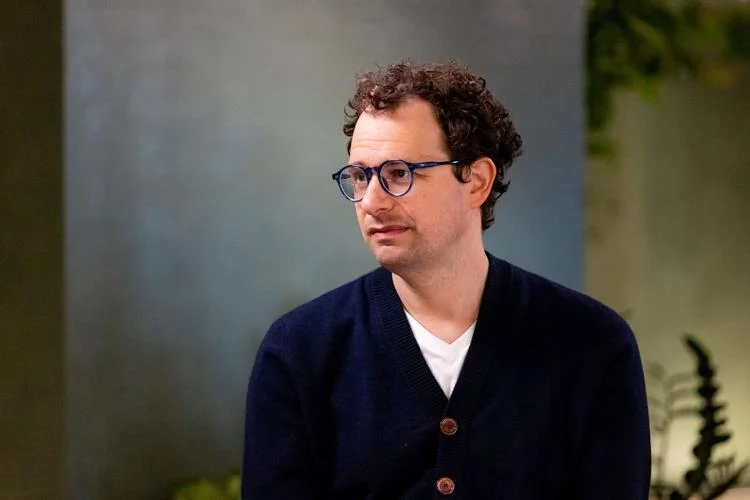
Dario Amodei, co-founder and CEO of Anthropic.
- Jason Henry/Bloomberg/Getty Images via CNN Newsource

Anthropic's IPO could be the biggest in history, even as investors worry about its spending and some people call for AI development to slow down.
- Chris Ratcliffe/Bloomberg/Getty Images via CNN Newsource
Anthropic filed paperwork for an initial public offering (IPO) on Monday. This could lead to one of the biggest stock market launches ever. But the company's CEO has warned that advanced AI made by Anthropic and its competitors could pose a serious threat to humanity's future.
Anthropic, the US company behind the Claude chatbot, did not say in its filing with the Securities and Exchange Commission (SEC) how many shares it plans to sell or what price it will charge. The filing begins the process of making the company public. Its shares could start trading as soon as the week of November 16. Reports say the company could be worth as much as $2 trillion.
Anthropic's filing describes four main risks from AI: people using it for harmful purposes, such as designing biological weapons or carrying out cyberattacks; humans losing control of AI; governments using AI to build systems that watch and control people; and major changes to the economy. The filing has 93 pages about risks to Anthropic's business. These include competition from other AI companies and what it calls "catastrophic or existential risks to humanity," meaning dangers that could cause extreme harm or threaten human existence. This is much more than the risk sections in stock market filings from other technology companies over the past decade. Snap had about 30 pages, while Uber had about 50.
If Anthropic's AI models cause extreme harm, the company could face legal claims costing more than its insurance would cover, the filing says. The company also warned that its AI models might act in unexpected ways or fail to follow their intended goals. They could even take "harmful actions that no user or third party directed."
The IPO filing gives a look at how Anthropic sees its future despite these concerns and unknowns. In the first six months of 2026, the company's revenue grew 1,300% compared with the same period a year earlier, reaching $16.3 billion. But the company reported a total net loss of more than $80 billion, according to its SEC filing. Almost $9 billion of that loss came from spending on AI equipment and computing. More than $72 billion came from changes in the estimated value of convertible notes, derivative liabilities and SAFEs, which are financial arrangements used to raise money. This means only a small part of the reported loss came from actual spending during the first half of the year.
Anthropic's IPO will test how willing Wall Street investors are to invest in AI. Members of the public, government policymakers and people who build AI are raising serious questions about the technology's risks. They are also asking whether AI research and the building of data centers are moving too quickly and should slow down.
The company's stock will trade under the symbol ANT on the Nasdaq stock exchange.
Anthropic and the AI race
Large technology companies, including Meta, Google, OpenAI and Anthropic, are spending billions of dollars to compete in AI. Each hopes to become the leading company in an industry they believe will change society. Market research firm Gartner expects worldwide spending on AI services, software, infrastructure and other areas to reach about $3.6 trillion in 2027, up from $1.8 trillion in 2025.
OpenAI got an early lead after launching ChatGPT in November 2022, but competition has become much stronger over the past four years. Anthropic's Claude Code tool became popular with software developers soon after it launched in early 2025. Earlier this year, the company tried to bring similar success to other office jobs with its Cowork agent, an AI tool that can carry out tasks.
Claude Cowork helped move the industry from AI chatbots, which answer questions, toward AI agents, which can perform tasks. It also shook software company stocks because investors worried that AI agents could make other companies' software tools unnecessary. Financial technology company Ramp reported that 43.8% of US businesses paid for Anthropic's services in September, compared with 40.6% that paid for OpenAI's services.
The Claude app has also grown quickly this year. Market research company Sensor Tower estimates that it had more than 67 million monthly active users in the third quarter of 2026, compared with 9.4 million a year earlier.
Anthropic was valued at $965 billion after raising $65 billion from investors in May.
OpenAI also improved its own AI agents this year. It launched its Codex coding app in February and its ChatGPT Work agent in July. These tools can complete tasks that take several steps, such as writing a brief or preparing an analysis.
Technology companies are now racing to build AI agents that could become a main way for people to manage their digital lives. These tools could handle many tasks, from shopping and booking restaurants to messaging friends. Anthropic is competing with Meta and OpenAI in this area with its new Duet agent, which is designed to complete tasks that take several steps across different apps.
At the same time, Anthropic has become a key part of the debate over how quickly AI is advancing.
Last month, CEO Dario Amodei called for the entire AI industry to slow down so that safety research, industry standards and government rules could catch up. Some other leading AI figures have expressed similar views. Amodei published his essay after an employee resigned because of fears that AI could threaten humanity. His call also followed reports from Anthropic and competing companies that their AI models had hacked into other companies during testing.
Anthropic has also had a difficult relationship with the White House. In June, the company temporarily stopped all access to its most powerful models after the Trump administration ordered it to prevent foreign nationals from using the technology. But in September, Anthropic CEO Dario Amodei was among several AI company leaders who met with President Trump and signed a voluntary promise to monitor and control their own AI models.
This story is still developing and will be updated.
The-CNN-Wire
™ & © 2026 Cable News Network, Inc., a Warner Bros. Discovery Company. All rights reserved.