Anthropic: 8 Most Interesting Things in Its S-1 IPO Filing
The biggest AI IPO ever is weeks away.
Anthropic has filed the paperwork for its IPO, or initial public offering.
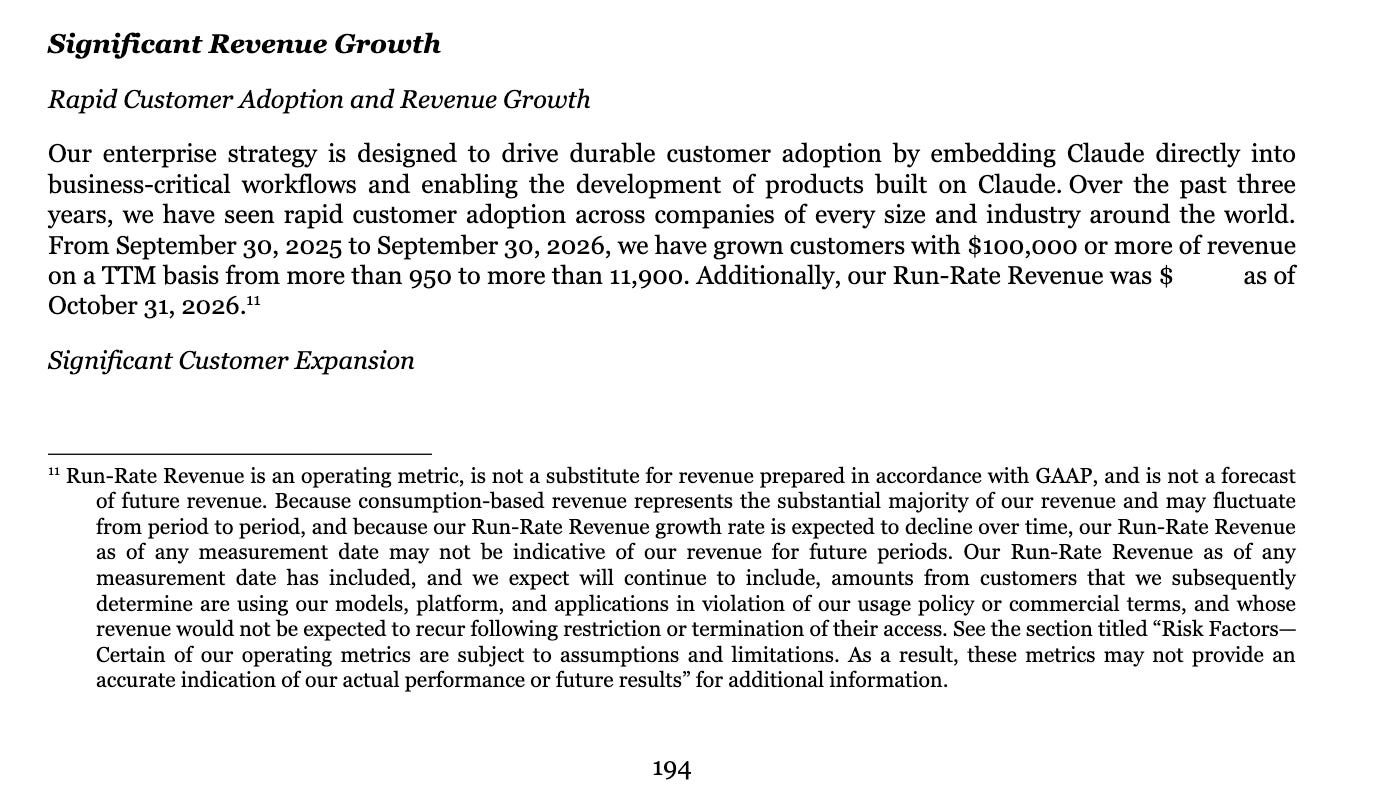
On Monday, the company that makes advanced AI models filed its S-1 prospectus with the SEC. The 318-page document mainly describes the company's past. But I think it is a good sign that page 194 includes a blank space for October's annual recurring revenue (ARR). ARR is the amount of yearly revenue a company would earn if its current subscription revenue continued for a full year. This figure will be added later in an updated S-1 filing.
After all the talk about no more ARR updates, there is only one reason for Anthropic to include October's ARR in an updated S-1: it would help the IPO. Anthropic would be foolish to include a bad October ARR figure when it does not have to, and the company is not foolish.
Remember that on September 22, Anthropic released Opus 5.5, a much better model. I expect this has helped the company's business start growing faster again. And when Anthropic releases Fable 5.5 soon, ARR should rise further as the IPO approaches.
I believe investors' guesses about October's ARR, based partly on the blank space in the filing, helped push AI-related chip stocks higher during Monday's trading session.
Here are the eight most interesting points in the filing:
The stock ticker is ANT
“We have applied to list our Class A common stock on the Nasdaq Global Select Market under the symbol “ANT.”
Anthropic highlights its culture and employee retention
“As co-founders and leaders, we aim to be completely honest with each other inside the company. We encourage lively, open debate among people at every level. Every two weeks, Dario, our CEO, usually speaks to the whole company and openly explains the decisions he is thinking about and the state of the industry. Other co-founders and leaders often do the same in their own areas. Employees discuss the difficult choices required by our complex mission in forums that anyone at the company can join. This open culture is one reason we have so many talented people and keep our employees longer than most companies in the industry. All seven of us still work at the company, making Anthropic the only major AI company to have kept its entire founding team.”
Business customers are driving extremely fast revenue growth
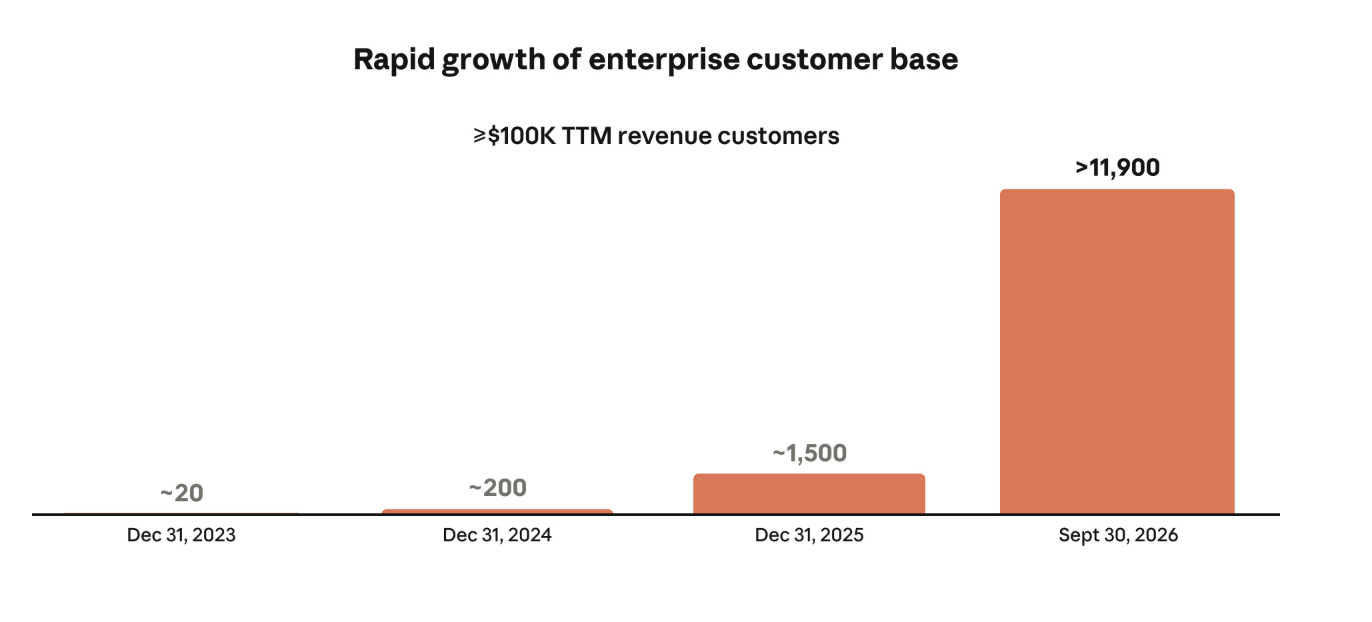
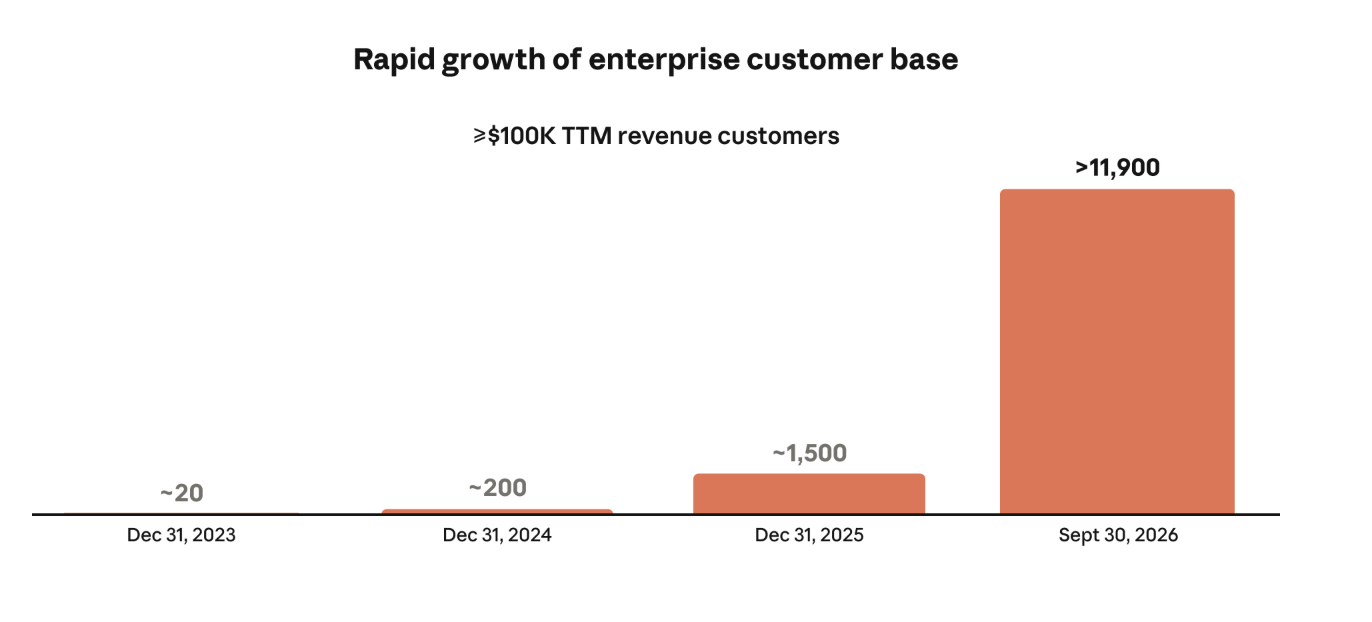
“The speed and scale at which business customers are adopting Claude show that Claude is one of the leading AI systems. As of September 30, 2026, our customer base included:
• More than 11,900 customers who generated at least $100,000 in revenue over the past 12 months; • More than 1,900 customers who generated at least $1 million in revenue over the past 12 months; and
• About 250 customers who generated at least $10 million in revenue over the past 12 months.”
These cycles of improvement help Anthropic stay ahead of competitors
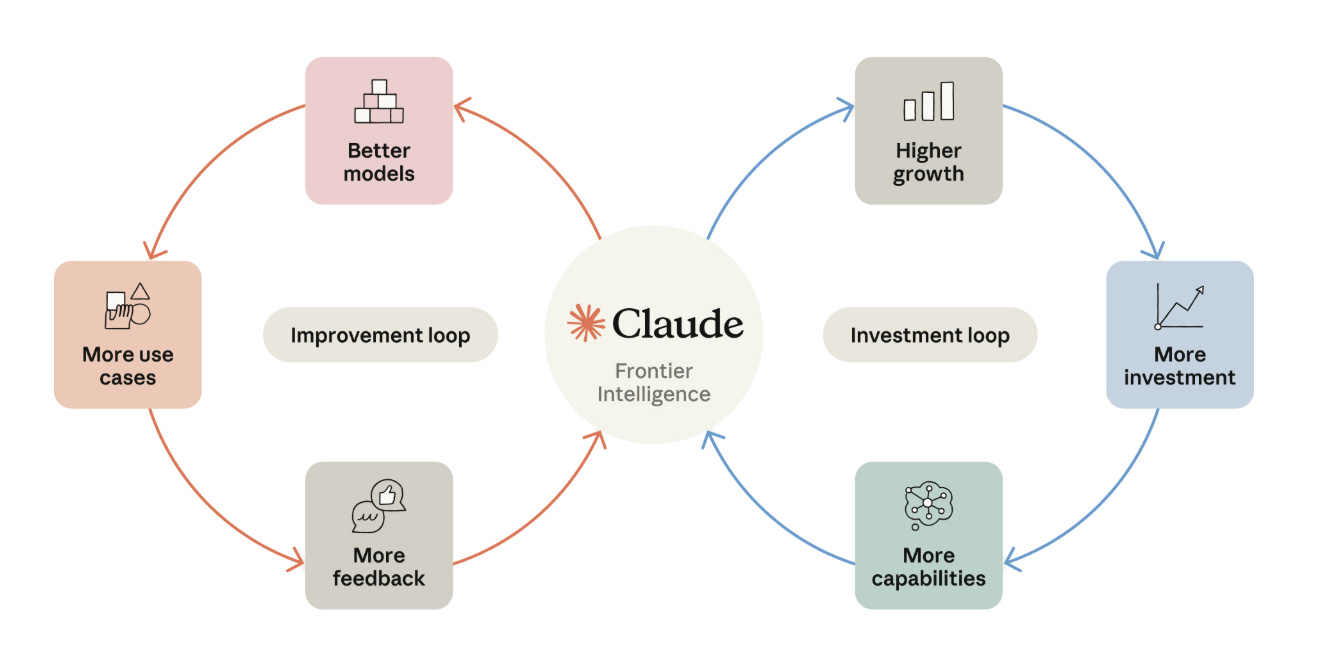
“Improvement Loop. When businesses use Claude, they help us learn more about the difficult problems, unusual cases, and specific challenges that matter to them. We use feedback from customers who use our products in their daily work to improve our models, platform, and applications. These improvements lead to wider use of our products, which gives us more feedback and starts the next round of improvement.
Investment Loop. As more businesses use Claude and spend more money on it, we earn more revenue. That money helps us pay for the computing power, research, and talented people we need to make Claude better.”
Shortages of memory chips and TSMC chip-making capacity are major risks
“The special chips needed to run AI systems, especially powerful AI processors and memory chips, are made by only a limited number of manufacturers. Making advanced chips is extremely complex and requires the most advanced manufacturing technology. Most of the world's capacity to make the most advanced chips is concentrated in Taiwan, mainly at Taiwan Semiconductor Manufacturing Company (“TSMC”). This concentration creates serious risks. These include natural disasters such as earthquakes and typhoons, as well as possible disruptions caused by political tensions between Taiwan and China.”
“Also, because demand for advanced chip manufacturing is so high, TSMC has sometimes been unable to meet all market demand. As a result, we have not always been able to get enough chips when we needed them.”
“For this reason, any restrictions or delays in the supply of advanced chips from Taiwan or TSMC would harm our business, financial condition, and operating results. In addition, high-bandwidth memory, an important part of powerful AI processors, and other high-performance memory used in computing systems are mostly made by SK hynix Inc., Samsung Electronics Co., and Micron Technology, Inc. Each company is working to increase production to meet demand. However, there is no guarantee that they will increase supply quickly enough, especially if large customers or competitors make exclusive deals or reserve most of a manufacturer's available production capacity.”
The cost of running AI models falls sharply each year
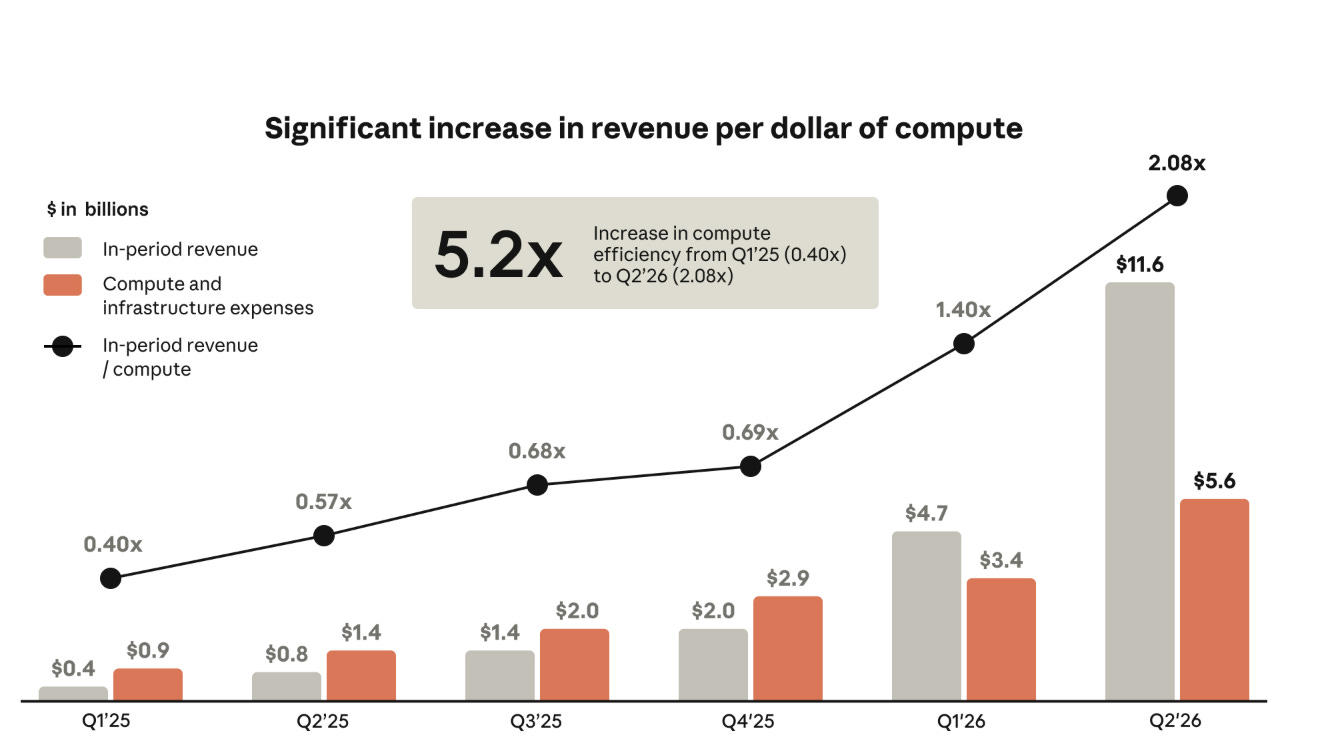
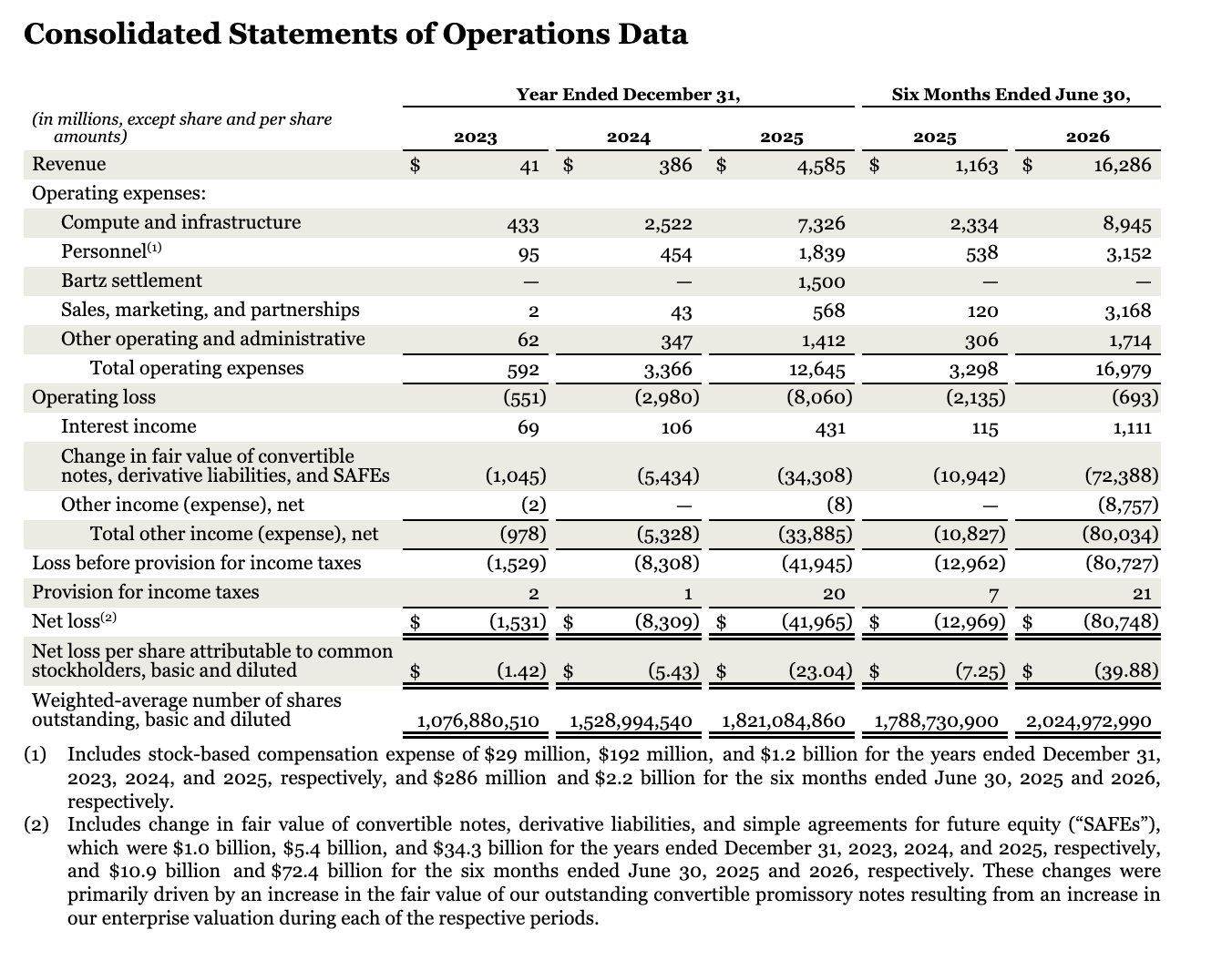
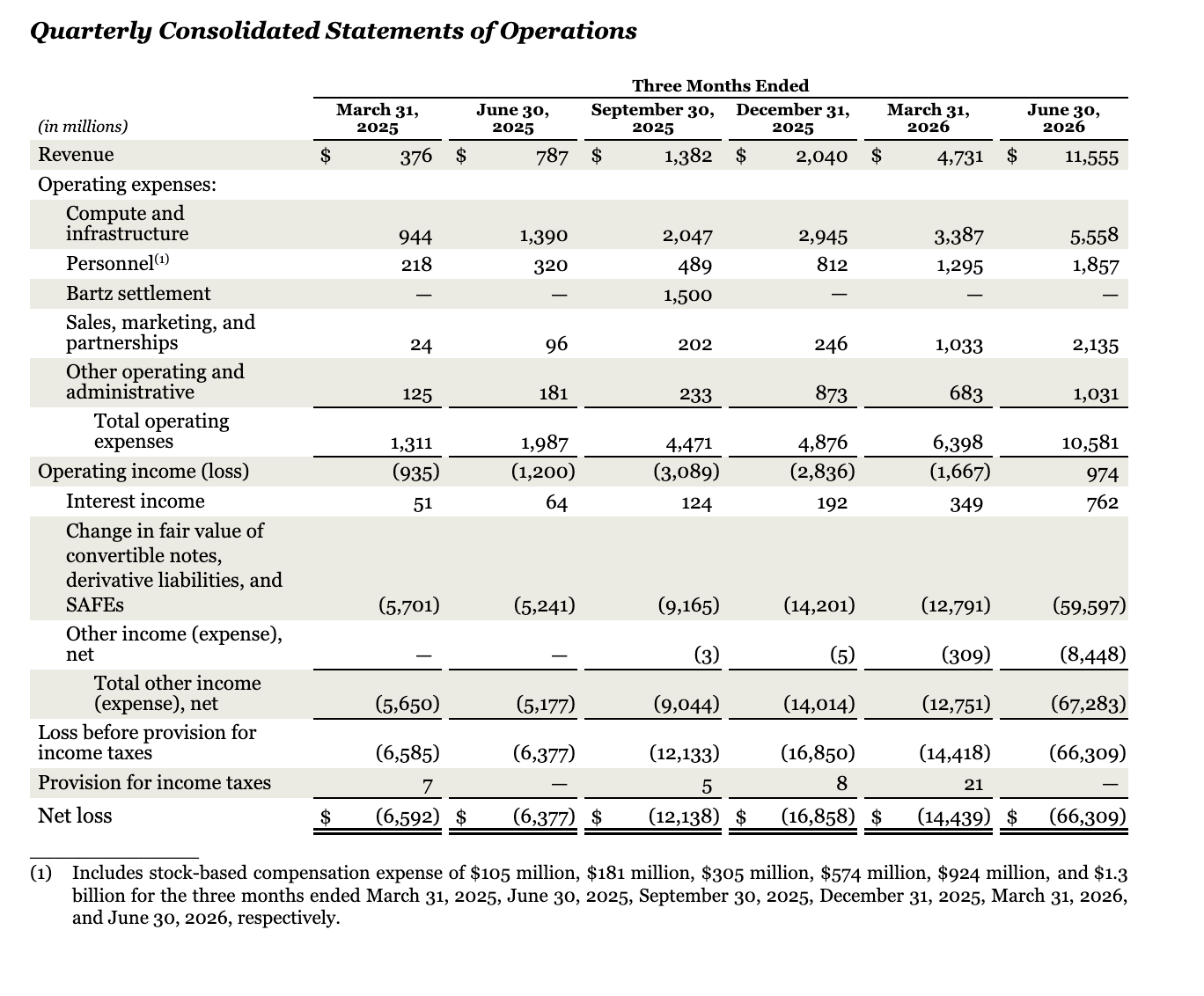
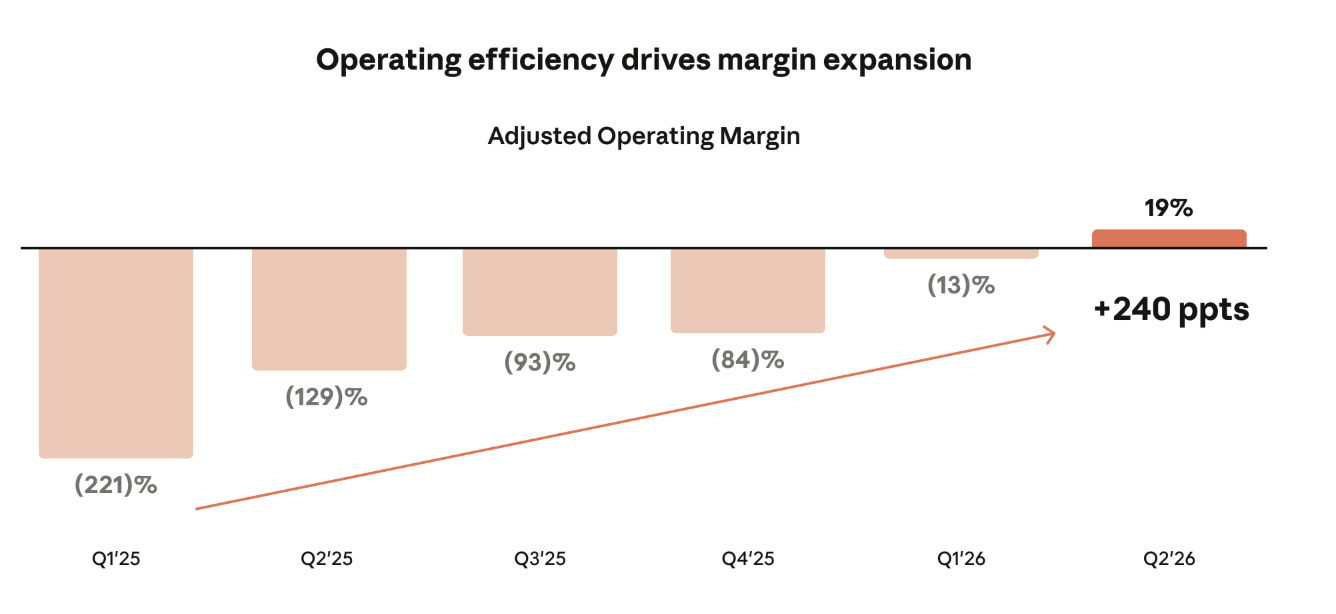
“The amount of revenue we earn for each dollar spent on computing has increased significantly, even as we have sped up our research and product development and increased our own use of Claude. For example, our revenue grew by 1,368% year over year in the three months ending June 30, 2026, while our computing and infrastructure costs grew by 300% over the same period. During this time, we continued to serve more customers, made major advances in AI with new leading models such as Mythos 5, Fable 5, and Opus 5, and launched new products, including Claude Cowork and Claude Design.”
October ARR will be added in an updated S-1 filing
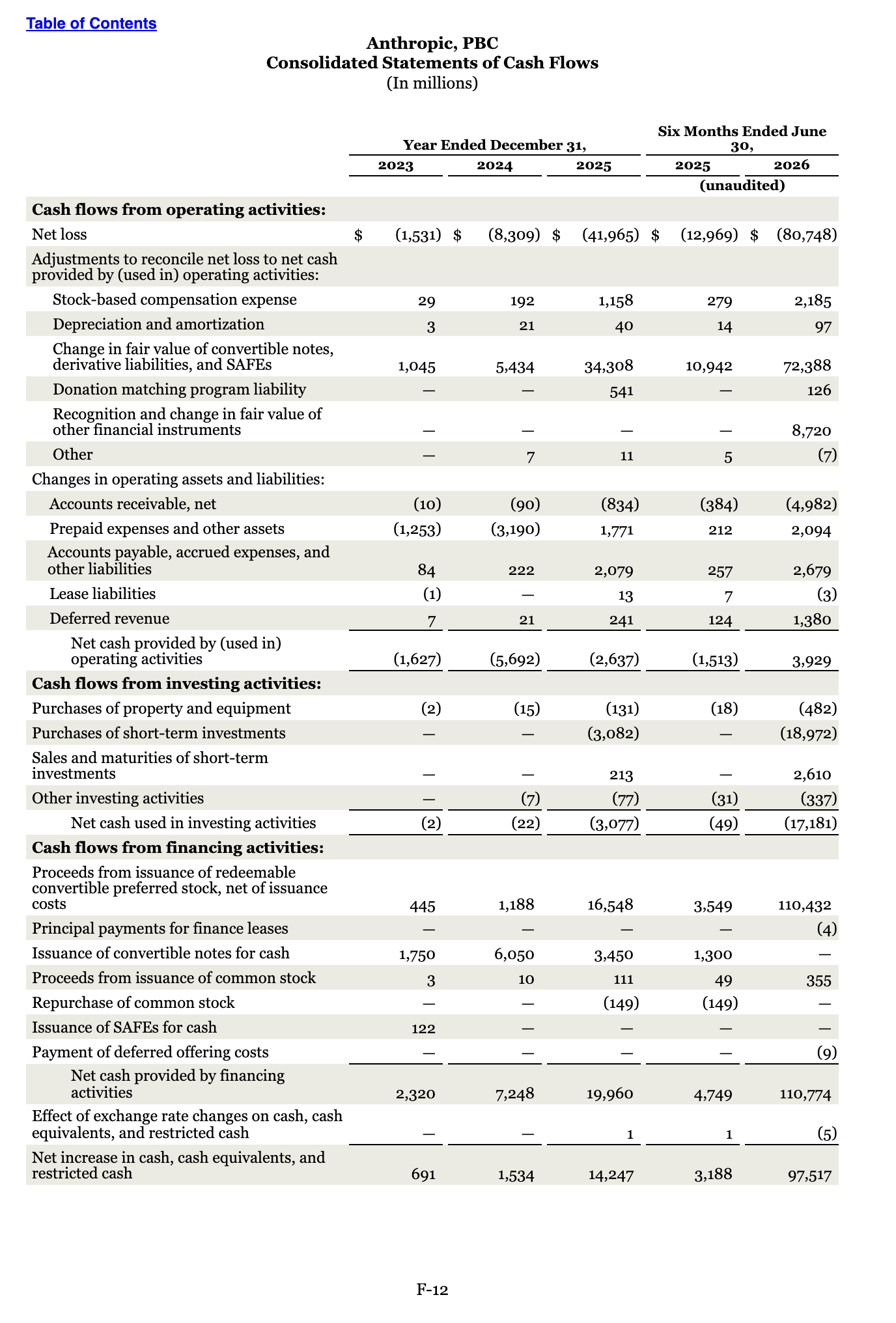
Positive cash flow from operations