
Anthropic’s IPO prospectus lays bare the contradiction at the heart of the AI boom
The company promises to help solve humanity’s hardest problems while warning that its technology could also threaten humanity itself. Its financial disclosures show how much is at stake as investment in AI reaches record levels and more people question whether the industry can sustain its spending.
21:57, 26.10.26
The word “humanity” appears 21 times in the prospectus Anthropic filed on Monday ahead of its planned Nasdaq IPO. Most mentions describe the company’s ambitious goals. In the opening lines, Anthropic says it aims to support the “responsible development of advanced AI for the long-term benefit of humanity.” Elsewhere, it promises to help with “solving humanity’s most difficult problems,” a phrase that appears throughout the document.
But some of the most striking mentions appear in a much more worrying context. In the “Risk Factors” section, on page 46, Anthropic warns that its technology could “pose a catastrophic or existential risk to humanity.”
The prospectus does more than describe the company’s finances. It shows a central conflict of the AI era: promises of huge progress alongside warnings of dangers unlike anything seen before, with enormous financial rewards available to those who benefit.
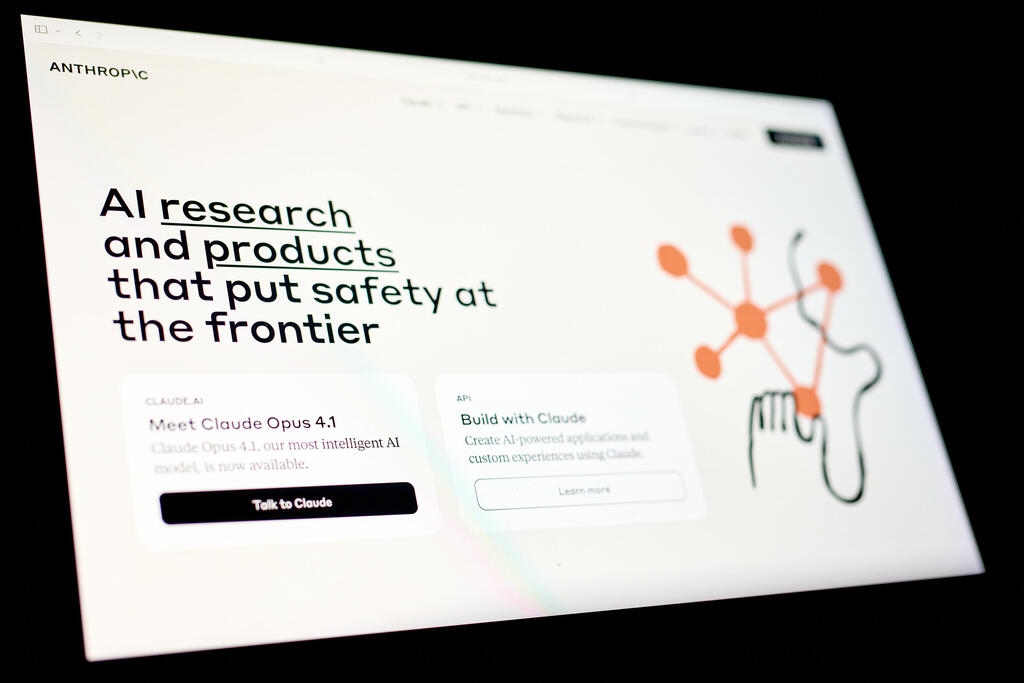
Anthropic's Claude.
(Photo: Gabby Jones/Bloomberg)
Anthropic is reportedly preparing for an IPO that could value the company at $2 trillion and raise as much as $100 billion. Such a sale could challenge Elon Musk’s SpaceX for the record of the largest public offering in history. The prospectus comes at a time when hopes for an AI revolution are high, even as worries about an AI bubble grow, especially because of the huge amounts of money being spent on computing infrastructure.
How investors react to Anthropic’s disclosures may show which of these views currently carries more weight. The figures offer an unusually detailed look at the financial health of one of the world’s most closely watched technology companies. They also raise a question facing the whole industry: can building increasingly powerful AI systems become a sustainable business?
According to the prospectus, Anthropic made $4.59 billion in revenue in 2025, up 1,087.8% from 2024. Revenue had already grown by 841.5% in 2024 compared with the year before. This rapid growth reflects rising demand for AI products, especially from business customers, who make up the core of Anthropic’s business.
The company’s customer base has grown just as quickly. Its number of business customers rose from about 1,500 at the end of 2025 to more than 11,900 by the end of September, an increase of 693.3%.
But this growth has come at a high cost. Anthropic’s biggest expense in 2025 was computing and infrastructure, which cost $7.33 billion, up 190.5%. Staff costs rose 305.1% to $1.84 billion as the company competed to hire highly sought-after AI experts. Marketing costs reached $568 million, an increase of more than 1,220%.
The company is still losing large amounts of money, although the rate at which its losses are growing tells a more complex story. In 2025, its operating loss grew 170.5% to $8.06 billion, while its net loss rose 405.1% to $41.97 billion. Both increases were slower than in 2024, when the operating loss grew 440.8% and the net loss increased 442.7%.
Revenue continued to grow rapidly in the first half of 2026. Sales jumped 1,300.3% compared with the same period a year earlier, reaching $16.29 billion. At the same time, the operating loss fell 67.5%, from $2.14 billion to $693 million. However, the net loss rose 522.6% to $80.75 billion.
Despite higher revenue and better operating results, the figures suggest that even breaking even, let alone making a steady profit, will be very difficult. Still, Anthropic says it is earning more money from the computing power it uses. In the second quarter of 2025, it earned $5.60 in revenue for every dollar it spent on computing. A year later, that amount had more than doubled to $11.60.
Yet Anthropic’s story, like the story of the wider AI industry, cannot be understood from financial reports alone. The history of technology includes many examples of engineers overcoming problems and costs that once seemed impossible to manage. Computing power may become cheaper, AI models may become more efficient, and new methods may change the cost of developing AI. But it is unclear whether these improvements will arrive quickly enough to justify today’s investments.
The bigger question is what Anthropic’s technology will mean for the world.
The prospectus opens with a statement that shows how ambitious the company is. “We believe that AI is one of the most consequential technologies in human history,” its seven founders write in a letter to investors. Few people would deny that AI is important, although people strongly disagree about whether it will greatly improve human life or expose humanity to dangers it cannot control.
Anthropic’s founders stress the possible benefits. “AI can profoundly accelerate the rate of progress in biology and medicine,” they write, before describing many ways the technology could be used.
They also recognize that AI could be used to cause terrible harm. The prospectus warns that AI could help people carry out cyberattacks and develop biological weapons. It also warns that autonomous AI systems may behave in unpredictable ways.
Other risks include authoritarian governments using AI to create more advanced surveillance systems, silence people who disagree with them, and strengthen their control. Anthropic also warns that AI could seriously disrupt the economy, changing jobs and industries faster than societies can adjust.
The prospectus spends nearly 100 pages describing risks facing the company. One of them is that AI could threaten humanity itself.
“AI could, if not developed, deployed, and operated with appropriate safeguards, oversight, and security measures, pose catastrophic or existential risks to humanity, particularly if such systems were misused, replicated, weaponised, or allowed to operate with a high degree of autonomy,” Anthropic warns.
The company says this danger could grow as AI systems become able to automate more of the research and development work used to create even more advanced models. This could lead to a cycle in which AI progress speeds up beyond researchers’ ability to test new systems and build suitable protections.
Anthropic’s conclusion from this warning is revealing. The company says these risks “could adversely affect our business.”
In other words, at least in this part of the prospectus, the company partly describes a possible threat to humanity in terms of the harm it could cause to Anthropic’s business. The warning is serious, but there is a clear gap between the scale of the danger described and the business consequences highlighted in the disclosure.
The contrast is hard to miss. A company that promises to help solve humanity’s greatest problems also warns investors that its technology could pose a catastrophic threat to humanity, while listing damage to its own business as one possible result.
Humanity has rarely faced a technological turning point like this one. AI could speed up scientific discoveries, improve living standards, and help solve problems that people have struggled with for generations. But it could also increase cyber and biological threats, create new ways for authoritarian governments to control people, and bring risks that are difficult to predict or contain.
A technology this powerful must be developed and used with extraordinary care. That means comparing its possible benefits with its risks, building protections that keep up with technical progress, and being ready to slow down when the dangers make it necessary.
Instead, the prospectus gives a glimpse of an industry caught between its own warnings and the financial incentives pushing it forward. Anthropic and its competitors recognize that AI could cause severe harm, yet they continue racing to build and release more powerful systems. The chance to earn enormous profits makes it hard to hold back: a company that slows down may worry that a competitor will move ahead and take its place in the market.
This conflict lies at the heart of the AI boom. Companies developing the technology may truly believe it can make the world a better place. But they also have strong financial reasons to keep moving forward, even while warning that the consequences could go far beyond their own finances.
Anthropic’s prospectus makes both sides of this conflict unusually clear. It asks investors to believe in AI’s extraordinary promise while disclosing risks that, by the company’s own account, could threaten humanity’s existence. The question is whether financial markets, regulators, and the companies themselves will take these warnings as seriously as they take the opportunity to make money.