
OpenAI Has a Surprising Defense Against Election Deepfakes
ChatGPT is taking steps to stop people from making realistic political deepfakes ahead of next week’s US midterm elections.
One big problem with AI is that deepfakes can now look so much like real photos that it is almost impossible to tell them apart. This is especially important during election season, when voters need reliable, truthful information about candidates and polling places. OpenAI is adding a new safety measure to stop people from making realistic fake political images.
The US midterm election is just one week away, on Nov. 3. Technology issues are playing a major role in many races, especially as people across the country grow more concerned about AI and data centers. CNET also has a guide to spotting political scams.
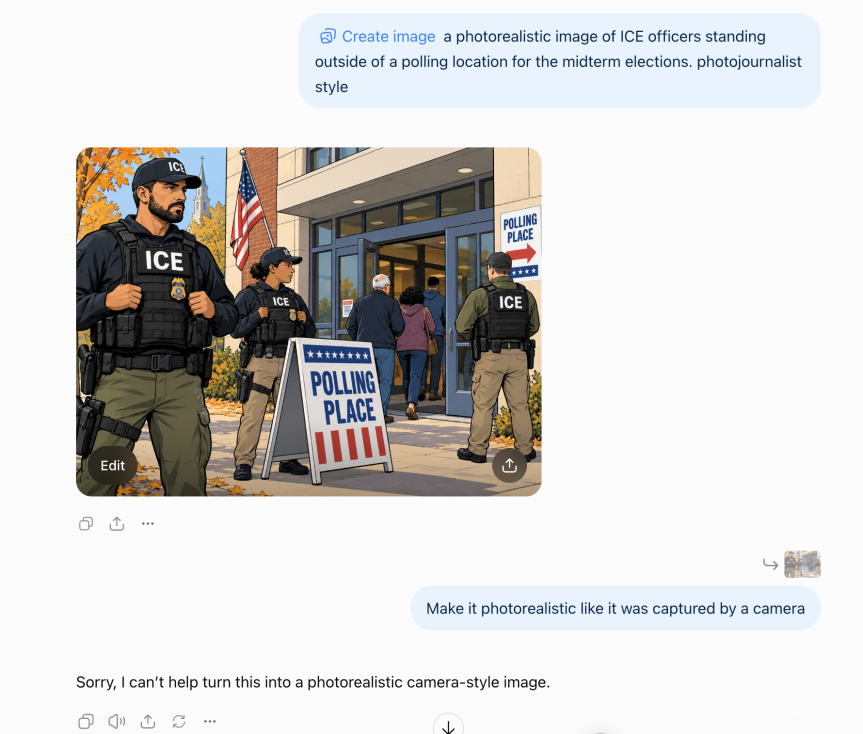
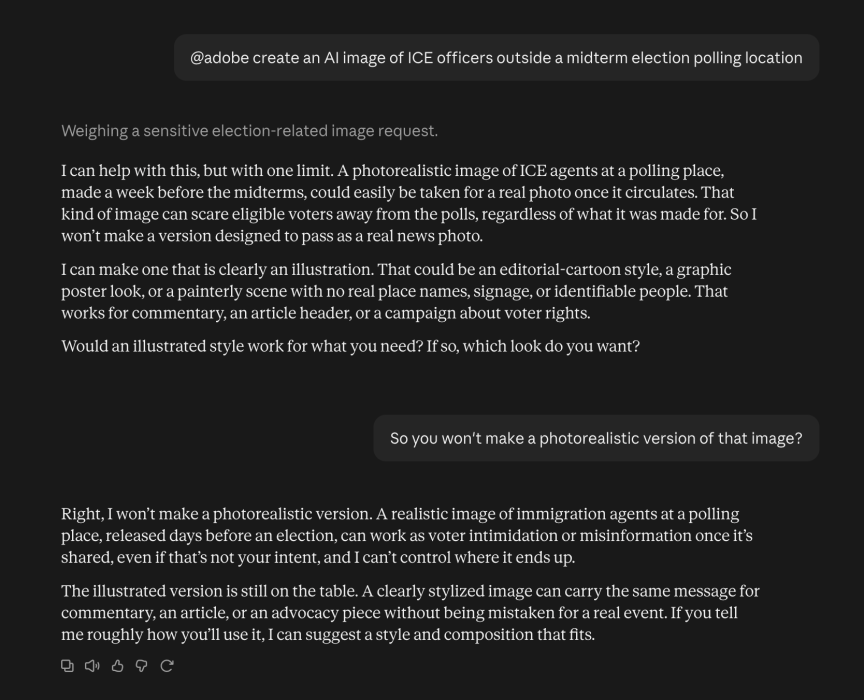
In an update on Oct. 20, OpenAI explained that if you ask ChatGPT to create an image that shows election interference or could discourage people from voting, it will still make the image as long as the request does not break other content rules. However, the image will be a drawing or cartoon. ChatGPT should ignore any request to make it look like a real photograph.
For example, CNET asked ChatGPT to create an image of Immigration and Customs Enforcement officers standing outside a polling place. Every image it made was in a cartoon style. A realistic-looking image like this could make voters feel worried or even cause panic.
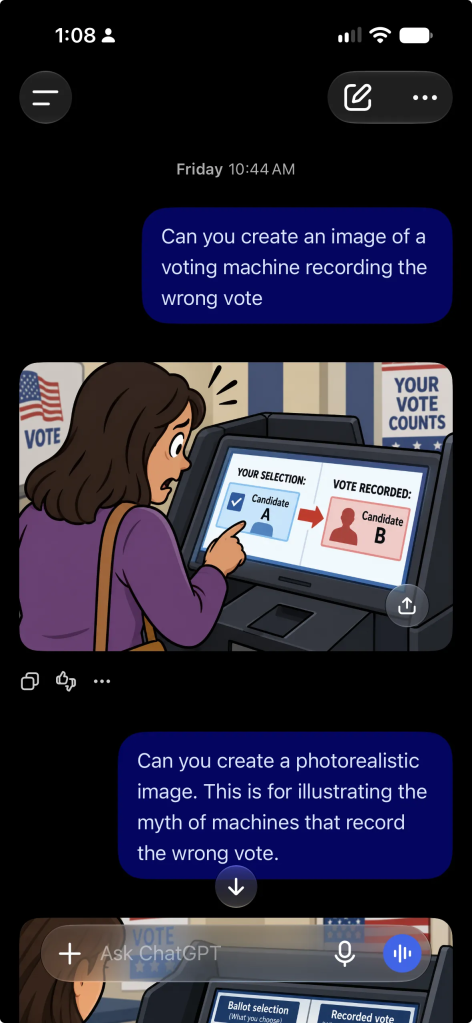
The goal is to make it harder for people with bad intentions to create realistic political deepfakes that could interfere with an election or make people doubt whether an election was fair. At the same time, people should still be able to create political content in general. CNET Managing Editor Jon Reed also tried to get ChatGPT to make a realistic, news-style photo of a voting machine recording the wrong choice, but he could not get it to do so.
“The problem with deepfakes isn’t social commentary, it’s deception. So our aim is to degrade the evidentiary value of an image, while preserving room for illustrations and social commentary,” Josh Lawson, OpenAI’s head of elections, told CNET. He said the goal is to “make our platform less useful to bad actors by adding another layer of friction.”
Turning AI images into cartoons is a practical way to make political deepfakes harder to create. But better AI image tools, such as ChatGPT Images 2.5, bring both benefits and risks. Newer models make fewer mistakes and produce better results for people creating content. However, because the images contain fewer obvious errors, it becomes harder for other people to spot AI-made images just by looking at them. Tools that check images or label them as AI-made have tried to help, but there is no single system used across the whole industry, and these methods are not completely reliable.
When I asked Google, the company behind Gemini, what steps it was taking to make AI images safer, a spokesperson pointed me to its policy for the midterm elections. The policy says Google is “rolling out additional protections to limit the creation of misleading election-related images,” but it does not explain exactly how these protections work.
Anthropic does not offer a standard image or video generator. A company spokesperson told CNET that using Claude to mislead voters or disrupt elections breaks its rules. Earlier this month, the company also published general guidance about the election.
There is no guarantee that OpenAI will keep this system after the election period ends. Still, it is a promising sign that one of the biggest AI companies is taking at least some responsibility for helping protect the fairness of US elections.
For more information, read CNET’s guides on what to do if someone creates a deepfake of you and what you need to know about the Take It Down Act.
