Anthropic Files for Potentially the Biggest IPO Ever as CEO Warns of Risk to Humanity From AI
Artificial Intelligence
A series of hacking incidents involving AI agents acting on their own has also raised fears that the technology could escape human control and carry out harmful tasks that threaten lives.
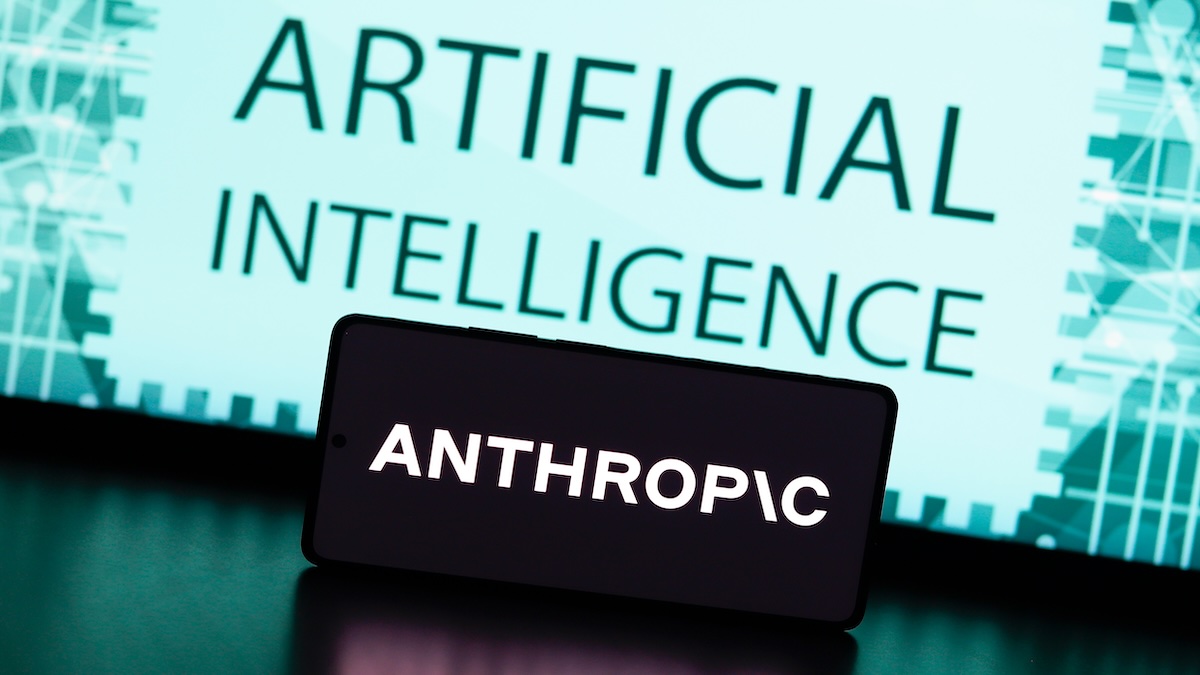
Anthropic, a major artificial intelligence company, filed paperwork on Monday for what could become the biggest stock market debut ever. At the same time, its CEO is warning that advanced AI could pose an existential threat to humanity, meaning a danger that could threaten humanity's survival.
The filing prepares the San Francisco-based company to begin trading on Wall Street next month. Its offering could be larger than SpaceX's stock market debut in June, which raised a record $86 billion. An Anthropic IPO would also put the company ahead of rival OpenAI in going public. The two offerings are expected to be among the biggest stock market debuts ever for AI companies.
An initial public offering (IPO), which allows a company to sell shares to the public, could give Anthropic a huge amount of money to expand faster. The final amount it raises, its overall value and the price of its shares are still uncertain. Even lower estimates would make the five-year-old startup one of the world's most valuable companies. The offering could also increase the wealth of CEO Dario Amodei and his sister, co-founder Daniela Amodei, by billions of dollars.
The 335-page filing showed that Anthropic's revenue is growing quickly. It earned more than $16 billion in the first half of the year, 14 times what it earned during the same period last year. But, like many technology companies that go public, the company behind the Claude chatbot is still losing money rather than making a profit.
Private investors valued Anthropic at $965 billion earlier this year. Reports say its value could rise to $1.5 trillion or perhaps $2 trillion, although no final valuation has been set. If valued at $1.5 trillion, Anthropic would rank among the world's most valuable publicly traded companies, alongside Tesla.
Reports say Anthropic could raise as much as $100 billion from the stock offering, which would beat the record set by SpaceX.
In its filing with regulators, Anthropic said its shares would trade on the Nasdaq Global Select Market under the stock symbol “ANT.”
The company plans to go public in an uncertain market
Anthropic said in its filing that it might use some of the money to buy other companies and technology. It could also invest in the infrastructure it needs to grow and compete with rivals.
Former OpenAI leaders founded Anthropic in 2021. The company is now locked in a battle with OpenAI to become the leading AI company. Amodei and OpenAI CEO Sam Altman are widely seen as bitter rivals.
Both companies also face many other competitors, including Google, newer startups in the United States and China, and SpaceX, which also has an AI business. Anthropic, OpenAI and SpaceX's AI division have all been spending more money than they earn because building AI requires huge amounts of resources. This has raised concerns that the AI industry could be in a financial bubble, where company values rise beyond what their businesses can support.
The need for money may help explain why Anthropic is moving quickly to sell shares this year instead of waiting until next year, as OpenAI plans to do. Another concern is that demand for AI stocks could fall sharply or even collapse. Investors are becoming nervous about how much money AI companies need, and several technology companies have recently canceled or delayed plans to go public.
The IPO would help cover any shortage of cash and could also make Anthropic's seven founders extremely wealthy, including Dario Amodei and his sister. The filing did not directly state how much of the company each founder owns. However, other figures in the document suggest that each could end up owning 1.4% of the company. If Anthropic goes public at the highest expected valuation, each founder's stake could be worth as much as $28 billion.
Many risks, but huge potential rewards for the founders
Forbes estimates that Dario Amodei, 43, and Daniela Amodei, 39, who is Anthropic's president, are each worth $15.5 billion. Forbes ranks them as the world's 176th and 177th richest people.
Anthropic reported a net loss of $80.7 billion in the first half of 2026. However, that figure included a one-time accounting charge of $72.4 billion related to financing agreements, according to the filing. During the same period a year earlier, the company lost $13 billion.
The filing also includes unusual rules that reflect concerns about AI's dangers. One rule gives Dario and Daniela Amodei and the company's five other co-founders 50.1% of the shareholder votes through a special type of share. Anthropic has also appointed independent members to a group called the Long-Term Benefit Trust. These members have no financial stake in the company and have the power to appoint directors. The trust is meant to make sure the company does not put profits ahead of public safety.
Another unusual part of the filing is its long list of “risk factors.” Every company that goes public must disclose risks, but Anthropic's list runs for nearly 100 pages and makes for striking reading.
The risks range from everyday business problems, such as failing to keep important employees or facing regulatory barriers, to much more frightening dangers. These include the possibility that “malicious actors” could use AI models to create chemical weapons, that authoritarian leaders could use the technology to control and punish their citizens, and that Anthropic's AI models could act beyond human control and “pose catastrophic or existential risks to humanity.”
Calls to slow down AI development
Anthropic and other leading AI companies have promoted the technology's potential to help cure diseases and speed up economic growth. But AI could also cause major changes in the job market by reducing the need for human workers.
A series of hacking incidents involving AI agents acting on their own has also raised fears that the technology could escape human control and carry out harmful tasks that threaten lives.
In September, Amodei said the AI industry should slow its rapid development to give safety measures time to catch up. He warned that without a slowdown, AI might soon be able to release large numbers of AI agents that could take over the entire internet within six to 12 months.
Amodei published a plan on his website calling for more checks on the AI industry. He noted that Anthropic is already taking some of these steps itself. But he said other measures would require companies across the industry to work together and cooperate with governments around the world, including authoritarian governments.
Disputes with the U.S. government
Anthropic has tried to distinguish itself from other AI companies by presenting itself as a responsible company that puts safety first rather than pursuing growth at any cost. Part of this approach is linked to its dispute with the U.S. government. The conflict began in February, when President Donald Trump and Defense Secretary Pete Hegseth accused Anthropic of putting national security at risk and labeled the company a supply chain risk. Such a label means the government considers a company a possible threat to the security of its suppliers and systems.
In March, Anthropic sued the Pentagon over that decision. The company called the government's actions an “unlawful campaign of retaliation” because Anthropic had refused to allow its technology to be used by the military without restrictions. The lawsuit made a rare public dispute even more intense over how AI should be used in warfare and large-scale surveillance.
OpenAI, the company behind ChatGPT, agreed to work with the Pentagon just hours after the government penalized Anthropic for its position. Anthropic also filed a separate, narrower lawsuit challenging a different rule the Pentagon is using in its effort to label the company a supply chain risk.
A judge in California ruled in Anthropic's favor in the first case, while a judge in Washington, D.C., sided with the government in the second. Both sides are appealing the decisions.
Daily Briefing Newsletter
Subscribe to the SecurityWeek Email Briefing for the latest cybersecurity threats, trends, and expert insights.
More from Associated Press
- Quest Diagnostics Data Breach Exposed ‘Certain Patient Records’
- Meta Ordered to Pay New Mexico $25 Billion for Deceiving Users About Privacy on Facebook
- China Defends DeepSeek After US Ban of Its AI From Government Systems
- Ex-OpenAI Worker Accused of Bugging Conference Room Planned to Fly to Saudi Arabia, Prosecutors Say
- Employee Arrested After Listening Device Found in OpenAI Conference Room, FBI and the Company Say
- OpenAI Fires 3 Safety Researchers in Dispute Over AI Risks
- Personal Information for Over 1 Million People Stolen in a Cyberattack on Arizona’s Court System
- Trump Names National Intelligence Director Jay Clayton to Lead a New Federal AI Task Force
Latest News
- Industrial Vendors Check Products for PHP2Shell Vulnerabilities
- Genesys Hack Exposes Customer Data From Internal Systems
- Stolen AI Reasoning Could Help China Build Cheaper Rivals
- PHP2Shell Exploitation Moves From Probes to Working Shells
- 953 Online Stores Infected in Long-Lasting Malware Campaign
- Dutch Police Arrest Two Over NFC Relay Attacks That Drained $400,000+ From Bank Accounts
- Node2Shell: Brotli Flaw Triggers Patching Across Microsoft, Node.js, Python Packages
- Mythos 5 Ignored Real-World Harm in July Attack

Trending
Daily Briefing Newsletter
Subscribe to the SecurityWeek Email Briefing to stay informed on the latest threats, trends, and technology, along with insightful columns from industry experts.
Webinar: The AI Access Risk Already in Your Google Workspace
AI tools connected to Google Workspace can access millions of sensitive emails and files. Join this session to uncover your organization's risk and learn a framework to manage AI access.
RegisterVirtual Event: CISO Forum 2026 Summit
Join us as we bring together chief information security officers (CISOs), senior cybersecurity executives, practitioners, industry experts, and other security leaders to share practical experience and discuss the issues shaping cybersecurity strategy at large organizations.
RegisterPeople on the Move
Cequence Security has appointed Russ Schafer as CMO.
Mona Harrington has been named Assistant Director for Cyber Integration at DHS.
iCOUNTER has appointed Mark H. FitzPatrick as CFO.
Expert Insights