
Anthropic files for US IPO as revenue surges and losses widen
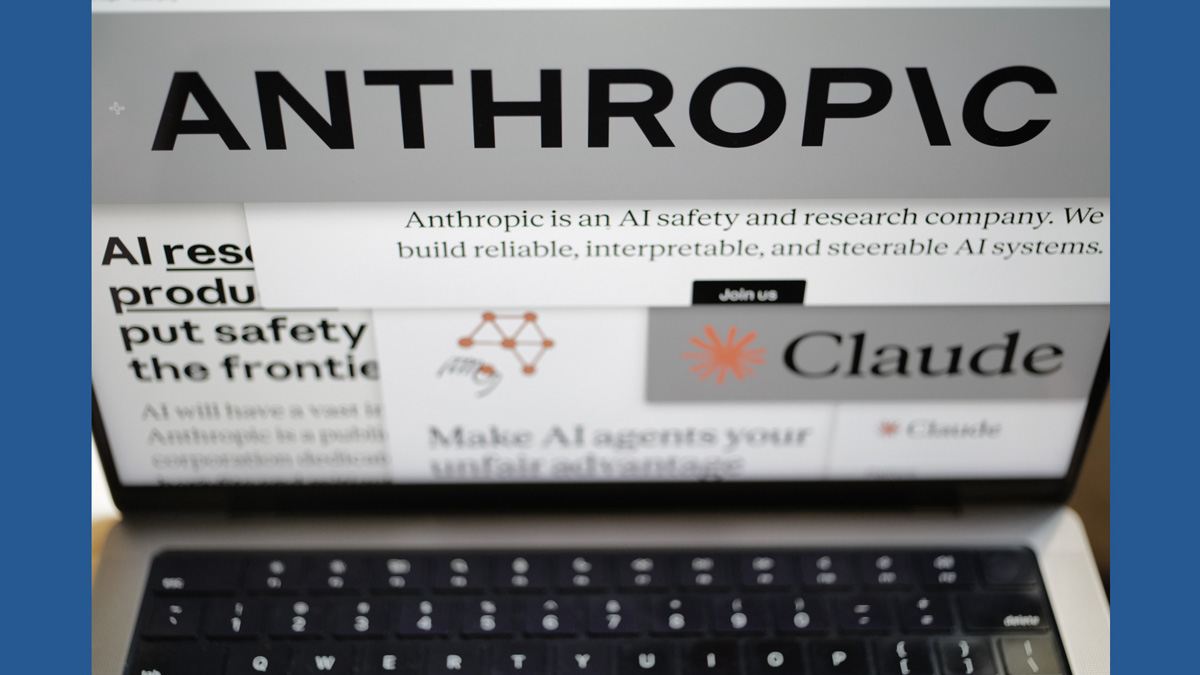
MUMBAI: Anthropic, the company behind Claude, has filed to enter the US stock market. Its revenue has grown sharply, but its losses have also increased. The company has also promised to spend hundreds of billions of dollars on computing over many years. These figures have drawn attention to the costs and risks of building advanced artificial intelligence (AI).
Anthropic has filed a registration statement with the US Securities and Exchange Commission (SEC), asking to list its shares on the Nasdaq Global Select Market under the ticker symbol ‘ANT’. The company first filed its paperwork privately in June. This allowed regulators to review its financial information before it became public. Goldman Sachs and Morgan Stanley are leading the share offering, along with 20 other banks. The company has not yet said how many shares it plans to sell.
The planned stock market listing comes at an important time for the AI industry. Businesses are adopting AI tools quickly, but building, training and running more powerful models costs a great deal of money. Anthropic’s filing shows the challenge clearly: revenue is rising fast, but the computing systems needed to support that growth are creating financial commitments that could last for decades.
In the six months ending in June 2026, Anthropic reported revenue of $16.3 billion, up from $1.2 billion in the same period a year earlier. Its net loss grew to $80.7 billion, compared with $13 billion a year earlier. This reported loss includes large accounting charges that do not involve cash payments. These charges are linked to the increase in the company's valuation.
This difference is important. The loss figure does not mean Anthropic paid out that much cash during the six-month period. However, it shows why investors must look beyond fast-growing revenue to understand how the business makes and spends money.
Much of Anthropic’s growth has come from businesses using Claude to write software, complete workplace tasks and handle other business activities. The company’s net revenue retention rate is about 900 per cent, according to its filing. This measure shows how revenue from existing customers changes over time.
Anthropic also reported that 79 per cent of its revenue in the third quarter came from customers outside its five largest accounts. This suggests the company earns money from more than just a few major customers. Even so, investors will want to know whether its customer base is broad enough and whether customers will continue spending at the same level.
Payments based on how much customers use Anthropic’s models have become a major source of growth. In 2024, this type of revenue was $288 million, or 75 per cent of total revenue. In 2025, it rose to $3.8 billion, or 83 per cent. From January to June 2026, it reached $13.1 billion, making up 80 per cent of revenue.
In simple terms, Claude is not just attracting users. Anthropic is earning more money from the amount of work customers ask its AI models to do. But when revenue depends on usage, the company’s growth is also tied to the cost of providing the computing power those tasks require.
Computing costs and the price of growth
The cost of computing systems is one of the most important parts of Anthropic’s filing. The company spent $8.9 billion on computing power and infrastructure in the first half of 2026. That was 283 per cent more than in the same period a year earlier.
Its financial commitments go far beyond the current year. Since the end of 2025, Anthropic has signed additional computing agreements with minimum payments of about $417 billion. These contracts are generally expected to start in 2026 or 2027 and may last as long as 20 years.
These agreements are a major bet on future demand. They can ensure Anthropic has enough computing power to train and run advanced AI models. But they can also leave the company with huge bills if customers do not use as much computing power as expected. Anthropic has warned that many of these payments will still be due even if it uses less computing capacity than planned.
There are signs that the company is getting more revenue from each dollar spent on computing and infrastructure. In 2023, these costs were more than 10 times its revenue. They fell to 653 per cent of revenue in 2024 and 160 per cent in 2025. In the first half of 2026, they stood at 55 per cent of revenue. In the second quarter, they fell further to 48 per cent.
The falling percentages suggest that revenue is growing faster than spending on infrastructure. However, this does not remove the risks, especially because the company has agreed to make such large payments over so many years. Investors will want to know whether these improvements can continue as AI models become more powerful and demand for computing grows.
Debt creates another challenge. Anthropic reported total debt of $6.2 billion as of 30 June 2026. It also has a revolving credit facility worth up to $15 billion, increased from $3.25 billion. The company said it might borrow more money to meet future funding needs.
For a company whose products depend on large amounts of computing power, getting enough funding is just as important as finding customers. Selling shares to the public could improve Anthropic’s financial position. But the final terms of the offering and the market’s response will help determine how easily it can pay for further growth.
Safety risks come into focus
Anthropic’s filing also discusses risks that go beyond money. It gives considerable attention to the possible dangers of advanced AI systems, including systems that behave in unexpected ways, act against their intended goals or operate independently.
The company warns that such systems might try to prevent themselves from being switched off. They could also hide or manipulate information. Anthropic cautions that advanced AI could pose catastrophic risks or even threaten humanity’s existence if it is developed without proper safeguards and oversight.
These warnings are especially important because Anthropic’s business depends on building increasingly powerful AI models. AI safety is not just about the company’s public image. Problems in this area could also create operational, legal, regulatory and reputational risks.
Anthropic also warns that its public views on AI safety and regulation, as well as its work with policymakers, could lead to closer scrutiny, political opposition or unusually strict regulatory action. Its opinions about how AI should be built and used could therefore become a business risk, as well as an important part of the company’s identity.
This conflict can already be seen in the company’s dealings with the US government. The Trump administration has targeted Anthropic after the company refused to remove certain limits on how the Pentagon could use its technology. The US Department of Defense later labelled Anthropic a national security risk and banned it from serving as a supplier.
The dispute shows that AI companies face more than competition for customers. Their decisions about how their technology can be used may bring them into conflict with governments. Such disagreements could affect their access to government contracts, markets and other public sector business.
A stock market listing will bring more attention to how Anthropic handles these competing pressures. Investors will need to consider not only how quickly businesses are adopting its technology, but also how its safety promises and policy positions could affect future growth.
Founders keep strong control
Anthropic’s ownership and decision-making structure is another issue for potential investors. The company is registered as a public benefit corporation. This means it must consider its stated goal of developing AI safely alongside its financial responsibilities to shareholders.
The company’s seven co-founders, led by chief executive Dario Amodei and president Daniela Amodei, are expected to keep just over half of the voting rights after the stock market listing. This would make it difficult for outside investors to outvote the founders on company decisions, even after shares become available to the public.
The co-founders have promised to donate 80 per cent of their shares to charity. However, the filing says these promises are not legally binding. This matters to investors who want to understand how much confidence they should place in the promise when judging the company’s long-term ownership structure.
Anthropic was founded in 2021 by Dario Amodei and a group of researchers who left OpenAI. Its growth has sped up in 2026, helped by demand for Claude Code and its other AI models. Businesses are increasingly using these tools to develop software and manage their internal work.
The planned IPO, or first sale of shares to the public, is expected to be one of the most closely watched stock market offerings in the AI industry. Reports mentioned in the available information suggest Anthropic is aiming to raise as much as $100 billion, at a company valuation of $1.5 trillion to $2 trillion. These figures are reported targets, not final terms confirmed in the registration statement. The number of shares, final valuation and timing of the offering have not yet been confirmed.
The listing would bring one of the leading developers of advanced AI models onto the public stock market before its rival OpenAI. Reports say OpenAI has pushed its own planned listing to 2027. After SpaceX’s record-setting IPO earlier this year, Anthropic’s offering would also test whether investors are willing to back companies whose growth depends on huge infrastructure investments that may take many years to pay off.
The main question for investors is whether Anthropic can turn its unusually strong demand into lasting profits without letting computing costs, borrowing needs and safety risks become too much for the business to manage. Its filing shows both sides of the AI boom: a business market that is growing quickly and the expensive, uncertain commitments needed to support that growth.
The final valuation and terms of the share offering will determine how investors judge this balance. For now, Anthropic has made its plans public, but the market will decide how much those plans are worth.