
Anthropic IPO Filing: $417B Compute Deal [2026]
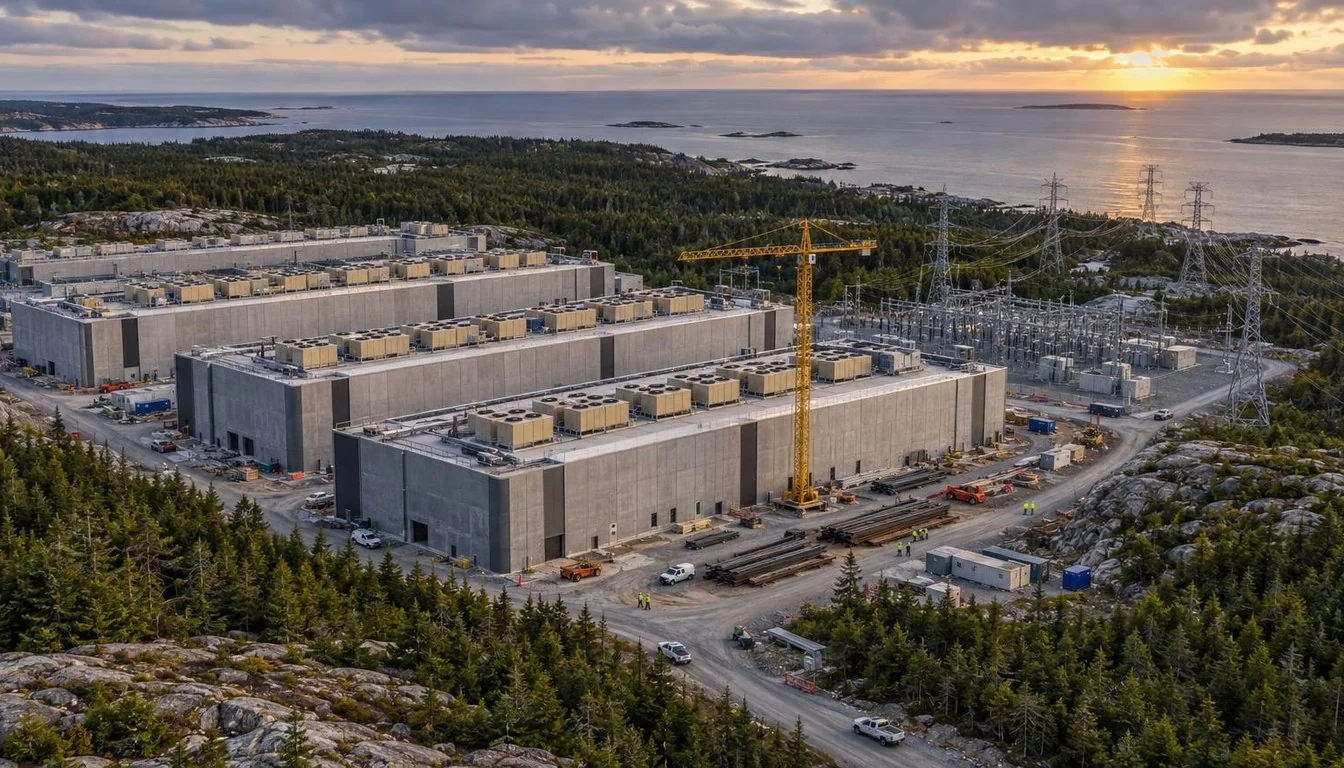
Anthropic PBC has listed Canadian copyright lawsuits and the huge cost of data centres among its business risks, according to Yahoo Finance Canada’s coverage of the IPO filing. The document names four Canadian publishers as plaintiffs, mentions class actions in British Columbia and Quebec, and warns that losing these cases could force the company to change how it builds its AI models.
The same document says Anthropic’s growth depends on access to “enormous and increasing quantities” of computing power from data centres. It also confirms that the company has signed a lease at a planned facility in Nova Scotia. Reports value the project at $10 billion. For people building products with Claude in Canada, the filing puts two major challenges side by side: legal disputes and the physical resources needed to run AI.
The planned Nova Scotia site was already facing opposition before the filing appeared. Our earlier report on the protest over EverWind’s $10B AI data centre showed growing local resistance. Anthropic’s own risk disclosures now treat this kind of opposition as a possible financial risk. This article explains what the filing says, what it leaves unanswered, and what Canadian readers should watch next.
What Anthropic’s IPO Filing Says About Canada
Anthropic is preparing for an initial public offering, or IPO. This is when a company first offers its shares for sale to the public. Before shares can be traded, the company must publish a filing that explains important business risks. Several news outlets covered the document around the same time. The Globe and Mail described the company as preparing for a potentially huge stock-market listing while discussing AI’s benefits and risks for humanity. CNBC published live updates on the S-1 filing on October 26, and The Register published its own report that day.
Canada appears in two main parts of the document. First, the legal section lists Canadian cases involving the Copyright Act. Second, the infrastructure section says Anthropic has signed leases for data-centre capacity in Australia and Canada. The company is also seeking capacity in more countries outside the United States.
Neither issue is just a headline number on its own. Together, they show that Anthropic needs to deal with Canadian content rights and courts while securing Canadian electricity and computing facilities to keep growing. This is different from a year ago, when much of the Canadian discussion about Anthropic focused on prices and access to its models.
The Canadian Lawsuits Named in the Filing
Postmedia Network Canada Corp., The Globe and Mail Inc., Torstar Corp. and other Canadian publishers sued Anthropic in Ontario. They allege that the company broke copyright law by using their content to train AI models. La Presse Inc. filed a similar copyright lawsuit in July. Two class actions are also underway: one in British Columbia on behalf of Canadian authors and another in Quebec on behalf of authors in that province. Both claim that Anthropic violated Canada’s Copyright Act.
| Proceeding | Who brought it | Core allegation | Source detail |
|---|---|---|---|
| Ontario lawsuit | Postmedia Network Canada Corp., The Globe and Mail Inc., Torstar Corp., other publishers | Copyright infringement through use of content to train AI models | Disclosed in IPO filing |
| La Presse lawsuit | La Presse Inc. | Similar copyright-infringement claim | Filed in July |
| British Columbia class action | Canadian authors | Violations of the Copyright Act | Disclosed in IPO filing |
| Quebec class action | Authors in Quebec | Violations of the Copyright Act | Disclosed in IPO filing |
The reports we reviewed do not give a dollar amount for possible damages. Any estimate of how much Anthropic might have to pay is speculation until a court or the company provides more information. The filing does explain what could happen to the company’s operations if it loses. At this stage, these possible changes may matter more to investors than an estimated amount of damages.
Why Copyright Claims Could Force Retraining
Anthropic’s filing explains how losing these cases could affect its products. According to Yahoo Finance Canada, the company says, “Such claims could require us to limit functionality, segregate data or retrain models, and could adversely affect our business, financial condition and results of operations.” This statement names three possible actions the company might have to take and warns that they could harm its business.
Limiting functionality
A court order or settlement could limit what Claude is allowed to do with certain material. For example, it might face restrictions on copying or summarizing protected text. The filing does not say which features could be affected, so naming specific features would be guesswork.
Separating data and retraining models
Separating data means keeping disputed content apart from the rest of the material used to train an AI model. Retraining means building the model again without that content. Both tasks require computing power, which is one of the hardest resources for Anthropic to secure. This connection between the legal and infrastructure sections is one of the most important points in the filing. Losing a copyright case might mean more than paying money. Anthropic could also have to use scarce computing power to repeat work it has already done.
Analysis: Large business customers and investors are likely to pay close attention to the words “retrain models.” Training an advanced AI model is expensive, not a small extra cost. The computing commitments described later in the filing show how large this expense already is.
How Anthropic Plans to Defend Itself
Anthropic has clearly stated its position. According to Yahoo Finance Canada, the filing says, “Anthropic disputes the allegations and intends to vigorously defend itself in these matters.” This is standard wording for a company facing lawsuits. It does not mean Anthropic admits wrongdoing, and it does not suggest that the company is discussing a settlement.
The Canadian cases are part of a wider trend. Publishers and authors in several countries have challenged AI companies over the data used to train their models. Canadian groups have also started challenging platforms over the rules for collecting online content. Our report on two Canadian groups pressing Meta on AI scraping terms shows a similar pattern involving another company. The Ontario plaintiffs are not an isolated group. Their cases are part of a wider Canadian effort to decide who should be paid when written content is used to train AI systems.
Companies defending cases like these usually take two approaches: making legal arguments in court and discussing possible business agreements outside court. Anthropic’s filing mentions the court cases but does not discuss licensing negotiations. It does not say whether such talks are happening, so we cannot assume they are.
The $417 Billion Compute Bill
Reports on the filing put Anthropic’s computing commitments at about $417 billion. This figure covers data centres, the equipment inside them, and cloud services. The agreements are due to begin between 2026 and 2027, and their terms range from less than one year to as long as 20 years.
| Item | Detail reported |
|---|---|
| Total compute obligations | About $417 billion |
| What it covers | Data centres, equipment inside them, cloud services |
| Start window | 2026 to 2027 |
| Contract length | Under one year to as long as 20 years |
| International leases | Australia and Canada, more jurisdictions being pursued |
| Canadian site | EverWind Fuels LLC planned facility, Nova Scotia (reported $10-billion project) |
The Verge pointed out unusual details in its article on five unusual details from Anthropic’s IPO filing. The size of these commitments is important when reading the document. A 20-year contract could last longer than the equipment it covers, since hardware may be replaced every few years. Such a contract is a bet on future demand as well as on technology.
Anthropic acknowledges this risk. CoStar reported this passage from the filing: “The capital-intensive and long-term nature of leasing and equipping data center capacity creates financial risk, as large upfront investments and long-term payment commitments must be made months before facilities become fully operational.” The company also warns that if its needs change, it could end up with infrastructure that is “poorly suited to our actual needs” as AI hardware and training methods change.
EverWind and the Nova Scotia Lease
The Canadian part of Anthropic’s computing plans involves a planned facility in Nova Scotia from EverWind Fuels LLC. The project has been described as worth $10 billion, and Anthropic has signed an agreement to lease capacity there. The word “planned” matters. The facility is not described as operating, and Anthropic’s warning about paying months before facilities are ready applies directly to this kind of project.
For Nova Scotia, the lease could make Anthropic a major customer for the facility. For Anthropic, it offers a way to spread its infrastructure across different locations. The filing says that building outside the United States would help reduce “concentration risks associated with operating a significant portion of our compute infrastructure in the United States.” Having computing capacity in a Canadian province directly addresses that concern.
The deal also raises a question the filing cannot answer: how will local communities and politicians respond as the $10-billion AI facility gets closer to construction? Canadian reports have already shown communities debating similar projects, from a council investigation in Toronto to pressure over land claims in other areas. Anthropic’s lease is now part of that debate, whether the company wants it to be or not.
Why Anthropic Wants Compute Outside the United States
Spreading infrastructure across countries is not only about politics. It also reduces the risk of depending too heavily on one place. A company that runs much of its computing in one country faces that country’s electricity limits, delays in construction permits, and changes in regulations. Anthropic names this risk in its filing and says international facilities could help reduce it.
Electricity is one of the biggest limits. In a passage highlighted by The Verge in its coverage of the filing’s energy and climate issues, Anthropic writes: “Competition for access to electrical supply and data center locations with adequate power availability is intense.”
Our own mapping work shows a related pattern in Canada. The article on Canada’s AI data centre map, where Alberta takes 90% shows how heavily Canadian data-centre development is concentrated in Alberta. Anthropic’s plans for Nova Scotia could spread its infrastructure farther east. That would help the company avoid depending too much on one location.
Moratorium Risk for Data Centre Construction
The filing warns that proposed or existing pauses on new data-centre construction could “delay or prevent the construction or expansion of facilities on which we depend”. The reports we reviewed provide only this part of the statement. The basic meaning is clear: if a government pauses construction approvals, Anthropic’s schedule could be delayed even while it still has to make payments.
This risk is not just theoretical in Canada. Our report on how BC Greens demanded an AI data centre veto before the Oct 24 vote shows that calls for a pause reached the provincial legislature this month. The Toronto story about a council investigation into a 56 MW AI data centre shows similar pressure at the city level.
Analysis: Anthropic’s disclosure brings these local debates to the attention of a new group of people. Investors who would not normally follow city council meetings now have a reason to do so. For Canadian officials, this has both advantages and disadvantages. The filing shows that the investment is real, but it also gives opponents a clear example of what is at stake.
Risk Factors Side by Side
| Risk area | What the filing flags | What Canadian readers should watch |
|---|---|---|
| Copyright litigation | Could require limiting functionality, segregating data or retraining models | Rulings or settlements in Ontario, Quebec and BC proceedings |
| Compute commitments | About $417 billion, starting 2026 to 2027, up to 20 years | Whether demand keeps pace with fixed payments |
| Infrastructure mismatch | Leased capacity may become poorly suited as hardware changes | Hardware cycles at planned sites like Nova Scotia |
| Power and siting | Competition for electricity and locations is intense | Provincial grid decisions and local approvals |
| Moratoriums | Could delay or prevent construction or expansion | Votes and council actions on new data centres |
| US concentration | International sites reduce reliance on US infrastructure | Additional leases in Canada and elsewhere |
Market Impact for Investors and Enterprise Buyers
An IPO filing is a document meant to help a company sell shares, but it must also explain the company’s legal and business risks. Securities laws require these disclosures, and investors read them with that purpose in mind. Even so, the details here shift the main question from whether Anthropic can grow to how much that growth will cost and who could slow it down.
For business customers, the main concern is whether their services will remain reliable and consistent. If a court forces Anthropic to retrain a model, could the product a customer pays for change? The filing raises this possibility but does not answer the question. Banks, insurance companies and public agencies should ask AI providers how their contracts deal with model changes caused by court decisions.
For investors, the $417 billion figure puts the other risks into perspective. Commitments of this size mean that growing revenue is essential, not simply desirable. Our earlier article on OpenAI’s $30B ask and the Anthropic $600B figure examined the same trend toward heavy spending from the funding side. The IPO filing shows how that trend appears in formal company disclosures.
Competitive Comparison: Everyone Is Buying Compute
Anthropic is not the only company trying to secure electricity and land for AI. Recent reports on this site describe Meta seeking $95B in equity for AI, with $35B needed now, and Microsoft stepping back from Nscale’s £2bn UK AI data centre. The pattern is similar across the industry. Every major player must balance the need to move quickly against the risks of making large, long-term commitments.
What makes Anthropic’s filing different is how much detail it gives about Canada. It connects the company’s legal risks and infrastructure plans to the same country in one document. Most competitors have not published comparable information, so public sources do not allow a direct comparison of their Canadian risks. Anyone claiming otherwise is making assumptions about information that is not available.
The research behind this report also says the filing links Anthropic’s data-centre needs to its effort to compete with OpenAI and Alphabet. This helps explain why the company is signing long-term contracts. Access to computing power can give a company a lasting advantage, and Anthropic is spending money to secure that access early.
Historical Context: From Scraping Complaints to a Risk Factor
Disputes about AI training data began with complaints and open letters. As AI products became more valuable, those disputes turned into lawsuits. Now they appear in documents companies must publish before selling shares to the public. This change shows how much the issue has grown over the past few years. Each stage has raised the stakes for the next.
Canadian institutions have been making changes at the same time. Library and Archives Canada changed its ISBN rules, as explained in our report that ISBNs now require human authors, with 3 AI uses allowed. That policy is separate from the Anthropic lawsuits, but it shows Canadian institutions setting rules about authorship while courts consider claims from writers.
The change in infrastructure has happened more quickly. Anthropic’s contracts can last as long as 20 years. This shows how rapidly the AI industry has moved from renting computing time in the cloud to signing long-term agreements involving buildings, land and electricity.
What It Means for Claude Users in Canada
For now, everyday use is not changing this week. The filing describes risks, not new restrictions. Research based on Anthropic’s release notes lists Claude Opus 5.5, released on September 22; Claude Sonnet 5.5, released on September 28; and Claude Haiku 5.5, released on October 7. These releases reached Canadian users on the usual schedule, and the reports we reviewed do not say the lawsuits will cause any of them to change.
Readers deciding which model to use can start with our comparison of Opus 5.5, Sonnet 5.5 and GPT-6 Astra. The legal and computing risks in the filing are a reason to design systems that can switch between AI models, not a reason by themselves to avoid Claude. Teams that build their systems around just one provider face the kind of service-continuity risk the filing describes.
Where customer data is stored and processed is another concern. A lease in Canada suggests that more computing capacity may become available there, but it does not prove that this will happen. The filing, as described in the reports, does not promise that any customer’s data will be processed inside Canada. Companies that must keep data in the country should ask Anthropic directly rather than assume the lease guarantees it.
Five Predictions for the Next 12 Months
These are predictions based on analysis, not reported facts. None of them comes from the filing itself.
- More Canadian plaintiffs will appear. The four named publishers and two class actions could encourage other groups to bring similar cases, especially regional publishers and groups of authors.
- Early court fights will be procedural. Questions about which courts can hear the cases, whether class actions can proceed, and how evidence will be shared may take up the early stages before courts rule on the use of training data itself.
- Nova Scotia will stay politically live. A planned $10-billion facility with a named AI customer is likely to attract continued local attention.
- Anthropic will add more non-US leases. The filing says the company is seeking capacity in more countries, and its goal of reducing reliance on US infrastructure supports this prediction.
- Buyers will demand model-change clauses. Business contracts may begin to explain more clearly what happens if a legal decision forces a company to change an AI model.
For more background, read the site’s wider AI and machine learning coverage.
FAQ
Which Canadian companies are suing Anthropic?
Postmedia Network Canada Corp., The Globe and Mail Inc. and Torstar Corp. are among the publishers that sued Anthropic in Ontario. La Presse Inc. filed a similar lawsuit in July.
What do the Canadian lawsuits allege?
The Ontario publishers allege that Anthropic infringed copyright by using their content to train AI models. The class actions in British Columbia and Quebec allege violations of Canada’s Copyright Act on behalf of authors.
What could the lawsuits force Anthropic to do?
The filing says these claims could require the company to limit functionality, separate disputed data from other training data, or retrain its models.
How much compute has Anthropic committed to?
Reports on the filing put the figure at about $417 billion for data centres, equipment and cloud services. The agreements start between 2026 and 2027 and last from less than one year to as long as 20 years.
What is the Nova Scotia data centre?
It is a planned facility from EverWind Fuels LLC, described as a $10-billion project. Anthropic has signed an agreement to lease computing capacity there.
Why is Anthropic building outside the United States?
The filing says international facilities would reduce the risks of running a large share of the company’s computing infrastructure in the United States.
Does the filing change how Canadians use Claude today?
No changes are announced. The filing describes risks and plans, and the reports we reviewed do not announce changes to Claude’s current models or availability in Canada.