
Anthropic files for potentially the biggest IPO ever as CEO warns of risk to humanity from AI
Artificial intelligence company Anthropic filed papers on Monday for what could become the biggest stock market debut ever. At the same time, its chief executive warns that advanced AI could pose an existential threat to humanity.
By BARBARA ORTUTAY and BERNARD CONDON - Associated Press
Oct 27, 2026
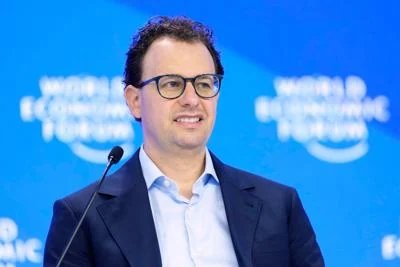
FILE - Dario Amodei, Anthropic's CEO and co-founder, attends the annual meeting of the World Economic Forum in Davos, Switzerland, on Jan. 23, 2025.
Markus Schreiber - APSAN FRANCISCO (AP) — Artificial intelligence company Anthropic filed papers on Monday for what could become the biggest stock market debut ever. At the same time, its top executive warns that advanced AI could pose an existential threat to humanity.
The filing puts the San Francisco company on track to begin trading on Wall Street next month. It could beat the record set by SpaceX in June, when the company raised $86 billion by selling shares to the public. Anthropic's stock market debut would also come before that of its rival OpenAI. The two AI companies are expected to have two huge stock market launches.
The filing comes weeks after CEO Dario Amodei argued in an essay that the slow development of the most advanced AI models in the United States could give Anthropic enormous resources to grow faster. The amount of money the company will raise is still unknown. Its final value and share price have not yet been set. But even at a lower estimate, the five-year-old startup could become one of the world's most valuable companies. It could also increase the wealth of Amodei and his sister and co-founder, Daniela, by billions of dollars.
The 213-page filing showed that Anthropic's revenue is growing quickly. But, like many other technology companies going public, it has not yet made a profit. The company behind the Claude chatbot reported a net loss of $7.9 billion in the first half of 2026, although some losses were only a small part of that amount after certain costs were removed. In the same period a year earlier, Anthropic lost $1.2 billion.
Despite those losses, private investors valued Anthropic at $380 billion earlier this year. The company is reportedly aiming for a value of $1 trillion, or possibly $1.5 trillion, though its final value has not been set. At $1.5 trillion, Anthropic would rank among the world's most valuable public companies, alongside Tesla.
Reports say the stock sale could raise as much as $60 billion. That would beat the current record set earlier this year by one of Elon Musk's companies, SpaceX.
In a filing with regulators, Anthropic said its shares would trade on the Nasdaq Global Select Market under the ticker symbol "ANTH."
Risks are high, but the founders could gain a lot
In the filing, the company said it could use some of the money to buy other businesses and technology. It could also invest in the equipment and systems needed to grow its business and compete with rivals.
Founded in 2021 by former OpenAI leaders, Anthropic is locked in a fight for dominance with that company. The two leaders, Amodei and OpenAI CEO Sam Altman, are widely seen as bitter rivals.
But they have plenty of other competitors, including Google, newer startups in the United States and China, and SpaceX, which has an AI business. Anthropic, OpenAI and SpaceX have all been losing more money than they make because of the huge cost of building AI. This has raised concerns that the industry could be in a bubble.
The need for cash may explain why Anthropic is rushing to enter the stock market this year instead of waiting until next year, as OpenAI plans to do. Adding to the pressure is the possibility that demand for AI shares could fall sharply or even collapse in the coming months. Investors have become more worried about the huge amounts of money AI companies need, and several technology companies have recently delayed or dropped plans to go public.
As well as helping fill any cash shortage, an IPO would make some of Anthropic's seven founders, including Amodei and his sister, extremely wealthy. Together, they own nearly 500 million shares, although the filing does not make clear how much of the company those shares will represent after the stock sale.
Dario, 43, and Daniela, 38, who is Anthropic's president, are each worth $6.5 billion, according to Forbes. Forbes ranks them as the world's 405th and 406th richest people.
Reflecting the dangers of AI, the filing includes some unusual rules. It gives those two founders and the company's five other co-founders 60% of shareholder voting power through a special class of shares. Anthropic has also appointed independent members who are not focused on financial interests to a group called the Long-Term Benefit Trust. This group has the power to appoint directors and is meant to make sure the company does not put financial interests ahead of public safety.
Another unusual part of the filing is its long list of "risk factors," which public companies must disclose. In this case, the list runs for nearly 100 pages and makes for difficult reading.
Among the risks are the possibility that Anthropic may not be able to keep key staff or may face government rules that block its work. The filing also points to the risk that people could misuse AI models to build chemical weapons. Authoritarian governments could use the technology to control their citizens. Given the many recent hacking incidents involving rogue AI agents, Anthropic's AI models could also "pose catastrophic or existential risks to humanity."
Calls for a slowdown in AI
The IPO comes as reports emerge about AI's ability to solve problems beyond human ability for good purposes, but also to carry out harmful tasks that threaten lives while people lose control.
In September, Amodei said the AI industry should slow its rapid development to give safety measures time to catch up. Without such a slowdown, Amodei warned, AI could soon be able to release a swarm of agents that could take over the internet within six to 12 months.
He offered a plan in a post on his website to increase checks on the industry, noting that Anthropic is already taking some of these steps on its own. But he said other changes would require the industry to work together and cooperate with governments around the world, including authoritarian governments.
"I believe that if slowing down bought us even an extra year or two before models reach critical levels of capability, and we used that time to advance alignment, we could greatly reduce the risk that something goes seriously wrong," Amodei wrote.
Clashes with the U.S. government
Anthropic has tried to set itself apart from other AI companies by presenting itself as a company that puts safety and responsible development first, rather than growing at any cost and with few safeguards. Some of this approach comes from the company's dispute with the U.S. government. That dispute began in February, when President Donald Trump and Defense Secretary Pete Hegseth accused Anthropic of endangering national security and labeled the company a supply-chain risk.
Anthropic used the Pentagon over its supply-chain risk label in March, calling it an "unlawful campaign of retaliation" because it refused to allow unrestricted military use of its technology. The legal challenge led to an unusually public argument about how AI can be used in warfare and mass surveillance.
ChatGPT maker OpenAI made its own deal to work with Pentagon officials after the government punished Anthropic for its position. Anthropic also filed a separate, narrower case about a different rule the Pentagon is using to try to declare the company a supply-chain risk.
A California judge ruled in Anthropic's favor in the first case, and a Washington, D.C., judge sided with the government in the second. Both sides are appealing the decisions.
— Reported from New York.
Copyright 2026 The Associated Press. All rights reserved. This material may not be published, broadcast, rewritten or redistributed without permission.