
3 Stocks Helping Companies Manage AI Risk After Anthropic IPO
Anthropic's IPO filing has drawn attention to the hidden systems that help AI work safely. Safety, following rules, and managing AI models now seem just as important as computing power. Investors watching this change see less focus on hype and more need for companies that help businesses manage AI risks as the technology becomes part of everyday work. This article looks at three stocks connected to the news about Anthropic and explains why they may be worth a closer look.
The three stocks discussed below are only a small sample. The full search found 26 more companies with interesting links to AI governance and risk management, which this article does not cover in detail. To explore and compare these companies yourself, use the AI Governance, Compliance, and Risk-Management Enablers screener.
Insperity (NSP)
Insperity operates where AI, human resources (HR) rules, and small-business risks meet. As AI tools become more common in everyday HR work, the company can help employers follow the rules when managing staff policies, employee benefits, and payroll.
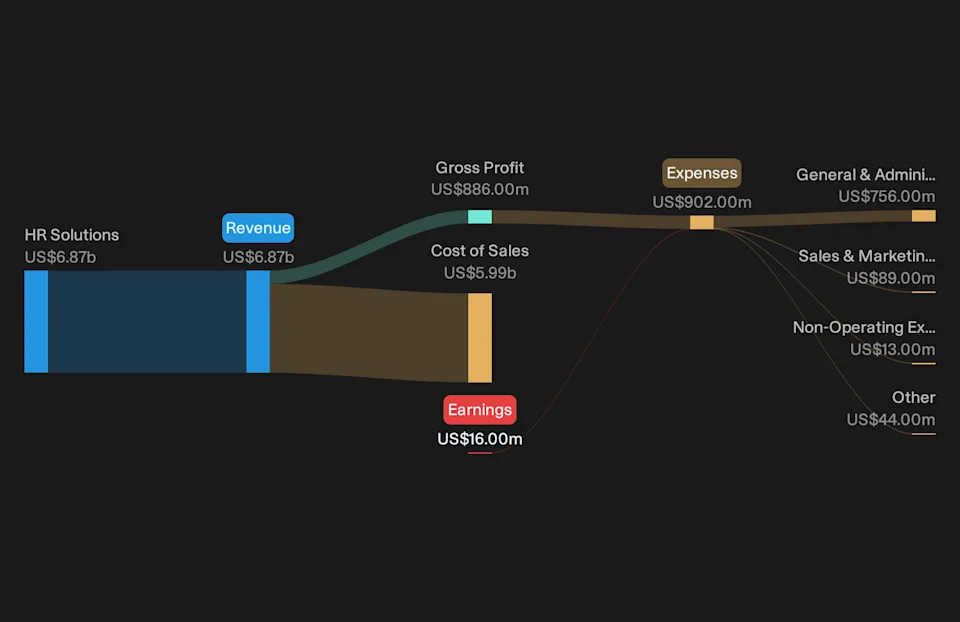
Insperity earns about US$6.9 billion in revenue from HR Solutions. It helps small and medium-sized employers in the United States manage payroll, employee benefits, and compliance with rules. The company has a market value of about US$2.1 billion.
"The Compass AI engine and AI agents within HR360 and HRScale are already being used in live operations. They aim to help the company respond to clients faster, create reports through conversations, and make internal HR and payroll work more efficient. Over time, these tools are expected to improve service productivity and help increase earnings before interest, taxes, depreciation and amortization (EBITDA) and earnings per share (EPS)."
How might Insperity's earnings change if an important but less obvious factor affecting client healthcare costs and the company's ability to set prices changes sharply in either direction?
If changes in healthcare costs are the main factor that could affect the company, read the full narrative for Insperity to learn how its risks and pricing situation may be changing.
Andersen Group (ANDG)
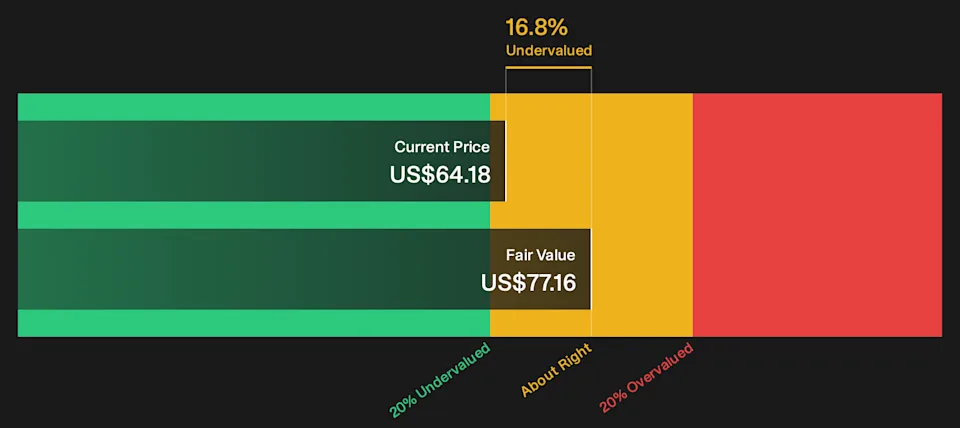
Andersen Group is a US-based company that provides tax, valuation, and financial advice. Much of its work focuses on governance, following regulations, and managing risks for clients with complex needs. In 2025, it earned about US$913 million from a single advisory business segment. Its market value is roughly US$7.2 billion.
Regulators are setting stricter expectations for AI-related disclosures, tax treatment, and the risks of AI models. Andersen Group already helps families with wealth passed down through generations, investment funds, and businesses deal with rules in these areas. Its independent advice on tax, valuations, and compliance gives it a clear role in AI governance. However, the company has high debt compared with its financial resources and recently reported a large one-time loss. Whether it benefits from this opportunity still depends on how changes in borrowing costs and plans to reinvest money affect the business.
The financial pressure from borrowing costs is examined in the Andersen Group financial health report. It can help readers judge whether the risks on the company's balance sheet are hiding a stronger opportunity for growth.
Coforge (NSEI:COFORGE)
Coforge is closely connected to AI governance because it helps build AI into business systems, including those used in industries with strict rules. In these projects, risk controls, data governance, and compliance must be included from the start rather than added later.
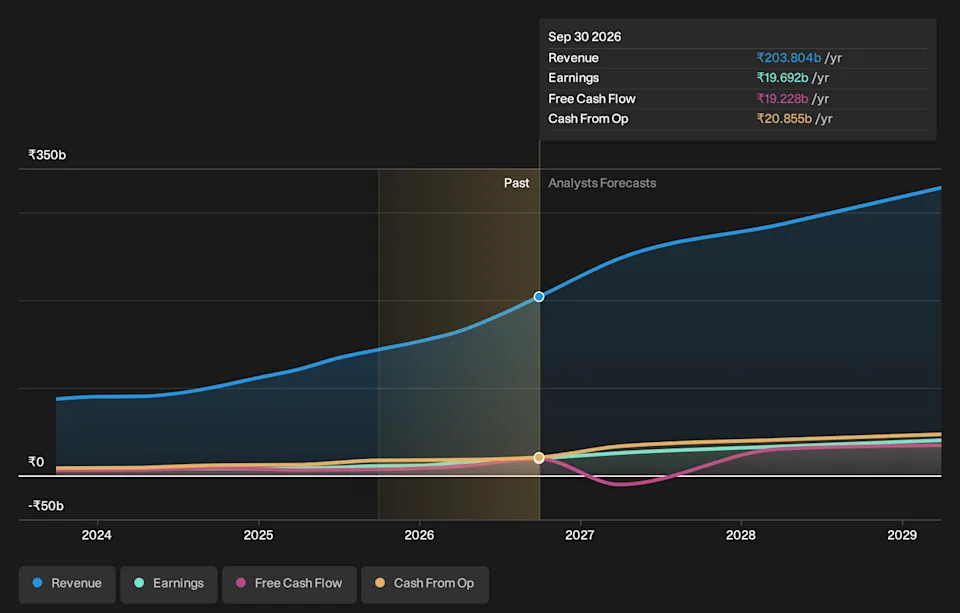
Coforge has one Software Solutions business segment, which generated about ₹203,804 million in revenue. With a market value of around ₹882.9 billion, it has the size to keep developing AI, data governance, and risk management services for projects with clients around the world.
"AI-powered solutions are growing quickly. In Q1 FY27, AI-led engineering, data, and cloud work accounted for 86% of Coforge's revenue, and the company used AI in about 30% of its projects. This supports the company's existing AI growth outlook and suggests that it may win more valuable projects that help increase revenue and net profit margins."
A key question is what will happen to Coforge's large share of AI-related work if a new challenge affecting how clients manage and fund long-term projects becomes a problem.
If this challenge could slow Coforge's AI-focused projects, the full narrative for Coforge explains how the company's growth story could still gain strength from here.
This article by Simply Wall St is general in nature. It offers analysis based only on historical data and analyst forecasts, using an unbiased method. The articles are not intended to provide financial advice. It is not a recommendation to buy or sell any stock and does not consider your goals or financial situation. The aim is to provide long-term analysis based on basic financial information about companies. The analysis may not include the latest company announcements that could affect stock prices or other important information about the companies. Simply Wall St does not own positions in any of the stocks mentioned.
Have feedback about this article or concerns about its content? Contact us directly. You can also email [email protected].