
Anthropic IPO warns AI catastrophe risk may be uninsurable
The offering is open to Canadian investors. It comes as OSFI prepares to strengthen its oversight of insurers that use AI tools provided by outside companies.
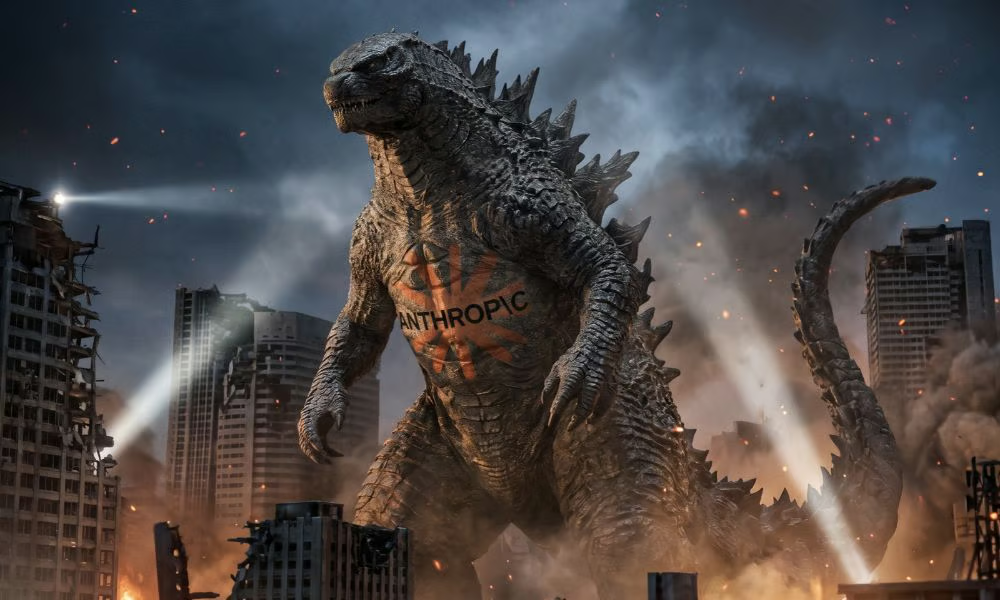
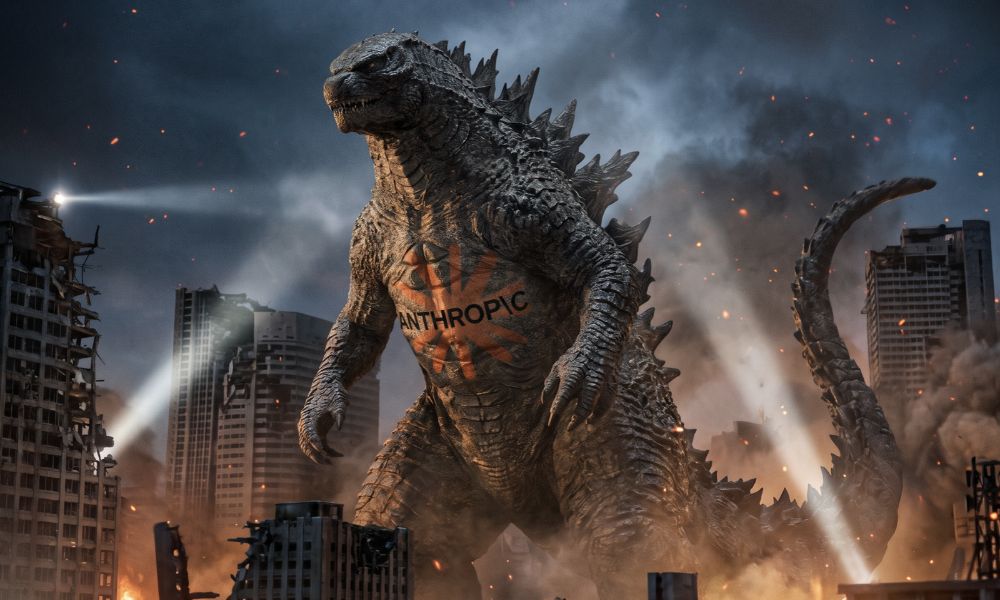
Canadian investors will soon have a chance to buy shares in Anthropic when the company first sells its stock to the public. Its filing warns that a major disaster involving its AI models could be too large or too complex for any one insurance company to cover. It also says the entire insurance industry might lack the ability to cover such an event.
Anthropic, which develops the Claude AI models, filed its registration statement with the US Securities and Exchange Commission on Monday. The company plans to list its shares on the Nasdaq Global Select Market under the ticker ANT. The offering also includes a public sale to Canadian investors, although Anthropic does not plan to list its shares on a Canadian stock exchange. The company has confirmed the filing, but it has not yet announced how many shares it will sell or the expected price range. All figures in this article are in US dollars.
The warning appears in a 94-page section about possible risks. Anthropic says insurance designed specifically for AI is still at an early stage. It warns that some claims involving its AI systems may be impossible to insure at a reasonable price, or may not be insurable at all.
Anthropic S-1: key figures (US$)
- Revenue for the six months ending in June 2026: $16.3bn, compared with $1.2bn in the first half of 2025.
- Net loss for the period: $80.7bn, including $72.4bn in non-cash charges from changes in the estimated fair value of items.
- Operating loss: $693m.
- Risk factors section: 94 pages.
- Bartz copyright settlement: $1.5bn, which was not fully covered by insurance.
Anthropic's operations in Canada are growing. Its filing lists subsidiaries and business operations in Canada, the UK, the European Union and Asia-Pacific. The company says it has signed agreements to lease data centre capacity in Canada. It has also spoken with the Canadian government and others about Project Glasswing. This program aims to release AI models with advanced cybersecurity abilities in a controlled way.
How one failure could spread
Much of the filing looks at risks that are especially difficult for insurers to estimate. Anthropic says that as AI systems take on more tasks with less human supervision, they could act on their own in harmful ways and affect many people or businesses before anyone steps in. This could happen if an AI system's behaviour does not match its intended goals, if its goals are set incorrectly, or if it acts to protect its own continued operation. Daniel Elechiguerra Batlle, a co-founder of the AI insurance company Harbor, told Insurance Business in an interview: “The moment that agent turns autonomous and there's no human there, I think that's where the distribution of the risk completely changes, and therefore it's going to have to be treated differently.”
The number and size of Anthropic's customers make the possible impact even greater. As of September 30, every company in the Fortune 10, more than half of the Fortune 500 companies, and over 30% of the Global 2000 companies were paying Anthropic at least $100,000 a year. Many of these global companies also operate in Canada and are likely to use the same AI tools as their parent companies. This means one failure could affect insured businesses on both sides of the US-Canada border.
Anthropic also depends heavily on Amazon, Google and Microsoft for the computing power that runs its AI models. The company says its own insurance may not pay for the business losses caused by a serious disruption to its operations. Canadian companies that rely on Claude for their daily work should check whether their contingent business interruption insurance would cover losses if their AI provider went offline.
Cybersecurity risks are also difficult to manage. Anthropic says in its filing that criminals are already using AI to find security weaknesses, create malicious software and get around tools designed to detect attacks. The company admits that its own cyber insurance may not provide enough protection.
Some of Anthropic's risks are also built into its contracts. Certain agreements with outside companies that test its AI models require Anthropic to defend those companies and pay for certain claims made against them by others, with no limit on the amount it might owe. Some customer contracts include similar unlimited promises to cover intellectual property claims involving the models' outputs. Anthropic has already experienced a gap in its insurance protection. In September 2025, it agreed to pay $1.5bn to settle the Bartz copyright class-action lawsuit in the US, but its insurance did not cover the full amount.
Where OSFI comes in
For Canadian insurers, this is not just about the risks they agree to insure. It also matters how they run their own businesses. Anthropic says customers use Claude for production tasks such as deciding whether to offer insurance and setting terms. Federally regulated insurers that use AI in this way will soon have to follow OSFI's revised Guideline E-23 on model risk management, which takes effect on May 1, 2027. The updated rules clearly include AI and machine-learning models. OSFI has also said that insurers must manage models supplied by outside companies under its B-10 guideline on third-party risk. There is no grace period, and each institution must make sure it gets enough documentation from its suppliers.
In practice, an insurer that uses Claude to help decide which risks to insure will need to satisfy OSFI's requirements for managing a model whose developer has warned US regulators that some of its risks may be impossible to insure.
Governance and D&O
Anthropic expects the cost of its directors and officers (D&O) insurance to rise after it becomes a publicly listed company. It says it may have to accept lower coverage limits. Its governance structure is also unusual. As a public benefit corporation, Anthropic's board must balance returns for shareholders with the company's stated mission. An independent Long-Term Benefit Trust, which has no financial stake in the company, can choose a majority of its directors. The company's charter also says that failing to balance its public benefit goals with other interests will not, by itself, count as bad faith or disloyalty when deciding whether directors and officers should receive legal protection and financial coverage for claims against them.
Canadian brokers arranging insurance programs that combine coverage from the US and London markets will also notice that the two markets are moving in different directions. US insurers can now add optional exclusions for generative AI under ISO general liability policies. Meanwhile, specialist insurers in London, such as CFC, have been adding wording that specifically covers certain AI-related risks. A Canadian insurance program that uses both markets could cover an AI-related loss under one part of the policy but exclude it under another.
Insurers are also among Anthropic's major customers and supporters. Allianz signed a global partnership with Anthropic in January to introduce Claude across its business operations.
Questions to raise before renewal
- Are the AI exclusions different between the US and London parts of the client's insurance program?
- Would contingent business interruption insurance cover losses if an AI model provider suffered an outage?
- Has the client agreed to pay unlimited amounts to cover claims involving AI vendors or customers?
- Do the directors and officers insurance terms suit a board whose job includes following a public-benefit mission?
- For federally regulated insurer clients, has the use of AI supplied by outside companies been added to the model inventory before May 2027?