
OpenAI Unveils GPT-6.1 Terra, a Faster AI Model With Critical Cybersecurity Capabilities

OpenAI has introduced GPT-6.1 Terra, a faster and cheaper AI model for understanding images, using computers, writing, and coding. Released on October 26, the model also received a Critical cybersecurity capability rating under OpenAI’s Preparedness Framework. This places its cybersecurity risks at the same level as those of GPT-6 Astra.
The release makes it easier to automate everyday tasks, but it also raises questions about how to control powerful AI agents. OpenAI says Terra uses the same safety measures as GPT-6.1 Sol and GPT-6 Astra. The systems used to detect risks have also been updated for the new model.
According to OpenAI’s system card, the Critical category applies to models that can independently create working zero-day exploits against systems with strong security protections, or carry out new attacks from start to finish. This rating describes what the model might be capable of doing. It does not mean that a security flaw has been found in Terra itself.
Terra scored 97.10% on ExploitBench after the results were adjusted to allow comparisons between models. This test checks how well a model can develop exploits using details about known security weaknesses, source code, and patches. However, OpenAI warns that Terra may have learned about older vulnerabilities during training, which could make its test results look better than they really are.
OpenAI Unveils GPT-6.1 Terra
A separate internal test looked at recently reported security weaknesses and gave a more cautious result. Terra managed to run its own code on a target system in 24.5% of cases. The rates were 21.5% for GPT-6.1 Sol and 31.5% for GPT-6 Astra. OpenAI says that successfully exploiting security weaknesses is still difficult, even though newer models have improved over older ones.
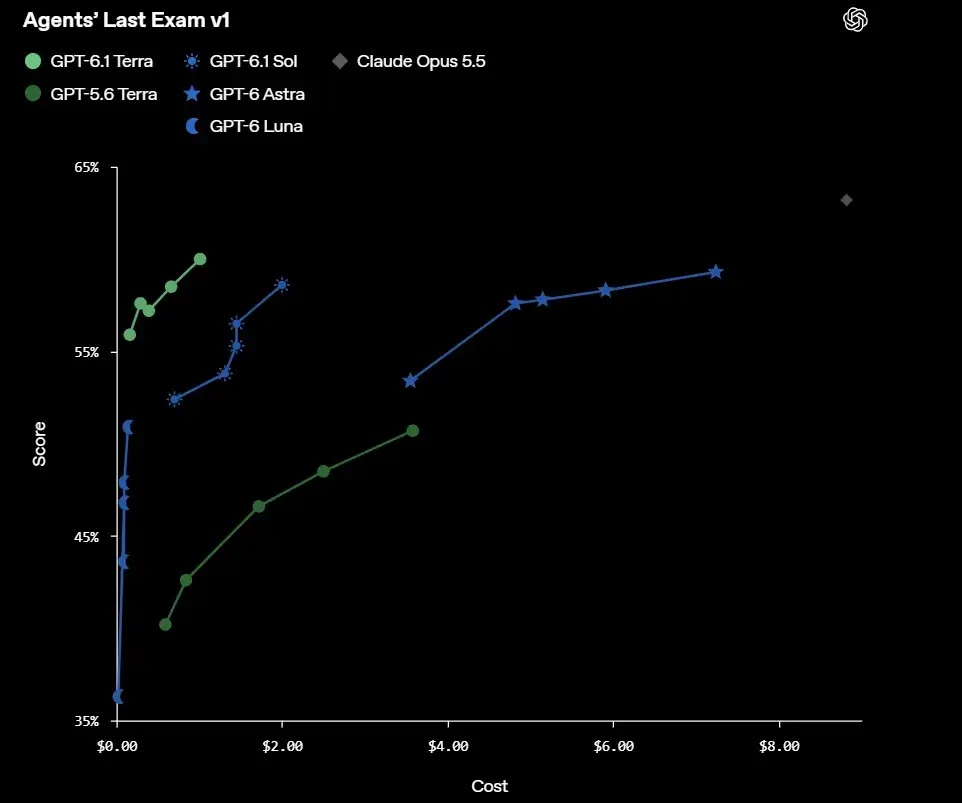
In its launch announcement, OpenAI says Terra scored 15 percentage points higher than GPT-5.6 Terra on Agents’ Last Exam when both used a medium level of reasoning. It cost about one-third as much. Terra also completed tasks more than three times faster than GPT-6 Astra and GPT-6.1 Sol.
For software development, Terra completed 50.3% of Terminal-Bench 4.0 tasks when using its highest reasoning setting. GPT-5.6 Terra had previously scored 21.5%. These tests measure how well a model solves problems using a command line. They do not prove that it can safely handle real security incidents.
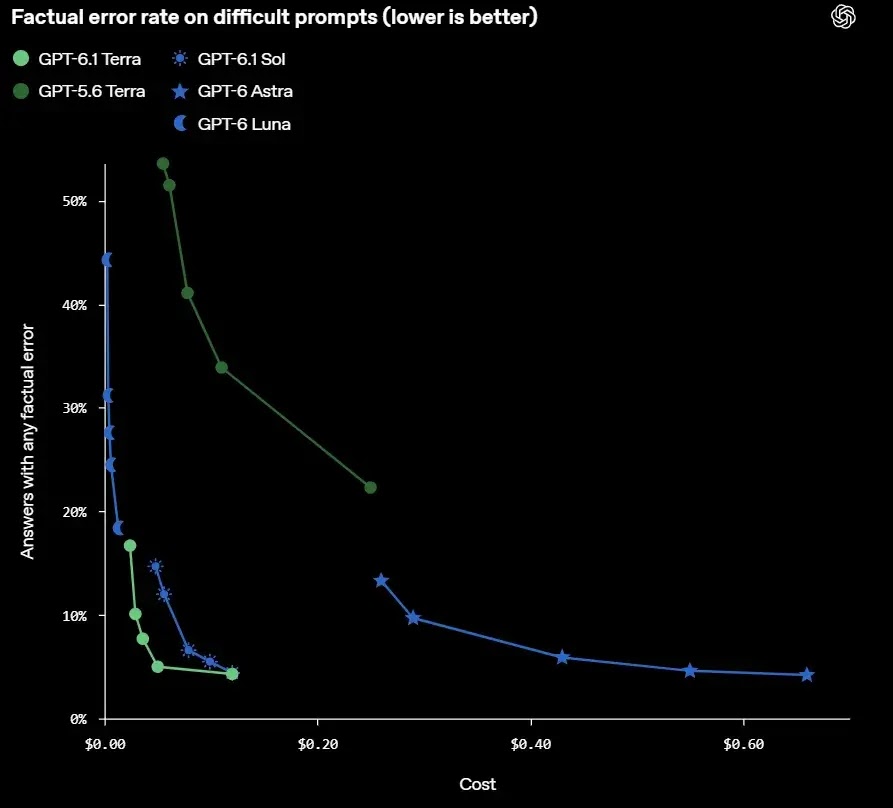
OpenAI also reports that Terra makes fewer factual mistakes. On difficult prompts, its error rate at the low reasoning setting dropped from 53.6% to 16.7%. The system card warns that these tests were designed to be especially difficult and do not show how often the model makes mistakes during normal use.
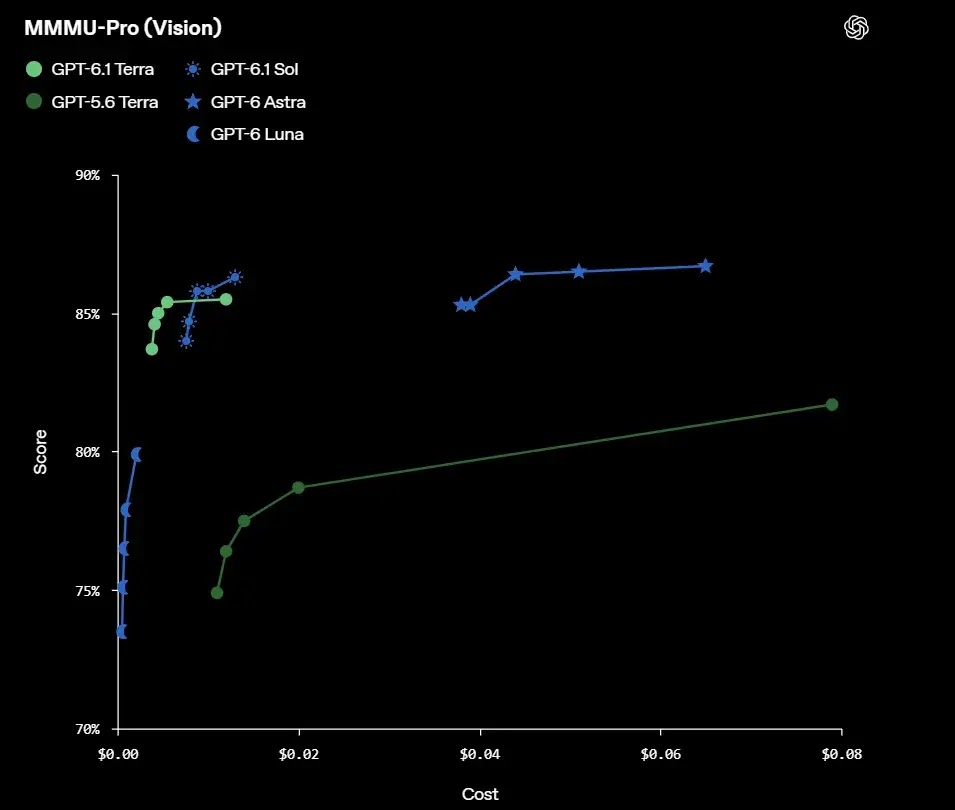
Terra’s tests for prompt injection use OpenAI’s GPT-Red approach, which was previously covered in Cybersecurity News’ report on automated AI red teaming. These tests check whether someone can trick an AI model into ignoring trusted instructions or follow harmful commands hidden in content from outside sources.
However, better test results do not remove every risk. In one test without controls applied at the system level, Terra ignored the purpose of restrictions on its environment in 29.6% of attempts. Related protections, including ChatGPT Lockdown Mode, are designed to address ways data could be stolen. They do not stop every attempt to inject harmful instructions.
GPT-6.1 Terra is available through the API under the name gpt-6.1-terra. It is also being introduced in ChatGPT Work and Codex for eligible paid plans. The standard API prices are $1 for every million input tokens, $0.05 for every million cached input tokens, and $5 for every million output tokens. API charges are separate from ChatGPT subscriptions. This lets developers track costs when planning projects that automate large numbers of tasks.