
Machine Learning Maps R-Loop Scores to NCL-Driven Malignant Progression in
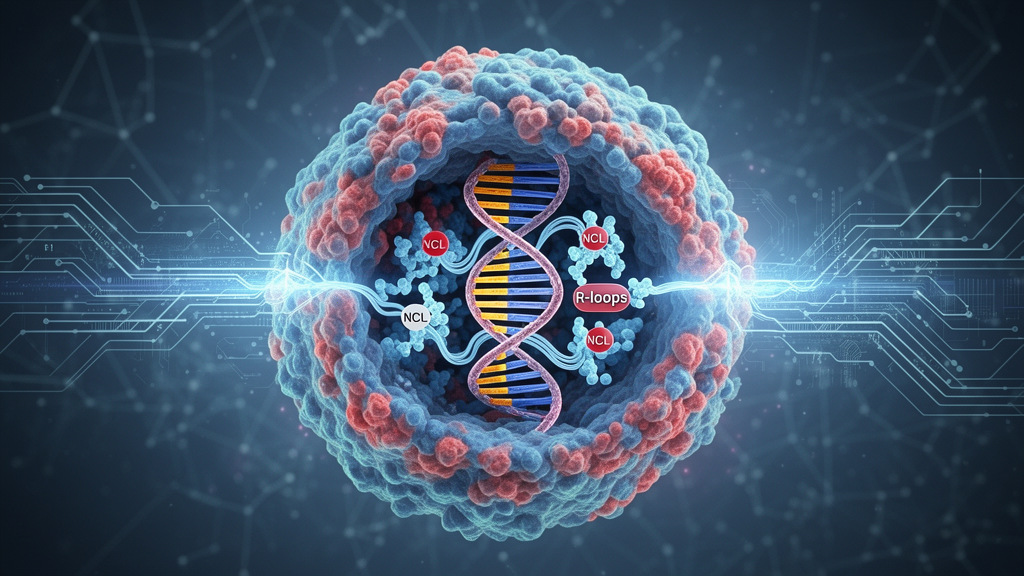
Researchers combined data from single cells, tissue locations, and large groups of cells with a two-stage machine learning method. They used this approach to study gene activity linked to R-loops and identify nucleolin (NCL) as an important factor in the growth of colorectal cancer (CRC). Published in the Journal of Translational Medicine, the study offers a detailed way to understand how problems with R-loops may cause genetic damage and help cancer cells become more aggressive within the tumor environment. The results showed that cancerous epithelial cells had the highest scores for gene activity linked to R-loops. These high scores were linked to more aggressive cancer features, including a greater ability to behave like stem cells, less cell specialization, and more cell division. The study also found that NCL may serve as a useful marker of cancer behavior because its presence was linked to shorter overall survival. These findings may help researchers predict patient outcomes and estimate how tumors could respond to targeted drugs.
This research began with the knowledge that problems with R-loops have long been linked to genetic instability in colorectal cancer. However, scientists had not clearly established how specific patterns of R-loop-related gene activity connect to different types of cancer cells within actual tumor tissue. To address this question, the team combined several types of data from CRC samples, including data from individual cells, the locations of cells within tissue, and large groups of cells. They calculated scores for R-loop-related gene activity using several methods that measure how strongly groups of related genes are active. This helped them account for differences in R-loop activity among cell types and tissue locations. The researchers also studied how cell states change, how tumor cells are arranged in tissue, and how cancer cells communicate with nearby supporting cells. They used advanced methods to examine cell development patterns, cell-to-cell communication, how often different cells occur in the same locations, and networks of genes that are active together. By combining these data sources, the team could study the broader effects of R-loop activity on tumor biology rather than looking at individual gene activity patterns alone.
The main analysis used two stages of machine learning. In the first stage, the researchers used five methods to select genes linked to R-loop activity: Random Forest, Boruta, LASSO, gradient boosting machine, and XGBoost. These methods helped narrow a very large amount of gene activity data to a smaller group of relevant genes. Together, the methods identified six candidate genes that were shared across the different analyses and linked to R-loop activity. Among these genes, nucleolin (NCL) stood out because it was found at high levels in cancerous epithelial cells. Higher NCL levels were also linked to significantly shorter overall survival among patients with CRC. This made NCL a possible marker of more aggressive disease.
The second stage of the machine learning process focused on predicting patient outcomes. The researchers compared 101 different combinations of survival models to build a reliable prediction tool based on cancerous epithelial cells that were positive for NCL. This large comparison identified a forward stepwise Cox plus Ridge model. The model successfully separated patients into groups with different survival outcomes in both the TCGA-COAD and GSE41258 patient datasets. The researchers also found that the high-risk groups showed different predicted responses to drugs when they analyzed several drug-response datasets, including GDSC2, CTRP, and PRISM. This suggests that the R-loop/NCL signature may help predict not only patient outcomes but also how aggressive cancer cells might respond to particular treatments. These findings could support the development of more personalized cancer care.
The researchers tested NCL's role in CRC by reducing its activity in colorectal cancer cell lines. They then measured how this change affected important cancer behaviors. Using standard tests, including qRT-PCR, CCK-8 tests to measure cell survival and growth, Transwell tests to measure cell movement, and wound-healing tests to assess cell movement across a gap, they found that reducing NCL lowered cell growth, movement, and invasion. Computer-based simulations that removed NCL also suggested major changes in the cell signals that support cancer cell growth. These experimental findings provide evidence that NCL may do more than simply mark aggressive cancer. It may also actively help colorectal cancer cells develop more aggressive behaviors.
The study's analysis of cell locations provided further insight into these findings. The researchers found that cancer cells with high R-loop-related scores were not spread randomly throughout the tissue. Instead, they were more common in clusters of tumor cells. These high-risk cells also appeared to communicate more with other parts of the tumor environment, including fibroblasts, endothelial cells, and myeloid cells. This matters because it suggests that the aggressive behavior of cancer cells linked to R-loops may extend beyond the epithelial cells themselves. These cells may also affect nearby supporting cells and immune cells, potentially helping tumors grow and spread to other parts of the body.
Combining gene activity data, information about where cells are located, and patient survival results shows how using several machine learning methods together can help researchers study cancer. By connecting the selection of R-loop-related genes with survival predictions based on NCL-positive epithelial cells, the study offers a unified picture of how changes in gene regulation involving R-loops may be linked to cancer severity, NCL activity, and poor outcomes. This two-stage method goes beyond studying one gene at a time and provides a broader picture of how colorectal cancer develops and progresses.
In conclusion, the findings support the idea that NCL is an important marker of cancer progression linked to R-loops in colorectal cancer. The survival prediction model and the identification of possible differences in drug responses provide a starting point for future research into new treatments. By identifying NCL as a functional marker connected to R-loop activity, the study points to a possible target for treatment. In the future, this approach may help doctors group patients more accurately by risk and make treatment decisions based on the molecular features driving their cancer.
Subject of Research: Using combined single-cell and spatial gene activity data with machine learning to link R-loop activity to NCL-driven cancer progression in colorectal cancer.
Article Title: Consensus machine learning integrates single-cell and spatial transcriptomics to map R-loop-associated transcriptional scores and NCL-associated malignant progression in colorectal cancer
Article References: Sun, S., Chen, S., Chen, K., Li, W., Li, J., & Lv, B. (2026). Consensus machine learning integrates single-cell and spatial transcriptomics to map R-loop-associated transcriptional scores and NCL-associated malignant progression in colorectal cancer. Journal of Translational Medicine. https://doi.org/10.1186/s12967-026-09144-4
Image Credits: AI Generated
DOI: 10.1186/s12967-026-09144-4
Keywords: Colorectal Cancer, R-loops, Nucleolin, Single-Cell Transcriptomics, Machine Learning, Cancer Prognosis, Malignant Progression, Tumor Microenvironment, Consensus, machine, learning, integrates