
Michael Hiltzik: Anthropic says its goal is to help humanity, but you may not want to believe it
- Michael Hiltzik, Los Angeles Times
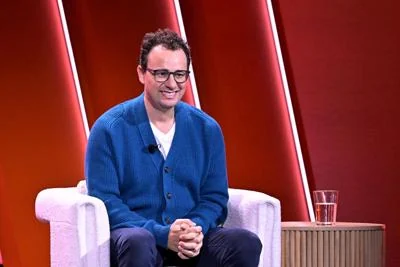
Anthropic co-founder and CEO Dario Amodei speaks at the "How AI Will Transform Business in the Next 18 Months" panel during INBOUND 2025 Powered by HubSpot at Moscone Center on Sept. 4, 2025, in San Francisco. (Chance Yeh/Getty Images for HubSpot/TNS)
Chance Yeh/Getty Images North America/TNSAnthropic, a major artificial intelligence company, wants everyone to know that it is deeply committed to building advanced AI "for the benefit of humanity."
We know this because the company put this promise at the center of the early version of the document for its planned first public stock sale, which became public on Monday. Anthropic calls this promise its "Company Purpose." The term is always capitalized and appears 42 times in the 318-page document, showing how important the company says it is.
But Anthropic also wants people to understand that its work may not actually help humanity. "We cannot assure you that we will achieve our Company Purpose or that the expected positive impact ... will be realized," the company admits in the document.
There is more that the company wants potential investors to accept on faith. Its financial success depends on bringing in much more money than it spends. Its costs already amount to tens of billions of dollars a year when measured at its current spending rate. Most of this money goes toward buying chips and computing power needed to build its AI systems.
People who buy ordinary shares will also have to trust that Anthropic's seven founders will always make decisions that benefit humanity. The way the shares are set up means that public investors will have no real say in how the company is run. More on that shortly.
By almost any measure, Anthropic's S-1, the official name for its initial stock-sale document, is remarkable. Market estimates suggest that the company could raise about $100 billion by selling shares, giving it a total estimated value of as much as $2 trillion.
That would put Anthropic ahead of the most recent huge stock sale, the SpaceX IPO in June. SpaceX raised about $86 billion and was valued at about $1.75 trillion. Anthropic's IPO is expected to begin sometime next month.
Another striking feature of the S-1 is how strongly the company warns investors that making billions of dollars will involve serious risks. The future of humanity could be at stake, and the outcome could be terrible.
Nearly 100 pages of the document list possible risks. One is that the company's work could lead to human extinction. The document warns that "sufficiently advanced AI systems could pose catastrophic or existential risks to society if not developed and deployed responsibly."
Anthropic says it does everything it can "to mitigate such risks, but there can be no assurance that our efforts will be successful." That may not reassure people who worry about AI and the people building this technology.
Of course, documents prepared for an initial public offering often include plenty of predictions and hopes about the future. Anthropic's S-1 may go a little further than most, but it is still a fairly typical example of this kind of document.
So let's take a closer look at what Anthropic says about itself. I asked the company to comment on the issues discussed below, but it declined, pointing to the quiet-period rules that federal regulators impose on companies during the IPO process.
Looking only at its financial results, Anthropic has made impressive progress in bringing in money. Its prospectus says revenue in the first six months of this year reached $16.3 billion, up from $1.2 billion during the same period a year earlier. But operating costs also rose quickly, especially for computing power and infrastructure. These costs were nearly $9 billion in the first half of 2026, compared with $2.3 billion a year earlier.
As a result, Anthropic had an operating loss of $693 million in the first half of the year, down from a loss of $2.1 billion a year earlier. However, under generally accepted accounting rules, its loss for the first half was actually $80.7 billion. Of that amount, $72.4 billion came from an accounting charge related to convertible notes the company had issued to pay its start-up costs.
Now consider the costs Anthropic will face in the future. The outlook becomes more worrying.
Because AI companies are competing fiercely for computing power, Anthropic has agreed to several deals for computer chips and data center space that it cannot cancel. This means it must pay for these resources even if it does not use them.
Depending on how the commitments are counted, they total about $500 billion. This includes $110 billion to Amazon, $114.5 billion to Google, $44.9 billion to Microsoft and $120.5 billion to SpaceX.AI, a SpaceX subsidiary.
Some of these deals last 10 years. They create huge costs that the company will have little chance to avoid, which could leave it struggling financially in the future.
What happens if the number of Anthropic's customers stops growing or grows more slowly? That would be a serious problem because the company's high estimated value depends on investors expecting its recent rapid growth to continue far into the future.
Already, some business customers of AI companies are starting to use less of their services. Prices are rising, and more people are questioning whether these services are worth the money.
"Despite massive investments and widespread hype around artificial intelligence, the technology has delivered zero financial payoff to corporate America outside of tech," Torsten Slok, chief economist at investment firm Apollo Global Management, wrote last week.
If companies outside the tech industry cut back on AI, the results could be very bad for businesses such as Anthropic. In its S-1, Anthropic admits that "a substantial portion of our revenue is driven by a limited number of customers." Its five biggest customers brought in about 25% of its revenue during the first nine months of this year, although no single customer accounted for more than 10%.
Anthropic also says that many customers do not have long-term contracts "and are able to reduce or ... cease spending at any time and for any reason." If competition among AI companies grows stronger, Anthropic could face increasing financial pressure.
This brings us to an important question: What could shareholders do if Anthropic's leaders fail to manage these challenges? The answer is nothing.
The reason is the unusual system of five types of shares that the company has created. Class A common shares, which will be traded on Nasdaq after the IPO, give each share one vote. But according to the prospectus, these shareholders will not receive dividends, or a share of the company's profits, "in the foreseeable future."
More importantly, Class A shareholders will never control the vote at Anthropic. They will never have more than 49.9% of the votes on company policies or the choice of directors. The company's single Class F share will always hold 50.1% of the voting power. Anthropic's seven co-founders will control that share together. They include CEO Dario Amodei and his sister Daniela, the company's president and board chair. This arrangement will remain in place until about three years after fewer than three of the original co-founders remain with the company.
Another type of share is Class T. It consists of a single share given to the company's independent Long-Term Benefit Trust. Experts in AI safety and public policy oversee the trust, which has the power to choose a majority of Anthropic's board members.
The main point is that the Amodeis and their fellow founders are set up to keep firm control of the company. They are responsible for carrying out the Company's Purpose. Should that make people feel safe? The best answer is maybe. One unclear part of this arrangement is what would happen if the trust's leaders decided that the founders no longer cared enough about safety and tried to use their control of the board to put the company back on the right path.
The Company's Purpose sounds good, but can we trust it? It brings to mind the mission statement of Google's founders around the time of its IPO: "Don't be evil." That sounded like a good moral rule, but it was vague and, in the end, proved to be more of a hope than a promise.
Over time, Google's growing business interests arguably took priority over that promise. In 2011, only seven years after its IPO, the Federal Trade Commission accused Google of misleading users and violating their privacy. A year later, the agency accused Google of violating the privacy of people using Apple's Safari web browser. Google settled both cases without admitting that it had done anything wrong. In the second case, it paid a civil penalty of $22.5 million, which was then a record amount. Google has also faced criticism for its YouTube video service recommending extremist content to users. Google has responded by trying to change YouTube's recommendation systems to show less of this material.
This does not mean Anthropic will follow the same path. It only shows that putting good intentions into an official document does not make them permanent promises. We can respect Anthropic's goals without assuming that the company will live up to them.