
From Nanoemulsion-Templated Drug Nanoparticles to Machine Learning Property
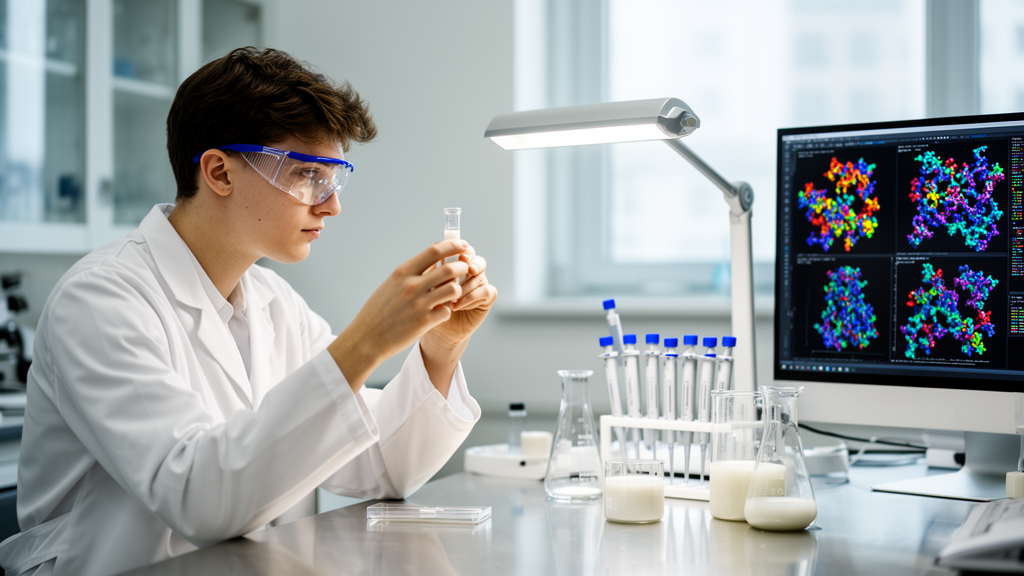
Getting drugs that do not dissolve well in water into the bloodstream through the gut remains one of the biggest challenges in developing medicines. An editorial published in AAPS Open on 10 September 2026 highlights Lucas Attia, a chemical engineer who studied this problem during his doctoral research at MIT. He worked on ways to improve drug formulations and later moved into machine learning for drug discovery. Written by Attia himself, the editorial describes his research journey, from making drug nanoparticles inside hydrogels to building computer models that predict the properties of molecules. It also shows how a modern formulation scientist can combine laboratory experiments, computer simulations, and data-based models.
Attia's research focused on a well-known problem. Many small-molecule drug candidates are lipophilic, meaning they dissolve poorly in water. As a result, the body may absorb only a small amount of a drug taken by mouth. This is known as low oral bioavailability, and it remains a major challenge in drug development. As potential drug molecules become larger and more complex, improving how they are delivered increasingly depends on designing better formulations rather than changing the drug molecule itself. One successful approach is called nanosizing, which reduces drug particles to a very small size. This approach has made it possible to deliver drugs by mouth, including sirolimus, sold as Rapamune, and aprepitant, sold as Emend.
However, making drug particles this small is also difficult. The main method often uses a process called nano-milling. It requires long processing times, uses energy inefficiently, with an energy efficiency of less than two percent, and can make the drug nanoparticles unstable instead of producing stable particles. Another approach, called a bottom-up method, builds and stabilizes drug nanoparticles directly. It takes advantage of added materials, called excipients, that help the particles form and become solid. Attia's PhD research focused on one of these methods, called nanoemulsion templating. First, a nanoemulsion containing the drug is mixed into a solution of a polymer that can form a gel. The solution is then turned into a gel, trapping the tiny liquid droplets inside a network of the gel. Finally, the material is dried, creating solid drug nanoparticles and stabilizing them inside a polymer matrix.
The basic ideas behind this technique came from earlier research by Attia's advisor, Patrick S. Doyle, and his team at MIT. Previous studies explained how the hydrogel separates the droplets and allows crystals to form in confined spaces. They also showed that different gel-forming materials could be used. However, researchers still did not fully understand how the materials, their properties, and the processing steps affected the final particles. The method had also been tested with only two model drugs that do not dissolve well in water, fenofibrate and ibuprofen, and with just one solvent, anisole. Attia's thesis addressed these gaps in two ways: by studying how materials and processing conditions affect the particles, and by adapting nanoemulsion templating to work with new chemicals.
The first research theme explored how researchers could control the properties of the particles made with this method. Experiments showed that the amount of crystallinity in fenofibrate nanoparticles depended on the concentration of surfactant in the original nanoemulsion. A surfactant is a substance that helps materials mix and stabilizes droplets. Molecular dynamics simulations, which use computers to model how molecules move and interact, helped explain why. The surfactant formed a protective layer around the nanocrystal surface, shielding it from interactions with the polymer that could make the particles less stable. One surprising finding was that the standard molecular dynamics simulations were too short to show crystallization directly. However, brief changes in the crystal structure, lasting only nanoseconds, could predict the level of crystallinity measured in experiments. This suggests that short computer simulations may provide a useful way to predict results that would otherwise require much longer simulations or complete laboratory experiments.
The same research theme also looked for ways to control how quickly drugs leave the particles. Attia and his colleagues adapted nanoemulsion templating to make hydrogel particles with a core and an outer shell. The core formed a gel when heated, while the shell formed a gel through interactions with ions. These core-shell hydrogels used water-based materials throughout the process. They allowed the researchers to create different drug-release patterns, including delayed release, release over an extended period, and the step-by-step release of different active ingredients.
The second research theme expanded the method beyond the model drugs and solvent used in earlier studies. In a case study, the team tested cannabidiol, clotrimazole, and cholecalciferol. These three active ingredients have different chemical structures, but they all dissolve poorly in water. The researchers showed that they could precisely control particle sizes from 100 to 1000 nanometers. The study also provided an uncommon quantitative test of the Ostwald-Freundlich relation, a well-known theory that explains how solubility changes with particle size. The results showed that the increase in solubility seen with cannabidiol nanoparticles was well explained by this theory. The editorial notes that this finding matters not only for drug formulation but also for understanding how materials behave at very small scales.
During this effort to expand the method, the team found a practical obstacle. When they tried to use the process with a new active ingredient, finding a suitable organic solvent to carry the ingredient was the step that most limited progress. To address this problem, Attia developed FASTSOLV, a machine learning model that predicts how well substances dissolve in organic solvents. This tool was designed to help researchers choose suitable solvents more quickly. Tests against publicly available solubility datasets showed that FASTSOLV performed among the best available models. According to the editorial, it has since become a widely used tool for computer-based solubility screening and solvent selection. Overall, the editorial argues that Attia's thesis helped develop nanoemulsion templating into a more mature platform for making drug nanoparticles. His molecular dynamics research also provided broader insights into how added formulation ingredients control nanoparticle structure.
Attia's research interests have since moved toward using data and computer models to predict the properties of chemicals and materials. In work with Lawrence Berkeley National Laboratory, he helped develop deep learning models that predict the optical properties of nanoparticles. In another project with an industry partner, he helped create a machine learning method based on counterfactuals. This method uses information from earlier observations when making predictions, allowing the model to give more accurate results within a specific local group of chemical or material systems. These projects show the range of skills he developed during his PhD, including drug formulation, soft materials, molecular simulations, and machine learning.
Attia now works as a machine learning scientist at Eli Lilly and Company. Through the collaborative TuneLab platform, he builds models that predict material and molecular properties. These models are made available to partner biotechnology companies for use in drug discovery, with a focus on physicochemical properties and ADME properties. ADME stands for absorption, distribution, metabolism, and excretion, which describe how a substance enters the body, moves through it, is changed by it, and leaves it. In the long term, Attia hopes to develop cheminformatics tools and machine learning representations designed specifically for formulation science. As he explains in the editorial, formulation scientists understand that complex formulations do not behave like simple mixtures of their ingredients. Yet existing machine learning methods often represent them as if they were simple mixtures. Learning how to capture the complex physical processes that control formulations will be essential for designing effective formulations with data-driven methods. Attia has received several awards for his work, including the ACS Colloids and Surface Science Symposium Langmuir Graduate Award in 2024, the AIChE PD2M Student Award in 2025, and the ACS CAS Future Leaders Award in 2026. He earned his PhD in chemical engineering at MIT, supported by the Department of Energy Computational Science Graduate Fellowship from 2021 to 2025.
Subject of Research: Using nanoemulsion templating to make drug nanoparticles and using machine learning to predict molecular properties
Article Title: Spotlighting rising researcher Lucas Attia: from drug nanoparticle engineering to molecular property prediction
Article References: Attia, L. (2026). Spotlighting rising researcher Lucas Attia: from drug nanoparticle engineering to molecular property prediction. AAPS Open, 12(1), Article 63. https://doi.org/10.1186/s41120-026-00200-3
Image Credits: AI Generated
DOI: 10.1186/s41120-026-00200-3
Keywords: nanoemulsion templating, drug nanoparticles, oral bioavailability, nanosizing, hydrogels, molecular dynamics simulations, Ostwald-Freundlich relation, machine learning, solubility prediction, FASTSOLV, formulation science, Eli Lilly