
Built before ChatGPT, sold in 13 months: The Birmingham graduates behind AI startup StudyStash | TheBusinessDesk.com
Built before ChatGPT, sold in 13 months: The Birmingham graduates behind AI startup StudyStash
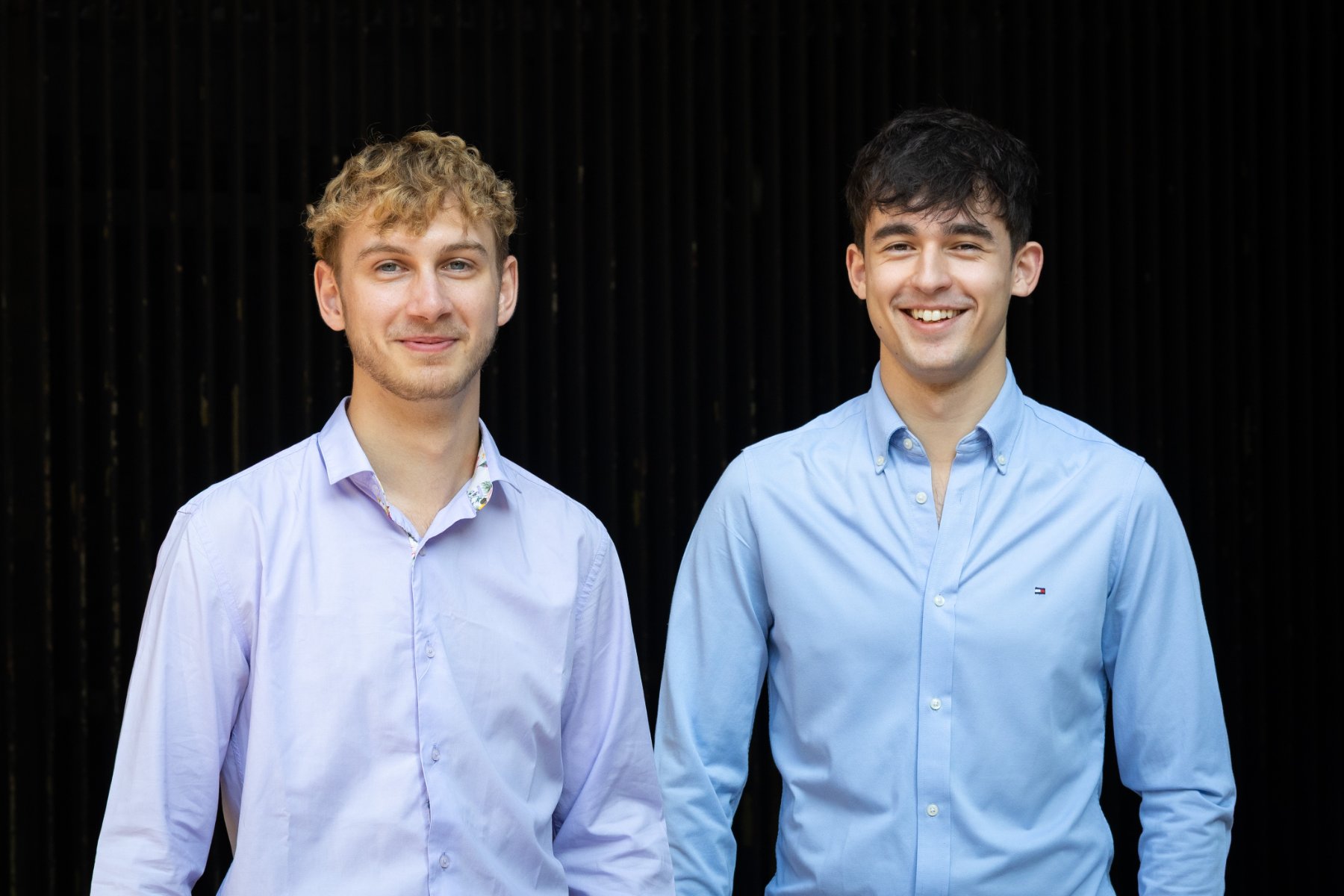
Ben Ward and Jonathan Graham were building an AI study platform before most people had heard of ChatGPT.
It was so far ahead of its time that even the University of Birmingham academics who first saw it were left scratching their heads. “They’re like, ‘How’s it doing this?’” says Ward.
Today, that platform, StudyStash, is used by more than 160 institutions. And just 13 months after graduating and turning it into a full-time business, the pair have sold the app to digital learning provider Kortext, in a deal The Times reported valued it in the low eight figures in dollars.
StudyStash turns the course material students are given into revision tools such as flashcards and practice tests. Averaged out since they graduated, that’s a new university signing up roughly every two to three days.
Ward, 23, remains chief executive and Graham, 24, chief technology officer, and the pair have since moved to San Francisco.
From study hack to business
The pair met in their first week at the University of Birmingham, where they studied computer science on PwC’s technology degree apprenticeship, and originally built StudyStash to manage their own course notes.
It didn’t stay a personal project for long. “We had 2,000 students sign up from the university, and then they actually tried to buy it,” says Ward.
The university’s engineering and physical sciences department wanted to purchase it. As is common in universities, the sale was initially blocked, because software is meant to be bought centrally. But rather than dying there, it was escalated to the vice-chancellor’s office, and Deborah Longworth, pro-vice-chancellor for education, rolled it out across every school at the university.
To win academics over, the pair barely mentioned AI. Instead, Graham says, they pitched it as “an adaptive learning tool”, a type of software that lecturers and university IT teams already understood. The pitch was simple: take all that dry course content, and “why can’t we make it into these really nice revision resources?”
But what universities are really buying is fewer students dropping out. In the US, every college course has a DFW rate, the proportion of students who drop out, fail or withdraw, and StudyStash is typically brought in where those rates are highest. Its customers include California community college consortia, which pick out courses with dropout rates of up to 90%.
“The universities will buy StudyStash to help reduce their student dropout rates,” says Graham. Some give it specifically to students at risk of dropping out, while others roll it out to everyone.
Growing up fast
Selling to universities was one challenge. Running a fast-growing business in their early twenties was another, and both admit to struggling with imposter syndrome along the way.
In the early days, they stopped going to sales meetings together and started wearing suits to look older. Turning up as a pair, Graham says, “would just create this impression” of two students.
Hiring was even harder, not least because, as Ward points out, “we’d never hired anyone before”. Their first recruits were coursemates from their computer science degree, who helped build the platform. But as the business grew, so did the challenge.
“It’s been really tough hiring some people that are way, way older than us as well,” says Ward. Some had to be let go because, he says, they didn’t respect the pair, “and we’ve now got a team of great people that do”.
Finding the right people locally was a struggle too. “Trying to build a US business in Birmingham is really hard,” he says.
Going west
The US, though, was where the business really took off. In the UK, it can take almost a year to get from first contact with a university to a signed contract.
“You really have to stay in it if you think the product’s good,” says Graham. “I think the US was a bit of a turning point for us.”
American universities move much faster. In July last year, the pair restructured the business so that the parent company is based in the US, with a UK subsidiary, allowing them to sell to customers in both countries. That, they say, is when things really took off.
They found the attitude to young founders different there too. In the US, says Graham, “it’s a very different dynamic”. People “really want you to succeed. And they see two young entrepreneurs, and they really buy into the story in a slightly different way than the UK.”
The funding gap
Back home, finding backers was harder. The pair did have support from early on. Several of their angel investors are University of Birmingham alumni, who mentored them before the business was even incorporated, later invested, and brought finance, legal and M&A experience between them.
The pair raised their funding round when they had just one university customer. But the investment funds in the West Midlands, the easiest for them to approach, were, says Ward, “by far and away the hardest” to persuade. Graham calls them “very risk averse”.
Birmingham, says Ward, “has the largest number of startups in the UK, the lowest number of scale-ups”. The region’s investors, he says, “just don’t take chances on people, and they don’t take as much risk as they do in the States.”
Graham says the issue isn’t unique to the region. “I think it’s just a UK-wide problem,” he says, adding that the UK “has a lot of work to do in terms of incentivization as well”.
He also points to Birmingham’s struggle to hold on to graduates, compared with cities like Bristol, where more students stay after university.
Even so, the move to San Francisco doesn’t mean StudyStash is leaving. It has staff in Birmingham, Bristol, Brighton and Louisiana, and has just hired more. “We’re keeping the team and we’re expanding,” says Ward.
AI without the AI
The biggest names in tech are now moving into education, with OpenAI and Anthropic both building tools for universities. Graham isn’t worried. He sees them as tools for quick answers, whereas StudyStash is building “a model of where you’re struggling and where you’re learning, which is much more long term”.
They also push back on the idea that AI makes students lazy, because students don’t have to use the AI at all.
“You don’t have to use any AI within StudyStash. You could write all your notes from scratch. You can create your flashcards, that kind of thing,” says Ward. “A lot of students do that, and you get a lot of value in the making process of actually creating the assets yourself as well.”
As he puts it: “It’s like AI without the AI. You can use it if you want to, but you don’t have to.”
For those who do, the latest feature is the pair’s favourite. Students can pull in content from their university’s learning system, such as Canvas or Blackboard, and turn it into a podcast in 121 languages.
“It’s got multiple voices. You can choose the accent. You can choose the length. And you can now download it on your phone and listen to it on the bus, on the train,” says Graham.
Students can pause it to ask a question, which the AI voices discuss before returning to the topic. It also shows where it’s drawing its information from as it plays. “As it speaks, you can see where it’s getting its information from. It’s not just hallucinating or using the wider web,” says Graham.
It’s a tool he wishes they’d had themselves. “I think we didn’t have that when we were at university.”
What comes next
The sale has given the pair a head start on whatever follows. They’re staying with StudyStash for now, but the money means they won’t need outside investors when they do start their next venture, which they expect will most likely be in AI too.
“In the future we would really like to do another business together,” says Graham. “Having seed or pre-seed funding from our own bank account will mean it’s going to be much quicker getting off the ground.”
For StudyStash itself, the ambition is to cover a student’s whole university journey, “right from the library to your student ID, all the way through to graduation and careers advice”, says Graham. Though he admits that in AI, plans change fast. “It’s very hard to define a roadmap even for six months, never mind two years.”
For now, though, all eyes are on scaling. Now plugged into Kortext’s network of more than 1,000 universities, StudyStash is in what Ward describes as a land grab, especially in the UK, where universities tend to settle on one main tool.
“Every university needs something,” he says. “We’ve got a big job over the next six months.”