
AI solves math problems at lightning speed, experts warn of risks to the internet and cryptocurrency.
OpenAI's new mathematical breakthroughs are opening up prospects for accelerating scientific research, but at the same time raising concerns about the risk of breaching cryptographic systems protecting the internet, cryptocurrencies, and personal data.
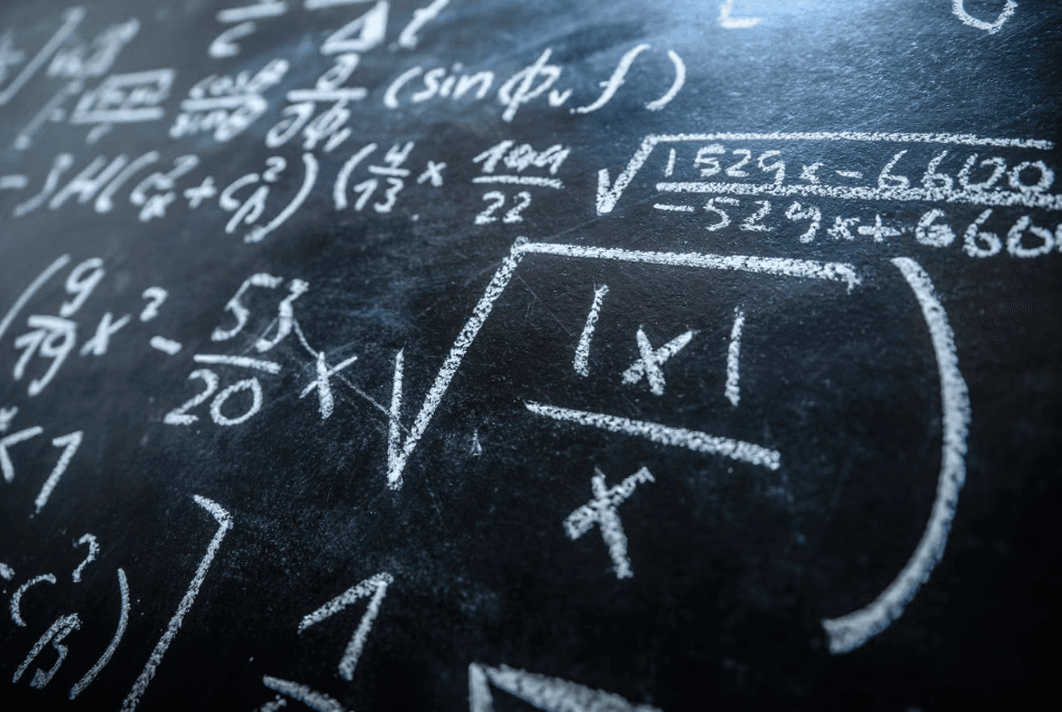
AI is driving unprecedented mathematical breakthroughs.
The latest advances in artificial intelligence (AI) are revolutionizing the field of mathematics, but they also raise major questions about cybersecurity and the ability of humans to verify knowledge.
According to the Independent , last month, on September 8th, OpenAI announced that 10,000 of its AI agents had solved a 90-year-old mathematical problem in less than 90 hours. The problem involves the Navier-Stokes equations, one of the seven Millennium Prize Problems, with a $1 million reward for each recognized solution.
Less than a month later, OpenAI continued to publish over 700 mathematical research papers presenting new findings on long-standing problems. Unlike the previous test, these results were generated by a single experimental model, requiring only one input statement for each problem.
The speed and scale of the published results have drawn attention in the scientific community. American computer scientist Scott Aaronson called this phenomenon a "Mathocalypse," implying a turning point that could profoundly change the field of mathematics. He described OpenAI's new results as "one of the most momentous days in the history of mathematics."
OpenAI states that its goal is to push the boundaries of human knowledge while facilitating further advancements in mathematics. However, alongside the prospect of accelerating scientific research, some experts warn that AI's ability to solve complex problems could directly impact the foundational technologies of the Internet.
Risks to cryptographic systems protecting the Internet.
For decades, cryptography has played a vital role in protecting information on the Internet. This technology helps encrypt sensitive data, ensuring that information remains confidential when transmitted across public networks and limiting the risk of unauthorized access.
Many security systems are based on mathematical problems that are very difficult to solve using current computational methods. This difficulty forms the secure foundation for the encryption methods used in web browsers, secure messaging applications, and online banking services.
However, if AI can discover new algorithms to solve problems that are considered difficult, those security platforms could face the risk of weakening.
However, there is currently no evidence to suggest that the mathematical discoveries published by OpenAI have created tools capable of breaking the cryptographic systems protecting the Internet. The main concern lies in the possibility that AI could accelerate the search for such breakthroughs, leaving less time to prepare and deploy protective measures.
Cryptocurrency under pressure from AI
Concerns about cryptography are not limited to traditional internet services but also extend to the cryptocurrency industry, including Bitcoin and Ethereum.
On October 7th, a researcher urged the blockchain industry to prepare for what he described as a “bunker mode,” implying a defensive stance against the risk of current cryptographic standards being challenged by AI.
Justin Drake, an Ethereum researcher, believes that the new results from OpenAI show that the future of mathematical superintelligence is drawing near. According to him, the world may soon witness weeks in which centuries of mathematical progress are made.
Vitalik Buterin, co-founder of Ethereum, also warned that advances in AI could pose a greater challenge to cryptocurrencies than the threat from quantum computers. Quantum computers have long been considered a potential threat to some current cryptographic systems due to their ability to solve certain problems much faster than traditional computers.
Buterin also recommended that cryptocurrency users store their assets in wallet addresses that have never been used for transactions, because the public keys of these addresses have not been publicly disclosed through transactions on the blockchain network. This is a precautionary measure he mentioned in light of the potential increase in cryptographic risks.
Can verification capabilities keep pace with the speed of AI?
Besides the risk to cybersecurity, another issue raised by experts is whether the solutions generated by AI are truly accurate.
Valerio Capraro, an associate professor at the University of Milan, argues that OpenAI's continuous publication of what he describes as groundbreaking results does not necessarily mean those results have been validated by the scientific community. He believes it remains to be seen whether the evidence is accurate and truly proves the research team's claims.
For complex mathematical problems, the formal verification process can take months. During that time, AI can continue to generate new proofs and drive further mathematical advances.
This poses a fundamental challenge: the speed at which AI generates knowledge may exceed the human capacity for evaluation and verification. If that gap widens, scientists will have to find ways to develop verification methods that are fast and reliable enough to keep pace with advanced AI systems.
Mathematical breakthroughs driven by AI could open up new opportunities for science, technology, and many application fields. However, these benefits also come with the urgent need to assess the reliability of the results, strengthen cryptographic systems, and prepare for potential security risks.
As the Independent noted, if mathematical progress occurs faster than human verification, the impact of AI will no longer be limited to mathematics but could spread to essential technological foundations of modern life.