
AI Chip Stocks Fall for Fourth Straight Day as Market Frets Over OpenAI Revenue and High-Rate Environment
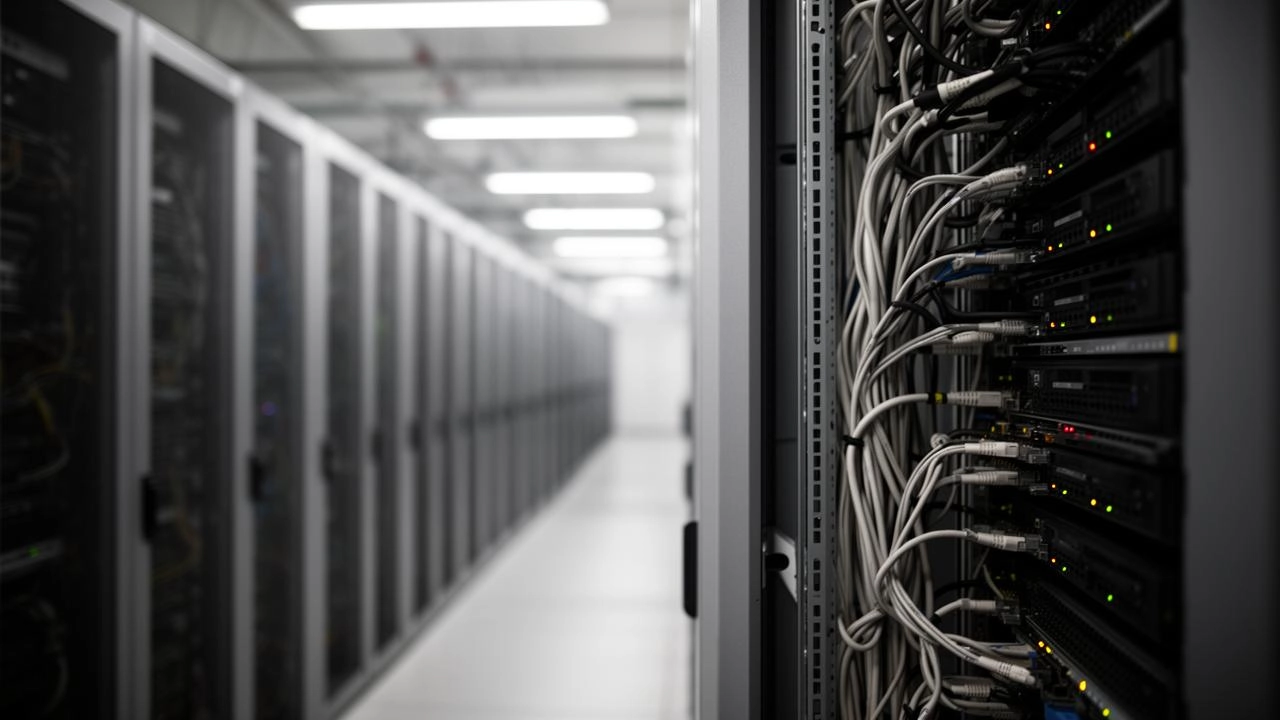
Artificial intelligence (AI) chip stocks are facing a wave of confidence testing. NVIDIA and AMD shares both declined Monday (the 12th), marking their fourth consecutive session of losses, even as the two companies unveiled multiple open-source designs at the OpenCompute Project (OCP) annual summit. The announcements failed to reverse the market's pessimistic mood. Analysts noted that what investors truly worry about is the staying power of the AI trade, and whether OpenAI's financial condition can support its massive capital expenditures.
AMD closed down 2.3% on Monday. At the OCP Summit, the company unveiled the blueprint for its upcoming Helion chip rack. The rack will support agentic AI—systems capable of executing tasks autonomously with almost no human prompting. AMD emphasized that Helion features an open design, allowing ecosystem partners to further develop and adopt the associated hardware and software. Customers will also have the flexibility to choose CPU-only configurations, or pair CPUs with GPUs to handle agentic AI workloads.
The rapid rise of agentic AI has already delivered clear benefits to AMD this year in server CPU demand. Inference computing—the process by which models make predictions based on what they have learned—is elevating the role of CPUs in AI applications and services.
NVIDIA shares fell 1.3% the same day. The company shared several open-standard designs with partners including Meta, Cisco, and Alphabet's Google, covering portions of the specifications for its upcoming Vera Rubin AI platform, including future AI factories and networking products.
However, these technology roadmaps failed to convince the market. Bill Birmingham, head of research at Rex Financial, said bluntly that while the announcements are beneficial for the industry, the focus remains at the standard-setting stage. "These announcements are still some distance from translating into purchase orders." He attributed Monday's selling pressure primarily to persistent market concerns about the sustainability of the AI trade and OpenAI's financial condition.
OpenAI's revenue figures became the flashpoint for these concerns. The Financial Times reported last week that OpenAI told investors its annualized revenue approached $50 billion (approximately NT$1.6 trillion) as of the end of September, roughly $20 billion (approximately NT$640 billion) below prior projections. However, part of the gap stems from differences in how OpenAI and rival Anthropic calculate annualized revenue.
Even so, both AMD and NVIDIA have deep partnerships with OpenAI, supplying millions of GPUs and other AI infrastructure. Birmingham noted in a client commentary that the two companies' exposure to OpenAI means that if OpenAI underperforms expectations, the market's near-term forecasts for both chipmakers will inevitably take a hit.
Memory giant Micron fell even harder on Monday, closing down 3.9%. The South China Morning Post reported that Micron's Chinese competitor ChangXin Memory Technologies said it had achieved a "key breakthrough" in technology to increase memory density on a single chip—news that heightened concerns about Micron's competitive position. Optical stocks also posted notably steep declines that day, which analysts attributed in part to cautious commentary on AI spending.
Birmingham also highlighted another layer of macro pressure: long-term U.S. Treasury yields remain near historic highs, and investors are reassessing valuations of high-growth stocks. This means companies that rely on borrowing to fuel expansion are facing stricter scrutiny of their elevated valuation multiples.
The capital frenzy in AI and its potential risks continue to reverberate through broader market discussions. SpaceX is reportedly seeking up to $40 billion (approximately NT$1.3 trillion) in new debt to purchase NVIDIA chips. The financing plan includes $10 billion (approximately NT$320 billion) in bank loans and $30 billion (approximately NT$960 billion) in bonds. SpaceX previously raised nearly $86 billion (approximately NT$2.8 trillion) in its first equity offering in June, followed by a $25 billion (approximately NT$800 billion) bond issuance.
Bridgewater Associates founder Ray Dalio recently warned of an AI lending bubble. He noted that if interest rates continue to rise, selling pressure will keep accumulating, becoming a macro risk variable hanging over all AI giants. Morgan Stanley analyst Adam Jonas even predicted that SpaceX's annual borrowing could reach $80 billion (approximately NT$2.6 trillion) by 2035.
On the competitive landscape front, Intel is also aggressively expanding in the GPU market, launching its new Intel GPU D-Series processors. The chip is designed specifically for AI inference, deployed via PCIe expansion cards, differentiating itself from the blade server design used by NVIDIA's Blackwell. Intel is working with ASUSTeK Computer, Hewlett Packard Enterprise (HPE), Dell, Supermicro, and others to bring systems to market. The company's stock has risen 183% year-to-date, benefiting primarily from the resurgence in CPU demand driven by the rise of agentic AI.
However, Intel faces stiff competition from AMD in the data center CPU market, as the latter rapidly increases its revenue share in that segment. Arm-based CPUs are also expanding market share, exemplified by NVIDIA's launch of standalone CPU racks featuring Grace chips. Qualcomm has likewise entered the fray, introducing its own Arm-based CPUs and AI accelerators in an effort to reduce its reliance on the smartphone market.
From a supply chain perspective, the computing power demands driven by agentic AI are reshaping hardware configurations. Industry observers note that the importance of CPUs in overall architecture continues to rise, with the CPU-to-GPU ratio potentially shifting from the traditional 1:4 to 1:8 toward 1:1. TrendForce data shows that server CPU lead times have extended from 16–20 weeks to 25–30 weeks, and supply-side tightness could transmit all the way to consumer and enterprise segments.
ASUSTeK Computer and Micro-Star International opened pre-orders in Taiwan on October 8 for high-end laptops featuring NVIDIA's RTX Spark superchip, targeting creators and professional developers. Microsoft also announced plans to turn Windows into a platform capable of running cloud-grade agentic AI on-device, introducing isolation and monitoring mechanisms such as Execution Containers. This trend of "data center-grade computing power trickling down to personal computers" is pushing the AI arms race from the cloud to end devices.
However, hardware availability does not mean enterprise adoption will accelerate in lockstep. Security and compliance remain critical hurdles before enterprises deploy agentic AI. NVIDIA has introduced the OpenShell and Sentry security platforms, while Microsoft is championing Execution Containers technology to prevent agent overreach through isolation, detection, and auditing. In practice, however, enterprises are still required to establish governance mechanisms such as least-privilege access, human review, and audit logging—otherwise sensitive data risks and legal liabilities will continue to dampen purchasing intent.
The cost picture is equally sobering. Supply-demand improvements in mature process nodes and power management components have yet to become widespread. Institutional investors expect related chips to have room for price increases this year and into next year, pushing up per-unit costs and average selling prices (ASPs). IC design houses are also shifting from pursuing scale to increasing per-unit value, creating near-term friction characterized by "lower volumes, higher prices."
Overall, the AI industry is at a critical juncture where technology roadmaps are accelerating but commercial realization still requires time. The open-source strategies of major chipmakers certainly help establish ecosystem standards, but between standard-setting and actual purchase orders lies a gap the market is unwilling to ignore. Under the combined pressures of persistently high interest rates, unresolved concerns about OpenAI's revenue, and competitors closing in, the path to valuation recovery for AI chip stocks is unlikely to be smooth.
Note: U.S. stock quotes are real-time streaming quotes; China A-share quotes are delayed by at least fifteen minutes.