
Artificial intelligence is changing the way we travel.
This technology helps travelers save time, have trips that better suit their personal preferences, and opens up new business opportunities for the tourism industry. However, the rapid development of AI also raises concerns about the reliability of information, the risk of itineraries becoming similar, and the impact on jobs and the environment.
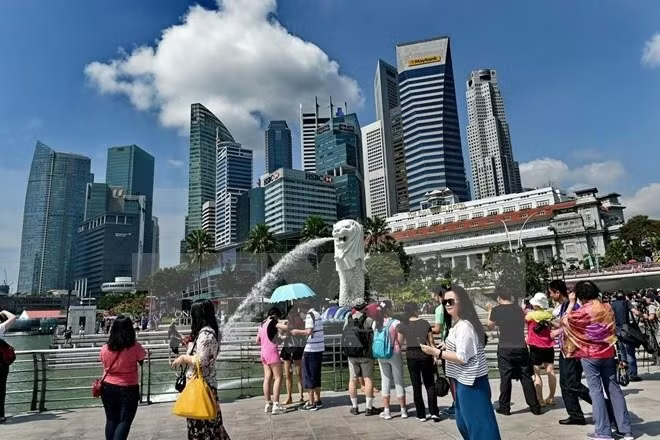
During a 7-day trip to Singapore with his 17-year-old son, 57-year-old Christophe Thiriet went without a guidebook for the first time. Instead, he used ChatGPT to create a 12-day itinerary based on his interests in nature, architecture, and cuisine. The results exceeded expectations, as he completed approximately 80% of the suggested activities and dining locations without prior verification. Remarkably, Mr. Thiriet is not a tech enthusiast but a travel expert who currently runs a hotel chain in France.
This case reflects a growing trend. Instead of spending hours searching for information online, travelers can simply provide their preferences, time frame, and travel requirements to receive relatively detailed suggestions.
Erwan Simon, founder of GenIA and co-author of a book on the transformation of the tourism industry under the impact of AI, believes the industry is at a major turning point, with AI playing a key role in driving change. Currently, travelers primarily use technology to choose destinations, but the scope of its application is rapidly expanding.
In the future, AI may not only suggest but also directly book flights, hotels, tours, and adjust itineraries based on weather, tourist numbers, or unforeseen requests. AI-integrated smart glasses can introduce the history of landmarks during a tour, while translation headsets help tourists communicate more conveniently abroad.
Not only travelers, but businesses are also increasingly applying AI to improve operational efficiency. This technology is being used to create promotional content in multiple languages, process invoices, track customer statistics, schedule check-ins, and manage hotel room cleaning. Importantly, AI also helps adjust service prices according to market demand to increase revenue.
Large corporations are leading this trend. At the end of September, Accor Hotels Group widely deployed its AI assistant, All Concierge, supporting 11 languages. This tool can recommend destinations and hotels based on preferences, provide information about accommodations, connect customers with booking systems, and offer after-sales support. It is expected that from 2027, the service will expand to include airline tickets, car rentals, and other travel activities through a network of 120 partners.
Accor is also experimenting with Google with a new transaction method where AI can directly participate in the search and purchase process. This shift is transforming how businesses approach customers. Previously, their main goal was to rank highly in search results; now, the aim is to have AI incorporated into responses when users request travel advice.
Booking, Expedia, Evaneos, and Accor Group are among the early partners collaborating with OpenAI. Around 400 travel businesses now have integrated ChatGPT applications, hoping to attract more customers and direct them to their booking pages. According to Vanessa Heydorff, General Manager of Booking in France, the goal is to help customers move from finding travel ideas to choosing and booking services more conveniently.
However, the development of AI does not benefit all businesses equally. Michel Durrieu, CEO of the Huttopia campsite chain, argues that this technology can help smaller destinations promote themselves more effectively thanks to its ability to create rich content in multiple languages. Conversely, if left unchecked, AI risks prioritizing large brands or booking platforms with strong technological capabilities, making it difficult for smaller businesses to reach customers.
Another problem is the concentration of tourists in popular destinations. Currently, about 80% of tourists are concentrated in 20% of France's territory. Some experts hope that AI can disperse the flow of tourists by recommending lesser-known locations that are suitable for the weather and actual tourist numbers.
However, Jean-Michel Blanc, a lecturer in tourism economics at the University of Paris I Panthéon-Sorbonne, expressed skepticism. According to him, if users make overly general requests, AI often suggests familiar destinations, leading to increasingly similar itineraries. Even when offered alternative options, most tourists still prefer to visit the well-known places they already planned to see.
The impact on employment is also not yet fully assessed. Some jobs may change or disappear, but experts believe that AI is unlikely to completely replace face-to-face human interaction.
In France, around 4,500 physical travel agencies remain operational despite repeated predictions that they would disappear due to the rise of the internet. Christophe Fuss, CEO of TUI France, said that many customers still visit consultants after consulting with AI. They want to hear about real-life experiences and have their questions answered before making a decision.
Similarly, Axel Auschitzky, director of the travel guide publisher Routard, noted that tourists often combine multiple sources of information rather than completely replacing guidebooks. Information selected and verified directly at the destination still has its own value.
The accuracy of AI is one of the most worrying issues. The technology sometimes provides non-existent locations, incorrect opening hours, illogical routes, or underestimates travel distances. In late August, three climbers had to be rescued from over 4,000 meters on Mount Shasta in California after getting lost using an AI-generated map. One person in the group was injured.
Beyond safety risks, over-reliance on AI can also diminish the joy of independent research and trip planning. According to travel consultant Jean Pinard, the planning process is also a crucial part of the travel experience, helping travelers visualize and become more excited about their vacation.
Furthermore, AI fails to address the fundamental challenges facing the tourism industry, such as fuel prices, climate change, or affordability, especially considering that around 40% of French people do not take vacations annually.
This technology itself consumes large amounts of electricity and water, increasing pressure on the environment. This is a dilemma for businesses pursuing sustainable tourism. Guillaume Jouffre, President of GreenGo, a platform specializing in providing accommodation services in France, acknowledges that businesses would find it difficult to compete without using AI. Therefore, GreenGo chooses to apply the technology sparingly, mainly to encourage tourists to choose trips closer to home and with lower carbon emissions.
Huu Chien (Correspondent of VNA in France)