
How Artificial Intelligence Is Transforming Business Growth and Efficiency

Recent News




You don't have to work in tech to benefit from advances in artificial intelligence. The system is fundamentally changing how companies can automate, scale operations, and maximize revenue while freeing human labor for more complicated tasks.
From predicting customer behavior to inventory shortcomings, the right AI tools may be the solution your company needs to grow. Read on to see how you can benefit.
Does It Help with Marketing?
Even with the best product and service, your company needs efficient marketing for customers to find you. Artificial intelligence is streamlining this process and making it more personalized.
With the right tools, like GTM AI, you can analyze browsing history, past conversations, and purchases to track warm leads. These leads are people who've already viewed or engaged with your content without making a final purchase yet.
By focusing on these targets, you save time and energy, since theyre potential customers whove already shown interest in what you do, compared to a cold lead thats likely to go nowhere. You may need to send encouragement to complete a purchase or make it more worthwhile with sales offers, etc.
Email marketing remains the most cost-effective option to reach your audience. With AI, you can dynamically optimize it by adjusting email subject lines, adding copy, and website layouts to match individual user preferences.
The intelligence of machine learning models can help predict when a customer may be about to leave a phone call or an online shopping experience.
It can trigger automated targeted retention efforts before they exit, such as:
- Discount pop-ups
- Opening a helpful chat window
- Limited-time deal offer
How Are Sales Affected?
Theres less guesswork and more predictive analysis with AI's predictive lead scoring. These algorithms automatically rank incoming leads based on the likelihood of converting to a sale. Therefore, you can focus on your highest-value prospects first for greater time efficiency.
AI assistants are now conversational chatbots that can handle all initial inquiries. These 24/7 chatbots can handle activities from booking meetings directly into calendars to answering basic questions without human intervention.
Then human labor can focus on more intense problem-solving and product development. AI can also automatically adjust prices based on market demand, which can take the load off many e-commerce sites. They also check out competitor pricing and existing inventory levels to help maximize your company's profit margins.
What About Operations?
AI's predictive analysis can help supply chain optimization by predicting vital processes, from shipping delays to inventory shortages. Therefore, you'll have enough time to proactively adjust inventory as needed to ensure customers remain happy with well-stocked supplies that are shipped on time while avoiding costly overstock that may sit too long.
The technology can handle routine customer tickets quickly for enhanced customer support. If something does need to be escalated to a human operator, the tool can do that. However, generative AI support agents often resolve a massive volume of tickets quickly. This system helps improve response times from days or weeks to seconds.
AI automation ability may continue with your companys higher-level items, from invoicing to contract reviews. It can handle repetitive entries that human talent may only need to check for accuracy. This automation can keep flowing so you don't get behind on important paperwork and compliance requirements.
Which Industries Are Using AI Tools?
At this point, the question may be which industries aren't using AI in some form. For example, the financial industry benefits from real-time fraud protection thanks to automated algorithmic risk management and trading. As a result, they've been able to reduce financial crime and empower non-stop customer support with intelligent chatbots.
Imaging diagnostics have improved thanks to the use of machine learning in healthcare. AI can help detect things the human eye can't, which has led to early diagnosis of cancer and other illnesses.
The manufacturing industry has benefited from evolving predictive maintenance, which has improved supply chain management and overall quality control. This can help reduce equipment downtime, which directly impacts productivity and reduces bottlenecks.
Retail and e-commerce heavily rely on hyperpersonalized marketing that tracks customer browsing and buying habits. They can easily produce targeted email ads to scale for:
- Customers birthday
- Holiday sales
- Encourage return customers
- Loyalty tiers
Of course, AI is also helping in the tech world that it originated from. Software companies are using it for automatic code generation. It's also helping with security threat monitoring and scaling cloud-based infrastructure essential for remote and hybrid teams.
AI Is Embedded Across Businesses
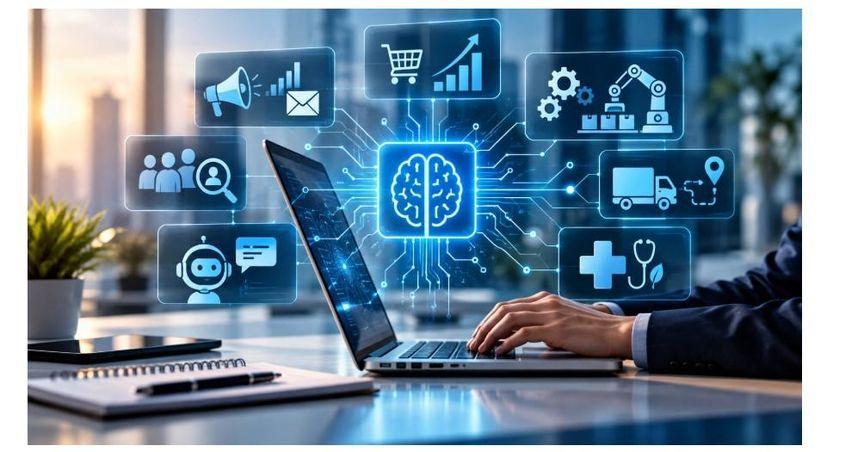
Modern businesses that want to remain competitive have several tools and techniques that use artificial intelligence software to track leads and keep them engaged, manage product and machine inventory, and stay on top of customer service, starting with chatbots through automated targeted marketing. Whether you need a personalized email or better healthcare diagnostics, AI can help you scale your operations as needed.
The content has been authored in collaboration with our guest contributor, James Williams.