
'AI slop' or a necessary evil, the rise of artificial intelligence in restaurants is leaving a sour taste
I’m begging restaurants to think twice before using AI-generated images to sell their food and drink
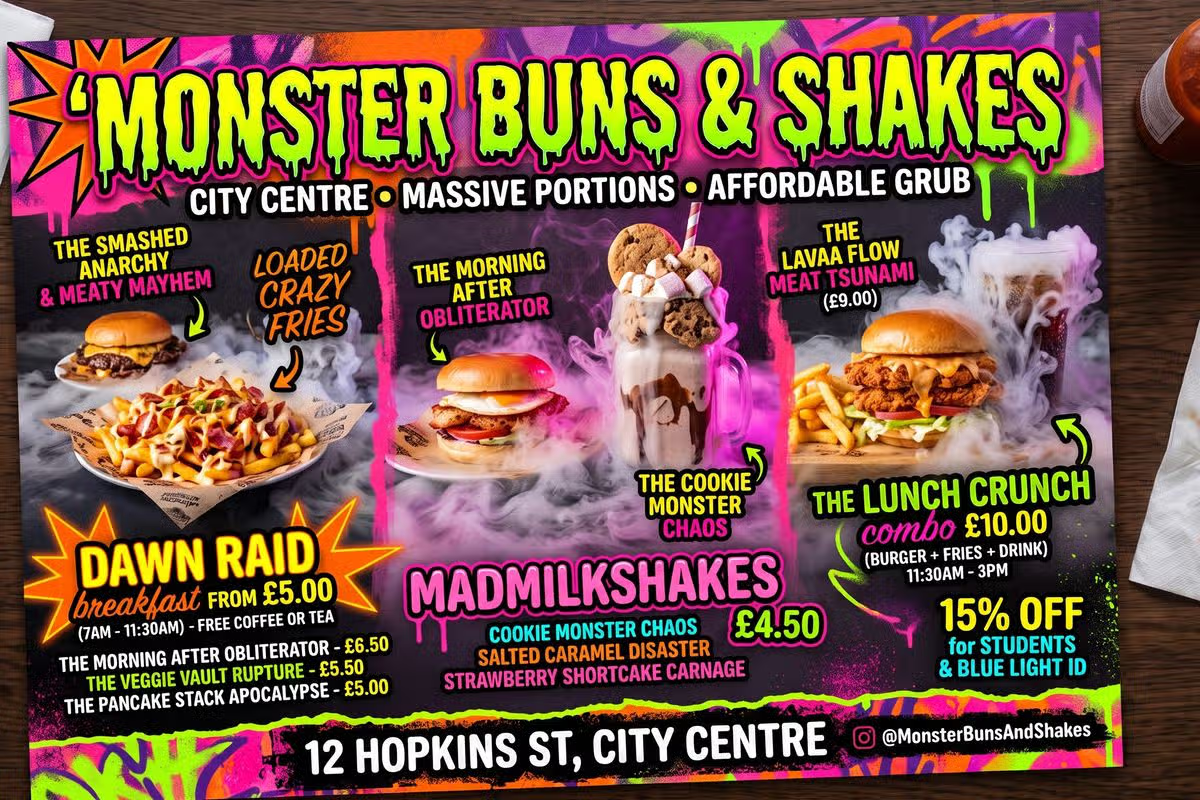
(Image: MEN / Google Gemini )
Why does artificial intelligence have such a firm grip on restaurants and bars? Is there a secret gentleman’s agreement between the giant AI firms of the world and our local bistro or butty shop, which means they are obligated to create menus, signage and promotional material that looks like something plucked from the pages of Dr Seuss?
At best, the images increasingly being made with AI and then plastered across sandwich boards and social media are slightly enhanced versions of an original image. At worst they’re utterly nightmarish, creepily cartoonish and despite the intent behind them, pretty off-putting to diners.
We’re all partial to a filter, we have the early days of Instagram to thank for that, but despite venues' best intentions, the end product of feeding a simple command into your AI platform of choice, is food that looks rubbery, unappetising and like something from another world - as if an alien was tasked with creating what they think humans might eat.
Click here for the latest on Manchester's food & drink scene, gigs and more in our CityLife newsletter
Is there no safe place from the clutches of AI?
I’m no luddite despite what our IT department might think, and I readily accept that technology continues to change the world, and requires us to adapt quickly, but please, can we all just take a beat before posting AI slop?
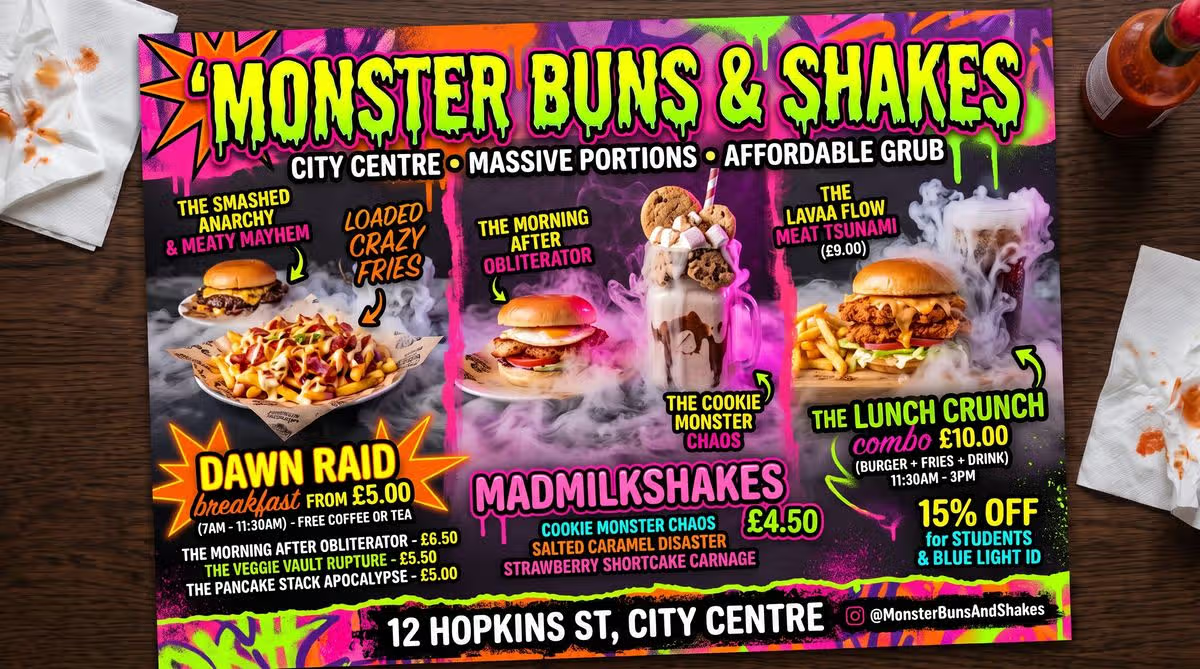
A fake menu we created using AI to show how quick and easy it is to create a menu, but what do customers think of the tool?(Image: MEN / Google Gemini )
In many ways it poorly reflects the ethos of the establishment. It hinders the actual message they want to convey.
You want us to know that you put great effort and care into your menu, that the produce is fresh and of great quality, and that the customer’s experience is of paramount importance to you as a business, but putting more AI-generated images into the world paints a different picture.
On one level, and this makes sounds harsh, it suggests a lack of care towards the end product, and where AI significantly alters an image or completely makes up a new one, it brings into question the authenticity - would the dish served up to a diner actually look like how it's being advertised?
But why are so many restaurants and hospitality venues using AI to create their promotional materials?
In short it’s a cheap and quick way to generate visuals, marketing materials and menus for little-to-no cost. To test it out, I used AI to create a burger menu (the main image for this article), and it only took three commands and less than two minutes to create.
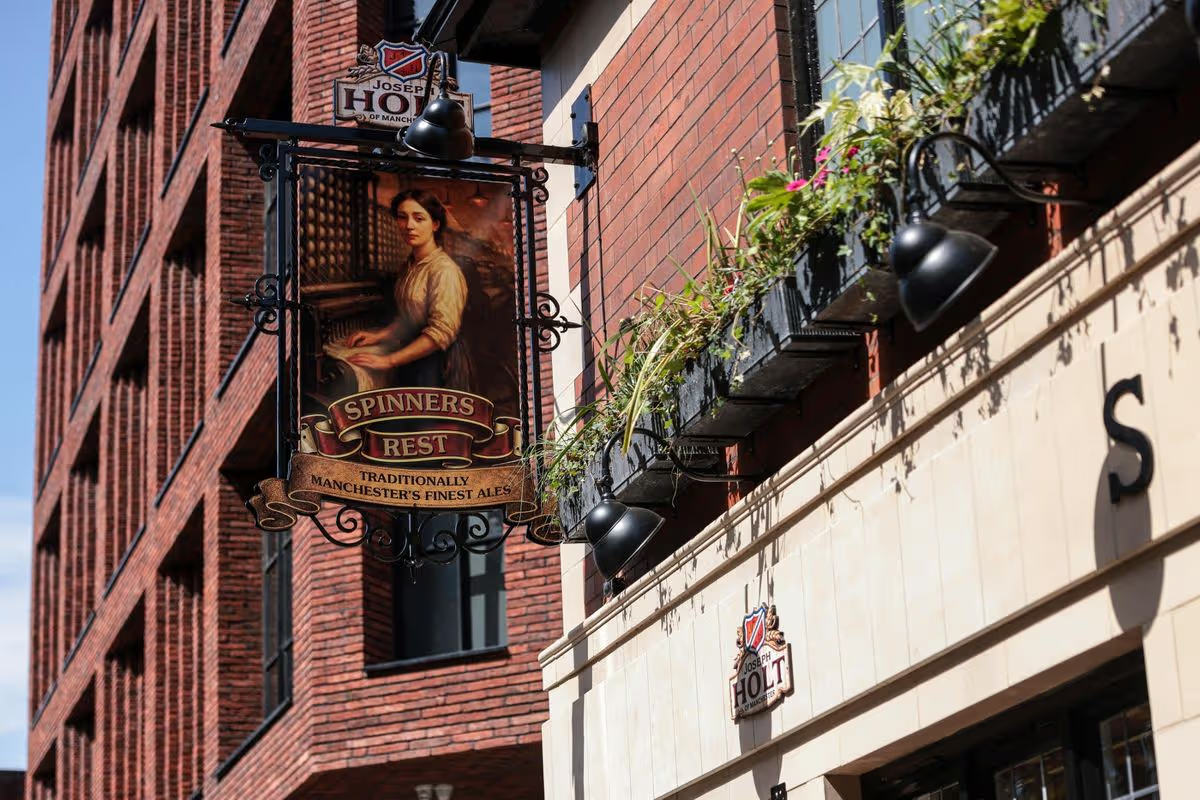
The sign that hangs off the front of the Spinners Rest has sparked controversy(Image: Kenny Brown | Manchester Evening News)
But the reasoning goes deeper than just being quick and easy. I also have a lot of sympathy for the hospitality industry and the struggles they’re facing on a daily basis.
We report on it every day, the cost-of-living crisis hasn’t gone away. Households just like businesses are grappling with high energy and utility bills, increasing rent costs, and rising food bills.
But your local restaurant or cafe is also having to pay higher National Insurance Contributions (NICs), National Living Wage, along with increased business rates and one of the highest VAT rates in Europe. The margins are getting slimmer and slimmer, leaving very little money in the bank for marketing.
Many owners are also having to work a lot more hours to make ends meet, unable to hire or keep as many staff, and having to do both front and back of house themselves. Within this context, I’m sure we can all understand that AI, at first glance, appears to be a silver bullet.
As one pub landlady also pointed out this week when facing backlash for using AI to promote the menus, huge international chains and brands are not held to the same standards.
"Do you comment on McDonalds posts? I haven’t had a burger that looks like their posters and adverts for about 30 years!!!,” she wrote.
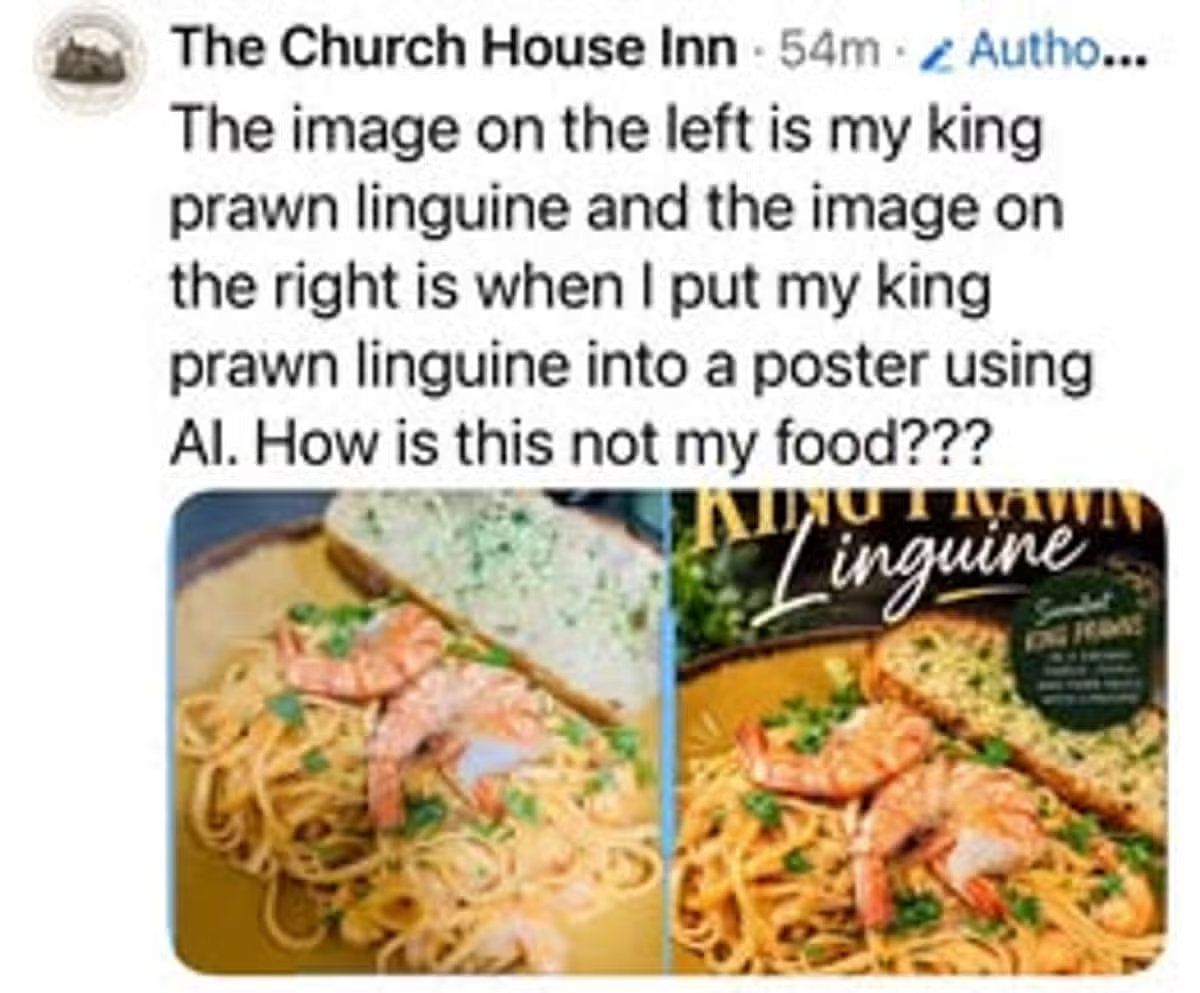
“Or is it just small businesses you like to irritate? Because we aren’t the ones with an £4.5 billion global marketing budget FYI."
Perhaps we really are holding small businesses to unrealistic standards. And do we, in all honesty, expect all that much of the fast-food chains, or do we just accept the sales spiel, and enhanced images that they push out to us on various platforms with their unrivalled marketing spend?
That said, the overwhelming use of AI in the hospitality industry at present, isn’t really helping anyone and it leaves a sour taste.
It’s toxic for the industry’s eco-system, which also supports the artists, designers and illustrators who spend a lot of time and energy helping businesses create their menus, social media posts and overall design too. It also creates a level of mistrust between the customer and venue, with many left scratching their head as to what is real and what is slop.
Don't let an algorithm decide what Manchester news you see - click here to add the MEN as your preferred Google source
The reasoning in many cases is completely understandable. It is one of the hardest times to run a hospitality business, and small fixes and tools like AI can make a big difference for time-poor, worn-out business owners.
But while it might be a useful short-term solution it also stands to erode or weaken the relationship between customer and business - one that could mean make or break.
As some have suggested, most customers would not mind a quick picture of a board using chalk to list the day's menu, or a poorly lit image of a meal, because at least that feels authentic and real, and not like something out of a fairytale or another planet.