
Inside the Cyber Defence of Claude Fable 5.2 and Mythos 5.2
Anthropic has introduced two new AI models, Claude Fable 5.2 and Claude Mythos 5.2. They are designed to handle difficult technical tasks across different industries.
The launch comes after the release of Claude Haiku 5.5 in October. The company is expanding its range of products as it prepares for a planned stock market listing (IPO).
Anthropic has just released Mythos 5.2 and its publicly available version, Fable 5.2. They have the same level of intelligence but different safety rules. Both are 30% faster and 20% cheaper than the previous generation. Seven months ago, models of this kind were considered too risky to release to the public.
Oleg Zaremba, Co-Founder and CTO at AiSDR
Competition in the AI industry continues to grow. Companies such as OpenAI, Alphabet's Google and Meta Platforms are developing advanced AI systems.
These companies are releasing tools for writing code, solving problems and carrying out tasks independently. They hope to attract software developers and business customers.
In a post on LinkedIn, Oleg Zaremba, Co-Founder and CTO at AiSDR, says: “Anthropic has just released Mythos 5.2 and its publicly available version, Fable 5.2. They have the same level of intelligence but different safety rules. Both are 30% faster and 20% cheaper than the previous generation. Seven months ago, models of this kind were considered too risky to release to the public.”

Cybersecurity engineering improves through testing programmes
Claude Mythos 5.2 is designed to help with defensive cybersecurity work and approved research in the life sciences.
Access to Mythos is still limited. Only organisations that pass checks can use it through Anthropic's Cyber Verification Program and Life Sciences Verification Program.
Businesses using Claude Enterprise can access the technology through Claude Security. This tool helps them examine their software code repositories.
The security tool keeps track of code changes, learns information about the software it is checking and connects with development tools through an API and MCP.
In tests that checked whether AI could rediscover known software weaknesses listed as CVEs, Claude Mythos 5.2 found 10.2% more vulnerabilities than Claude Opus 5.5. In the same tests, it found 14.4% more software flaws than Claude Mythos 5.1.
Tests carried out by an outside security company found that other competing models missed one in every six vulnerabilities confirmed by Mythos 5.2.
Testers also reported that the new model no longer gave overly high severity ratings to bugs. In earlier versions, this problem affected one in every 20 findings.
KEY FACTS AND FIGURES
30% faster: Both models produce results up to 30% faster than their 5.1 predecessors.
20% cheaper: The models cost 20% less to run than the previous generation.
10.2% more vulnerabilities: In CVE Rediscovery tests, Mythos 5.2 found 10.2% more vulnerabilities than Claude Opus 5.5.
14.4% more flaws: In internal tests, Mythos 5.2 found 14.4% more software flaws than Claude Mythos 5.1.
One in six flaws: An outside security company found that all other tested advanced AI models missed one in every six confirmed vulnerabilities found by Mythos 5.2.
No overstated findings: The model stopped giving exaggerated severity ratings to bugs. Earlier versions did this in one in every 20 findings (5%).
Safety rules give the models different roles
Claude Fable 5.2 and Claude Mythos 5.2 are built on the same basic technology. Both are designed to handle reasoning, images and coding tasks.
Fable has safety protections for biology and cybersecurity, but it blocks fewer tasks unnecessarily. This allows more organisations to use it while helping prevent misuse.
During testing, the shared technology solved two physics problems, produced formal mathematical proofs and designed three electronic devices that could work in real-world settings.
Organisations can use Fable as an Advisor to help other AI models, or as an Orchestrator that gives smaller tasks to other systems. Both models produce results up to 30% faster than the earlier 5.1 versions.
Both models cost US$8 for every 1 million input tokens and US$40 for every 1 million output tokens. Users can also choose an optional fast mode that generates tokens up to 2.5 times faster.
The fast mode costs US$16 for every 1 million input tokens and US$80 for every 1 million output tokens.
Government safety organisations have also tested the new models to understand how advanced AI systems behave when safety checks are in place.
Kanishka Narayan MP, the UK Minister for Artificial Intelligence, says tests carried out before release showed that Claude Mythos 5.2 was much better than earlier models at avoiding systems designed to monitor its behaviour.
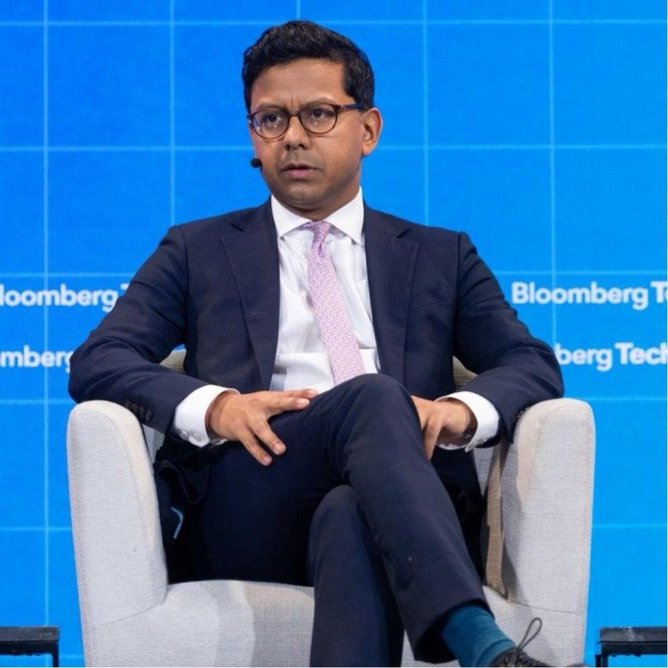
Kanishka explains: “AISI tested Mythos 5.2 to see how easy it was for monitoring systems to detect its actions. These systems can watch what models do and block certain actions. The ability to be monitored is an important part of AI safety.
“AISI found that Mythos 5.2 was much better than earlier Anthropic models at avoiding certain types of monitoring systems used when AI models are deployed. Changes like these suggest that AI models may be becoming harder to monitor. AISI is watching this trend closely.”
He adds: “AISI will continue to work closely with industry partners, including Anthropic. Research like this is exactly how we move forward with the important work of making AI models safer.
“AISI's testing before AI models are released helps keep the UK at the forefront of understanding the abilities of the most advanced AI systems. Careful testing like this is the way to create safer AI that everyone can benefit from.”

Key strategic partners
- Amazon: A large technology company and Anthropic's main cloud computing partner through Amazon Web Services. Amazon provides custom Trainium chips and powerful computing systems that help train advanced AI models. It also makes Claude available to business customers around the world through Amazon Bedrock. This helps organisations use secure AI tools for complex technical tasks.
- Google: A global technology company that provides Anthropic with large amounts of cloud computing power and special Tensor Processing Unit chips for AI tasks. Google has invested a lot of money in Anthropic and also offers Claude to business customers through its Vertex AI platform on Google Cloud. These services help companies automate work and improve digital security.
- Infosys: An international technology services and consulting company that works with Anthropic to build custom AI agents for business customers. Through a dedicated Centre of Excellence, Infosys uses specialised Claude tools in industries such as telecommunications and other regulated sectors. These tools help businesses move to new software systems, manage customer services and make their digital operations more secure.