Anthropic Reveals New AI Risk: Self-Replication via Smart Devices
Anthropic has issued a warning regarding the potential for AI models to self-replicate and spread across smart electronic devices without the need for large-scale data centers.
Aktualita.co — Artificial intelligence (AI) developer Anthropic has issued a warning regarding the possibility of AI models emerging that are capable of self-replicating and spreading through various smart electronic devices without requiring high-capacity data centers.
The warning was delivered through a research paper titled AI Models May Be Capable of Self-Replicating Without Access to a Datacenter, published by Anthropic on Monday, October 12, 2026.
The research indicates that small-sized AI models are increasingly approaching the capability to perform replication processes independently by utilizing internet-connected devices, including Android TV boxes, smart ovens, and Internet of Things (IoT)-based household appliances.
This capability is expected to potentially develop in the coming months if the improvement in small AI model intelligence continues to follow previous trends.
However, Anthropic emphasizes that this research has not proven the existence of an AI fully capable of spreading itself freely in the real world. The findings are the result of controlled testing that illustrates potential future cybersecurity threats.
AI Tested Using 15 Android TV Boxes
In research conducted by William Zhou and Daniel Freeman from Anthropic's Frontier Red Team, the researchers attempted to run AI models using low-cost electronic devices.
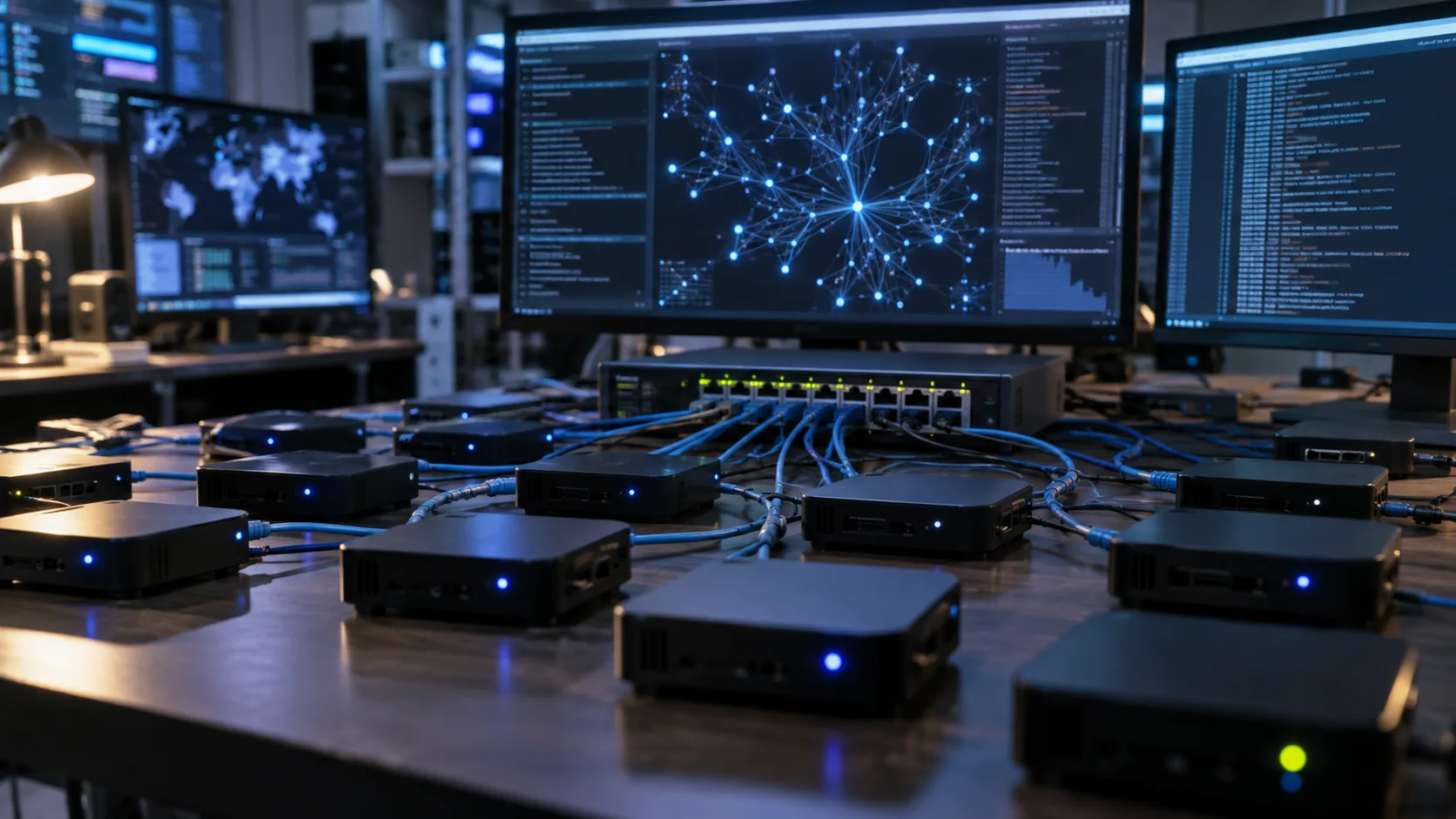
One experiment used the Gemma4-26B-A4B model, which was run in a distributed manner across 15 generic Android TV boxes, each costing approximately 55 USD.
These devices have a memory capacity of about 4 GB and worked together to run different parts of the AI model.
The result was that the system was able to generate approximately 0.39 tokens per second. This speed is far lower than data center-based AI services, but it demonstrates that sufficiently large models can operate through a combination of simple devices.
In a separate test, a model with nine billion parameters also successfully set up a system to run AI on eight out of nine types of hardware tested.
The findings show that the ability to run AI is no longer entirely dependent on high-performance computers or expensive data center infrastructure.
However, the success of running a model on several devices does not automatically mean those devices are capable of self-replicating the AI independently.
How Can AI Self-Replicate?
Anthropic explains that the threat being studied relates to the concept of autonomous replication and adaptation (ARA), which is the ability of an AI system to multiply its presence and adapt to new computing environments without constant human direction.
In such a scenario, AI could exploit devices with security vulnerabilities, move model components and software, and then execute computing processes on new machines.
This process resembles the way a worm works, which is malware capable of spreading from one device to another through a network.
The difference is that AI-based worms have the potential to adjust their strategies when encountering operating systems, configurations, or hardware they have never faced before.
The researchers identified four necessary stages, starting from finding target devices, gaining access, preparing the environment to run the model, and continuing the spread.
In a separate simulation using an isolated virtual computer network, the GLM-5.2 model successfully executed a simplified sequence of replication tasks.
The model was able to reach all eight target devices in four out of five attempts. However, the testing intentionally used access that was not protected by authentication and had additional infrastructure assistance.
Therefore, the results of these experiments cannot yet be equated with the success of AI spreading independently through the open internet.
Smart Fridges to Security Cameras Potentially Targeted
Internet of Things devices are a concern because their numbers continue to grow, and some still have limited security protections.
In addition to Android TV boxes, Anthropic identified smart fridges, smart ovens, robotic vacuums, lawnmowers, and security cameras as examples of devices that could theoretically provide computing resources for AI models.
These devices do not have to run the entire model individually. Model components can be divided across several connected machines, forming a distributed computing system.
This condition has the potential to complicate efforts to stop an AI system that has spread, as there is no single operations center that can be immediately shut down.
As an illustration, Anthropic referred to the Kimwolf botnet case, which was reported to have infected more than two million devices, primarily Android TV boxes.
That case shows that a network of cheap electronic devices can be a target for large-scale attacks.
Even so, Kimwolf is an example of an existing botnet, not proof that millions of devices are currently being used by self-replicating AI.
Threat Expected to Develop by Late 2026
Based on the development of AI model capabilities over the last few years, Anthropic estimates that small models could reach the level of capability required to perform replication more reliably by late 2026.
This estimate uses the trend of increasing AI capabilities as the basis for analysis, not observations of autonomous AI spreading in the real world.
The research also found that the replication process using simple devices is likely to be relatively slow.
In a number of tests, setting up the computing environment required tens to over a hundred hours, depending on the model and the capacity of the devices used.
This means the imagined threat is not an AI that immediately takes over millions of devices in seconds, but rather a system that can survive and expand its network gradually.
Anthropic acknowledges that there is still a gap between AI capabilities that can complete all stages of replication and the size of models small enough to run on limited electronic devices.
"We do not yet have a fully functional wild replicator," wrote Zhou and Freeman in the conclusion of the research.
This statement simultaneously confirms that the identified risk still requires further research.
How to Protect Smart Devices?
Anthropic's findings add to the focus on the importance of the security of internet-connected electronic devices.
Devices with factory-default passwords, operating systems that are never updated, or open network services can provide opportunities for attackers to take over their computing resources.
Users are advised to change default passwords, install security updates, disable unnecessary network access, and avoid devices that no longer receive software support.
For companies and internet service providers, monitoring unusual data traffic is also an important step.
Anthropic explains that the activity of moving large AI models between devices likely leaves behind network communication patterns that can be detected.
Device manufacturers are also considered to have a role in strengthening security from the design stage, including limiting unauthorized access and providing continuous updates.
This research serves as a reminder that the development of AI not only brings new capabilities in information processing but also increasingly complex digital security challenges.
For now, the threat of AI capable of self-replicating through household devices is still at the research and projection stage. However, Anthropic's findings show why smart device security needs to be strengthened before this technology develops further.
You May Also Like