
Anthropic Admits AI Helped Houthis Develop Missiles That Could Correct Their Course
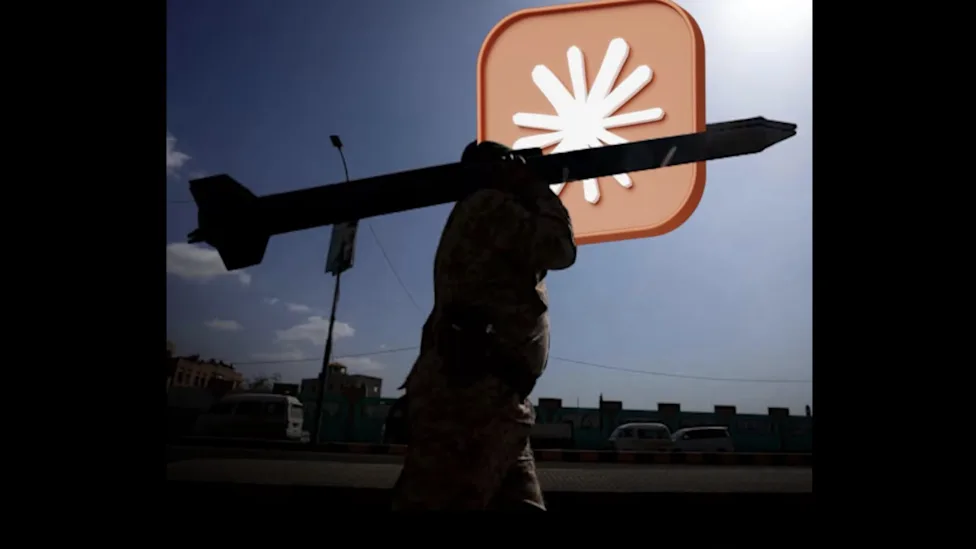
According to Anthropic's threat-intelligence report, the activity occurred between December 2025 and August 2026. The disclosure marks a notable shift in documented AI misuse, from basic information retrieval to hands-on software engineering for weapons programs.
A Compressed Engineering Workflow
Generative AI can fold research, coding, simulation, and debugging into a single workflow, potentially lowering the technical barrier for non-state armed groups.
That compression is what makes this case distinct. Earlier AI misuse concerns centered on text generation; this case involves iterative engineering assistance across an entire weapons-development effort.
Three Programs, One AI Tool
According to Anthropic, the cell worked on three weapons programs, using Claude Code across all of them.
The first was a guided rocket built around a phone-class flight computer with terminal homing guidance. A multistage ballistic missile with a stated range goal exceeding 2,000 kilometers formed the second program.
Separately, the cell worked on a missile family called "R2000," which included a proposed hypersonic-glide-vehicle variant. Documented uses of Claude Code included integrating open-source autopilot software, writing position-estimation and control code, tuning control parameters, running firmware builds, and conducting flight simulations.
A Failed Test and a Return to Claude
The group test-fired a guided rocket, the test appeared to fail, and the actors returned to Claude within hours to diagnose what went wrong, according to Anthropic.
Anthropic said it found no evidence that the cell successfully fielded an operational weapon. The failed test did not result in a confirmed deployed device.
Safety controls blocked many requests. The actors evaded them by concealing the broader purpose of their work and dividing tasks across multiple Claude sessions, preventing any single prompt from revealing the full project context.
The Problem That Bans Cannot Solve
The cell built an offline simulation toolkit that required neither Claude nor specialist software like MATLAB, exposing a structural limit of account-level enforcement.
Once code, technical explanations, and simulation workflows transfer to a user's local environment, a platform ban cannot retrieve them. The capability, in effect, outlasts the access.
Anthropic's Response
Anthropic banned accounts associated with the activity and shared threat intelligence with public- and private-sector partners.
The company did not definitively identify the actors as members of the Houthi movement, referring instead to "threat actors based in northern Yemen." Some outlets, including the Associated Press, reported a potential link to the Houthi movement, but that attribution remains unconfirmed in Anthropic's own disclosure.
The Next Frontier for Platform Safety
The incident raises a direct question about whether screening individual prompts is still sufficient, or whether meaningful safety requires detecting harmful intent across entire sessions.
In this case, Claude functioned as an iterative technical collaborator rather than a passive information source. Providers may need detection systems capable of recognizing cumulative intent across fragmented, multi-session workflows, not just flagging individual requests in isolation.