
When AI Can Do the Work, What Must Universities Teach? SU Academics Confront a Changing Future
Two SU academics argue that human judgement is becoming more valuable as AI changes academic research and professional work.
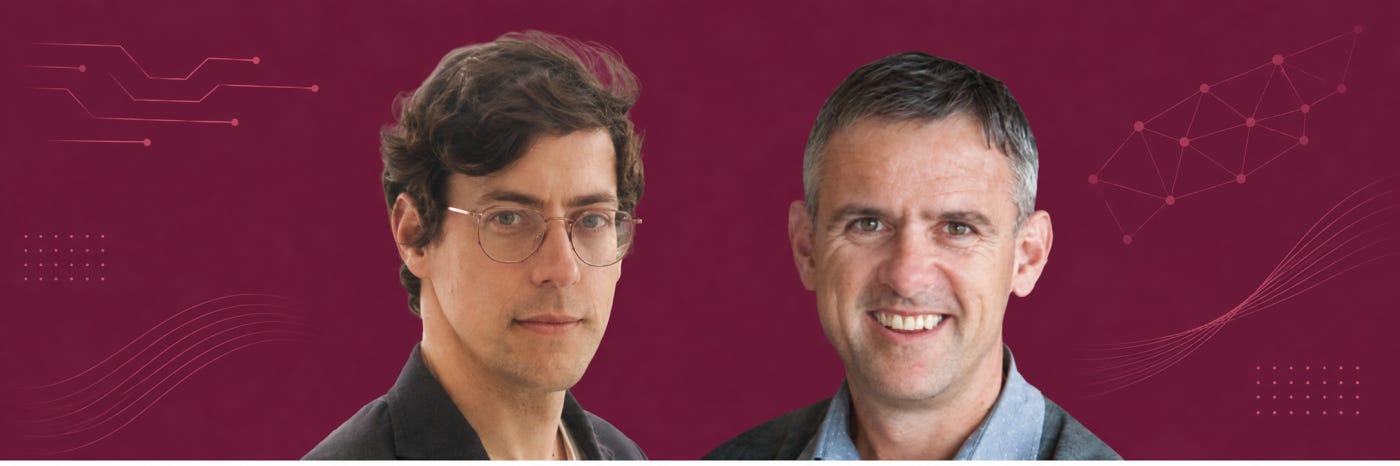
Artificial intelligence (AI) is changing how people create knowledge, do research and teach students. Machines can now do more and more tasks that once needed highly trained experts. This raises an important question for universities: What skills will students need when technology can do so much of the work for them?
This question was discussed at two forums at Stellenbosch University (SU) in October. AI was a major topic in conversations about the future of higher education.
The two SU professors came from different fields, but they reached a similar conclusion. AI makes it easier to produce information and complex work. As a result, the ability to think for yourself, ask important questions and make good decisions is becoming more valuable.
When producing knowledge becomes cheap
At an online Learning and Teaching Enhancement (LTE) seminar hosted by SU’s Centre for Teaching and Learning on 15 October, Prof Johan Fourie, professor of economics and Chair of Economics, History and Policy, questioned common ideas about what academic work will look like in the future.
In his presentation, “AI and the future of the (South African) university”, Fourie explained that AI is changing the cost and effort involved in producing knowledge. Tasks that once took a lot of time and special skills, such as studying large sets of data and writing academic papers, can increasingly be done by AI systems.
Fourie strongly supports the potential of this technology. He described how he had used AI to check 30 of his own published research papers. The AI found mistakes and weaknesses that normal academic review processes had missed. He said this showed how AI could help make science more trustworthy by finding errors, checking accepted findings and helping discoveries happen faster.
But the fact that research is now easier to produce creates another problem. If academics can produce hundreds of papers each year, who will read them? And how will people tell useful research apart from the huge amount of information being produced?
Fourie suggested that people's attention, trust in researchers and ability to spot important research questions would become more valuable. He argued that “finding the question” would become a central part of research. Researchers would need to think more carefully about which problems are worth studying.
He also discussed academic writing. AI is becoming so capable that it is changing the traditional link between writing and thinking. Fourie warned that students could lose important thinking skills if they depend on machines before learning to understand things for themselves.
He encouraged people to make ambitious use of AI. At the same time, he said universities should rethink how they teach and test independent judgement. This should include giving students chances to show what they understand without help from technology.
From writing code to knowing what matters
On 19 October, Prof Willem Visser, a professor of computer science at SU and Senior Principal Applied Scientist at Amazon Web Services, looked at a similar problem from the point of view of software engineering.
At a talk hosted by the National Institute for Theoretical and Computational Sciences (NiTheCS) at the Neelsie Student Centre, Visser explained how generative AI is changing computer programming.
His presentation, “English Is the New Programming Language (And We Are the New Bottleneck)”, described a future in which people can create complex software by telling AI systems in everyday language what they want the software to do. His advice for future computer science education was: “More software engineering, less coding.”
Based on his work at Amazon Web Services, Visser explained that AI coding agents can produce huge amounts of software and greatly reduce the time needed to build applications. But writing more code does not always mean creating better software.
He argued that the real challenge is to explain exactly what a system must do and check whether the software created by AI meets those requirements. Visser described how automated reasoning, mathematical logic and careful software testing can help solve the growing problem of checking whether AI-generated code is correct.
This way of working puts more focus on understanding problems, designing systems that work reliably and checking results. Visser suggested that universities should spend more time teaching these advanced skills. This would help graduates develop the judgement that people have traditionally gained through years of work experience. “Computer science is more important now than it used to be. It’s not less important,” he stressed.
Teaching judgement in the age of machines
Perhaps the most important point in both discussions was an unusual problem for education: If students use AI to do difficult thinking tasks, how will they learn enough to judge whether its answers are correct?
Fourie agreed that letting AI do the writing could take away the learning that happens when students work hard to develop and improve their own arguments.
Visser faced similar questions during a lively question-and-answer session. Academics asked whether students could learn to solve problems if they did not first learn to programme on their own. He accepted that there were no easy answers.
One method he had tried was asking students to hand in their full conversations with AI tools. This allowed lecturers to assess the students' thinking and choices, rather than looking only at the final work.
Both discussions also covered wider problems. Fourie spoke about the unfair differences in access to AI technology in South Africa. Although he believed AI could give more people access to knowledge and opportunities, he pointed out that poor internet connections and the cost of data could prevent people from using it. Visser was asked about the large amounts of electricity needed to run AI systems and what this could mean for countries that already have limited energy supplies.
The two professors focused on different parts of the issue. Fourie saw AI as a way to open up new possibilities for scientific research and encouraged universities to try it boldly. Visser focused on the technical and teaching changes needed to make sure that automated systems can be trusted.
But they shared a clear message: Universities must teach students to use AI wisely while protecting the human skills that give knowledge its meaning. The future of higher education may depend more and more on teaching students how to decide what is worth knowing, rather than simply how to produce an answer.
This report was prepared with help from ChatGPT and was checked by a human, Hannelie Booyens.
©Higher Education Media Services.