
Google’s New Gemini AI Model Imminent: Netizens Joke “Will It Traverse the Entire Periodic Table of Elements?”
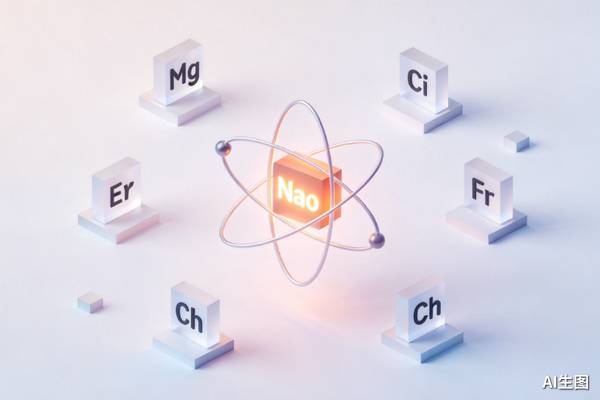
I never thought I would reach a day when I would complain that Google is releasing too many models...
Here is the latest news: Some developers have found a new model name, gemini-4-neon, in the code of the Gemini website.
Neon is the 10th element on the periodic table.
As soon as people discovered this, they started complaining that Google's naming order made no sense! Why did Google jump straight to Neon after releasing Hydrogen?
What happened to the promised order: Hydrogen, Helium, Lithium, Beryllium, Boron, Carbon, Nitrogen, Oxygen, Fluorine and Neon?
Speaking of the periodic table, someone even came up with a new interface for Google's Gemini models.
"I came up with a brilliant solution for Google... Google can use it for free."
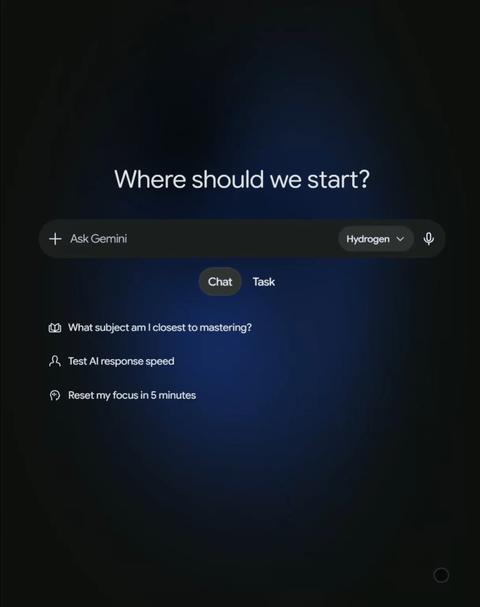
Who would have thought that, years later, I would be using the chemistry knowledge I learned in middle school again... Well, Google should stop releasing new models once it reaches Calcium. I can't remember the rest of the periodic table (just kidding).
What exactly is Gemini 4 Neon?
According to the model-tracking account AI Tracker Bot, the new name gemini-4-neon appears in the code of the Gemini website. It appears alongside model names that people had already found, such as gemini-4-argon and gemini-4-carbon.
There is also a subscription plan with the same name, NEON, in the code.
The code calls this plan TIER_NEON. Its name on the usage page is "Gemini Ultra", but the code treats it as a separate plan from the regular Ultra tier.
Some internet users also found that Neon is linked to upsell_MODE_CATEGORY_PRO. In software, an upsell usually means encouraging users to pay for a higher-level plan.
△
This clue makes it even harder to understand what Neon is meant to do. Before this, some people guessed that Neon might be a new, lightweight Flash-Lite model.
If we count them all, Neon would be the fourth Gemini 4 model found with an element-based name.
On September 30, Google first announced Gemini 4 Argon. It is designed for difficult tasks, including complex software engineering, deep thinking, business knowledge work and cybersecurity.
Next, on October 28, Google introduced Gemini 4 Carbon. This is a more advanced, cutting-edge model. It focuses on improving its ability to handle long and complex Agent tasks, coding and cybersecurity.
On November 12, Google released Gemini 4 Hydrogen. As its name suggests, this model focuses on speed and efficiency. It is mainly designed for everyday coding and Agent workflows.
Although Neon is still being prepared, some people are already asking Google to release Oganesson, the 118th element on the periodic table.
"Google is moving way too slowly! Why hasn't Gemini 4 Oganesson been released yet?"
"At this rate, Google will have to discover new chemical elements just to keep naming its models."
(That's actually a fair point.)
In fact, Neon is not the only element name that has recently appeared online. Krypton was also widely discussed a few days ago.
On November 14, a leaker claimed that Google was testing Krypton on Arena. The leaker shared code and animations produced by the model and even said that its performance was close to Claude Opus 5.5.
However, the leaker soon took back the claim and admitted that the model tested earlier was actually Gemini 4 Hydrogen running with a higher level of reasoning. The whole story had created a lot of excitement for nothing.
I'm going to quit my job and study Gemini model names at home
In fact, many people are trying to work out the rules behind Google's use of periodic table elements for model names.
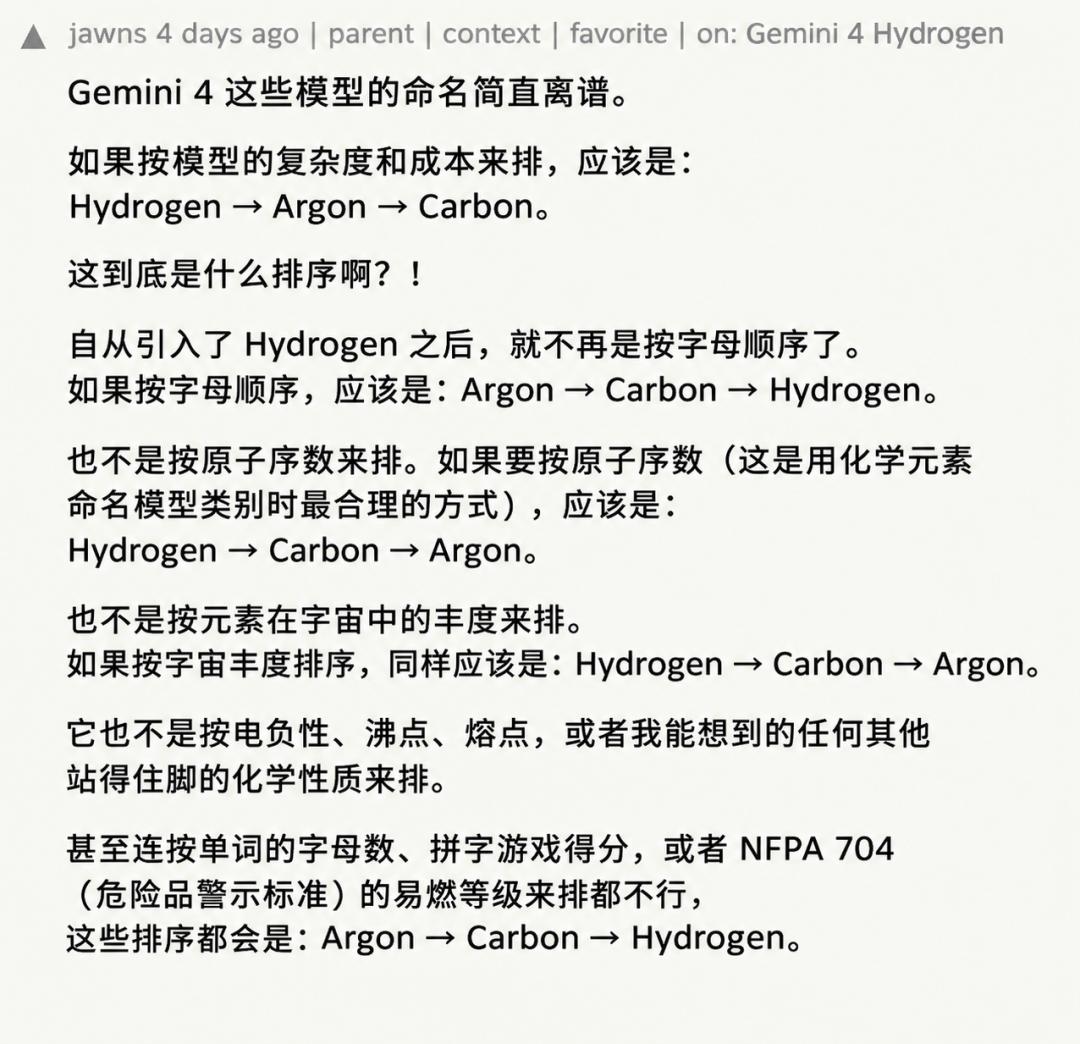
For example, an internet user named Jawns tried to put the Gemini 4 models in order in several different ways.
Here is how he explained it.
First, if the models are ordered by complexity and cost, the order should be Hydrogen → Argon → Carbon.
But if they are ordered by the atomic mass of their elements, the order would be Hydrogen (1) → Carbon (6) → Argon (18).
If they are ordered alphabetically, the order Argon → Barium → Carbon makes sense, because Google had previously tested Barium internally. However, this order no longer makes sense after Hydrogen was released.
If they are ordered by how common the elements are in the universe, the order should again be Hydrogen → Carbon → Argon.
△
In the end, nobody can work out the naming pattern.
"Bro, I think Google just picks elements at random from a hat."
"Even Starbucks' cup sizes have a clearer naming system than this."
To be honest, Google has become a master of making people guess. Maybe it deliberately makes the names so hard to understand that users keep guessing and waiting for new models to arrive.
But I think there is another possible explanation: Google may have chosen each element because of what its name or properties suggest.
Take Argon, for example. Its name comes from a Greek word meaning "lazy" or "inactive". Argon is a noble gas, which means it has very stable chemical properties. This could match the model's focus on cybersecurity defense and complex software engineering.
Carbon is a basic element that makes up living things and can form many different complex structures. This may also match the difficult problems that this most advanced model is designed to solve.
Hydrogen is the lightest element, which fits the model's focus on speed and efficiency.
As for Neon, its name comes from the Greek word "neos", meaning "new". The word "neon" comes from this word. Perhaps we can use this meaning to guess what the new model is designed to do.
Jokes aside, one complaint is actually quite reasonable.
"The day tech companies finally give their products normal names will be the day we know they have achieved superintelligence."
After all, the main purpose of a model's name should be to help users understand it easily. How powerful the model really is should be shown through the experience of using it.
One More Thing
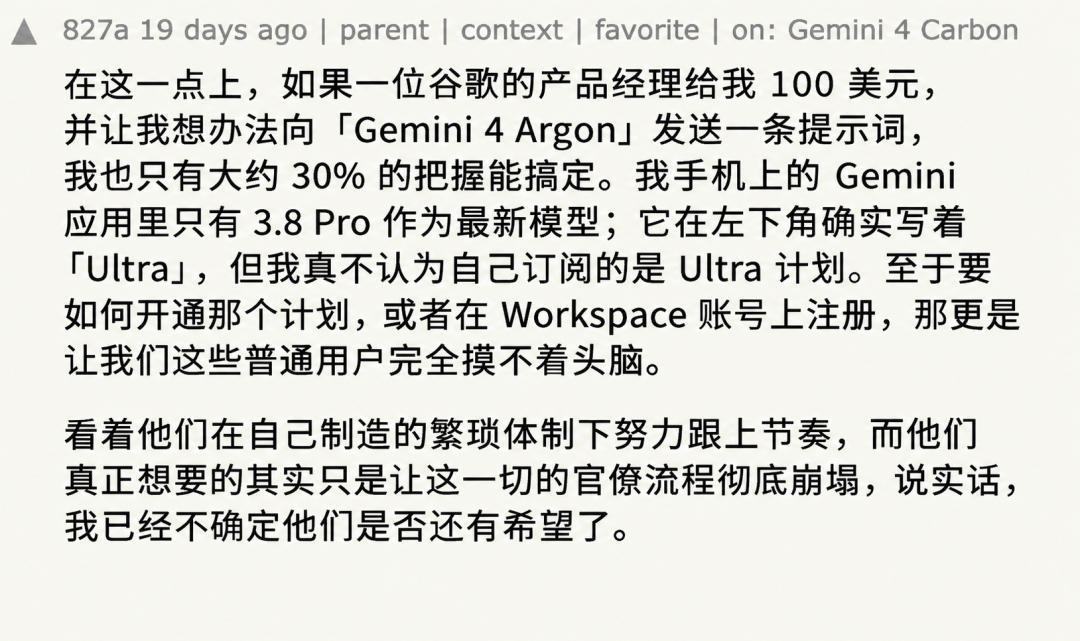
It is not just the model names that are confusing. Google's subscription system is also making many internet users frustrated.
When Gemini 4 Carbon became available to more users earlier, some people found that they still could not see any new models even though they had a Pro subscription.
Other users found that Carbon was available on their Google Workspace accounts but not on their AI Pro accounts. Their AI Pro accounts were still limited to Argon.
△
Google does not just have different paid plans. It also offers six different ways to access Gemini: AI Studio, Gemini API, Gemini for Business, Gemini App, Google Search and Antigravity.
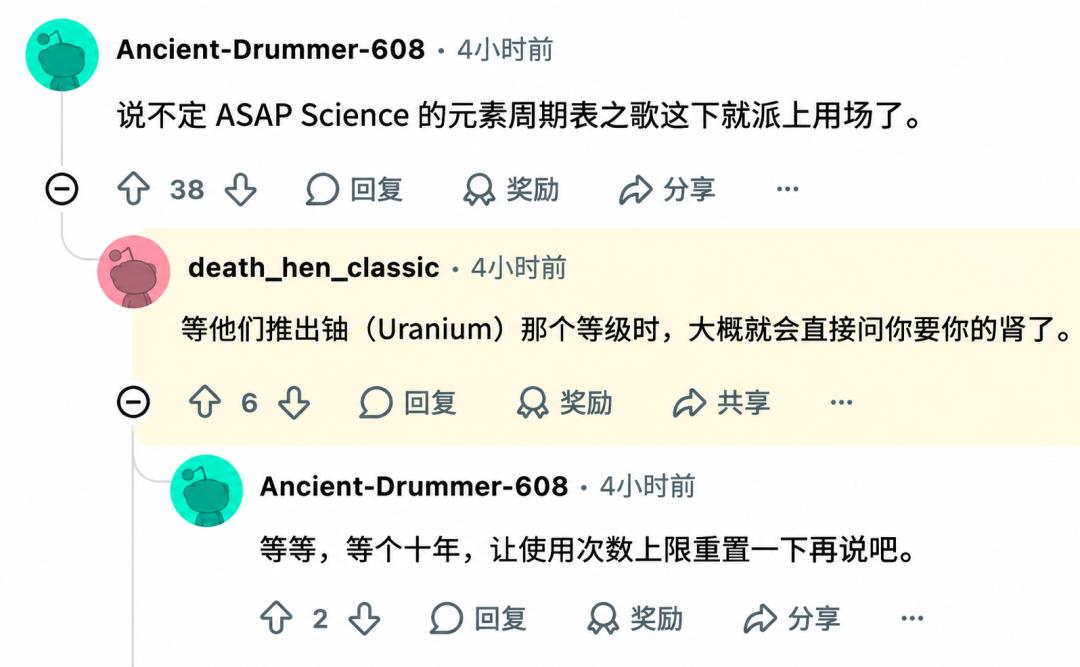
Now, the NEON subscription plan discovered alongside the new model has made the whole system even more confusing.
△
This article comes from the official WeChat account "QbitAI". It was written by Cheng Qian and published with permission from 36Kr.