
Who sets the objectives of an AI president?
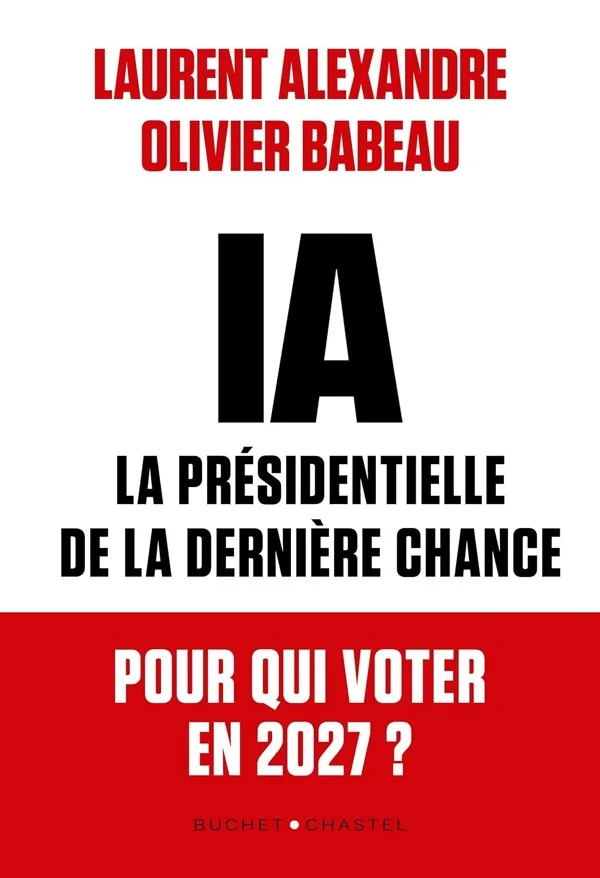
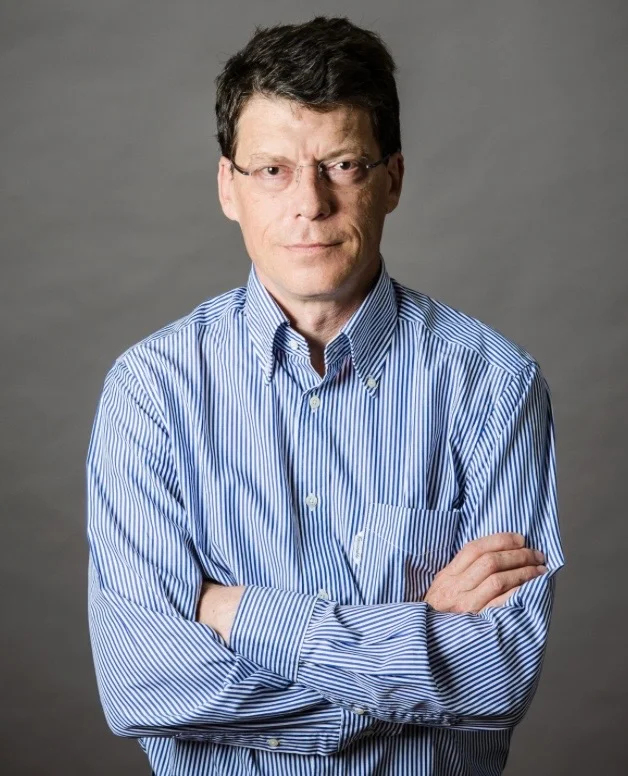
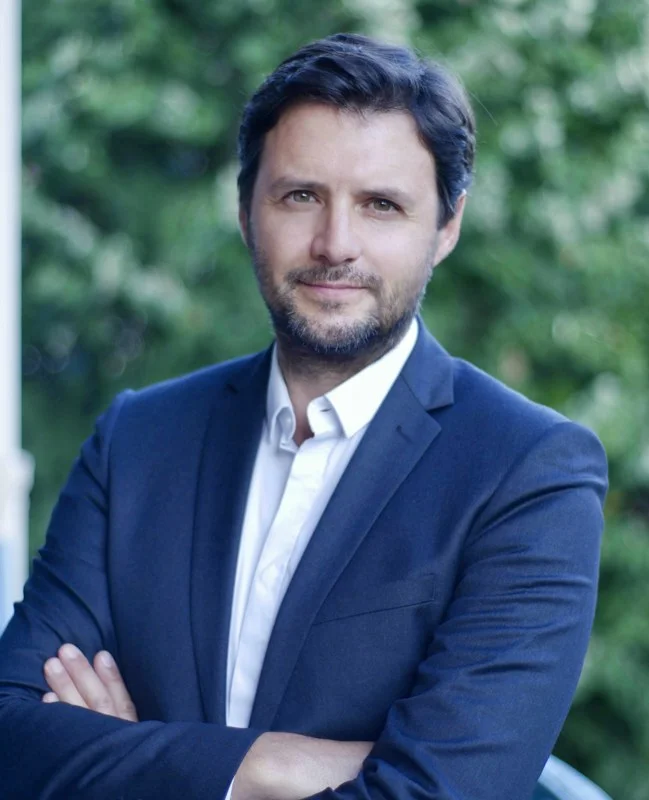
In IA: la présidentielle de la dernière chance. Pour qui voter en 2027? (AI: The Last-Chance Presidential Election. Who Should We Vote for in 2027?) (Buchet-Chastel, October 2026), Laurent Alexandre and Olivier Babeau want to give voters a “compass” to help them identify candidates who are ready for the challenges of artificial intelligence (AI). They argue that AI will become a major force shaping the economy, war, work and politics. Laurent Alexandre trained as a urological surgeon. He co-founded Doctissimo and is president of DNAVision, a Belgian company that sequences DNA. Among his books are La Mort de la mort (The Death of Death, 2011) and La Guerre des intelligences (The War of Intelligences, 2017). Olivier Babeau is a professor at the University of Bordeaux and founded the Institut Sapiens, a think tank created in 2017. The two authors previously wrote Ne faites plus d’études (Don’t Study Anymore, Buchet-Chastel, 2025). In this interview, they discuss why the 2027 election is urgent, what intelligence and the singularity mean, the major changes caused by AI, human control over decisions and autonomous weapons, national independence, jobs, their plans for the next five-year presidential term and, finally, the possibility of an AI president: who would decide its goals?
In IA: la présidentielle de la dernière chance. Pour qui voter en 2027? (AI: The Last-Chance Presidential Election. Who Should We Vote for in 2027?) (Buchet-Chastel, October 2026), Laurent Alexandre and Olivier Babeau want to give voters a “compass” to help them identify candidates who are ready for the challenges of artificial intelligence (AI). They argue that AI will become a major force shaping the economy, war, work and politics. Laurent Alexandre trained as a urological surgeon. He co-founded Doctissimo and is president of DNAVision, a Belgian company that sequences DNA. Among his books are La Mort de la mort (The Death of Death, 2011) and La Guerre des intelligences (The War of Intelligences, 2017). Olivier Babeau is a professor at the University of Bordeaux and founded the Institut Sapiens, a think tank created in 2017. The two authors previously wrote Ne faites plus d’études (Don’t Study Anymore, Buchet-Chastel, 2025). In this interview, they discuss why the 2027 election is urgent, what intelligence and the singularity mean, the major changes caused by AI, human control over decisions and autonomous weapons, national independence, jobs, their plans for the next five-year presidential term and, finally, the possibility of an AI president: who would decide its goals?
The European Scientist: Are you prophets of doom? You use phrases such as “the last-chance presidential election”, “the first election of the world that comes after”, “the window is closing”, “an irreversible five-year term” and “a book that has to hurt”. Are you trying to frighten voters or wake them up?
Laurent Alexandre: I am a surgeon. When a medical test shows that something is serious, I prefer to say so while there is still time to act. In 2027, we will elect a president for five years. In French politics, five years can be enough time to bury two reforms and order three reports explaining why they failed. In AI, five years can be enough to change the value of a degree, the size of a company or a country's ability to defend its independence. Even familiar issues such as the cost of living, healthcare and pensions will depend on a new question: where will wealth be created when more and more intellectual work can be bought whenever it is needed?
Olivier Babeau: The word “irreversible” has a fairly clear meaning. A government can cancel a tax reform introduced by the government before it. But it is much harder to rebuild a research sector after its teams have left, or to free government departments from computer systems on which their data, working methods and sometimes their institutional memory depend. There are also good reasons to welcome this revolution. Giving a child who cannot afford private lessons access to an excellent tutor is a wonderful opportunity.
The European Scientist: Could the growth of AI be more chaotic than expected? In Texas, Democrat Gina Hinojosa won a recent election after campaigning against the spread of data centres. In September, Bernie Sanders and Steve Bannon appeared on the same platform, one after the other, to call for tighter controls on AI. Does this show that progress may take a less predictable path?
Olivier Babeau: Of course. We often use one word to describe three different developments. The first is the improvement in what AI models can do. The second is how quickly the necessary infrastructure can be built. The third is how quickly society agrees to change the way it uses AI. These three developments can move at very different speeds for years. Gina Hinojosa's election was also about public schools and the cost of living. When a town agrees to host a data centre, it wants to know how many jobs will remain after construction ends, who will pay for the electricity connection and what effect the centre will have on local electricity bills.
Laurent Alexandre: Sanders and Bannon distrust the power of AI laboratories and technology platforms for different reasons. Their appearance on the same platform shows that this issue crosses traditional political divisions. Public anger can change where companies invest, make access to energy more difficult or lead to tighter controls. At the same time, a better algorithm may allow existing computers to do work that previously required a new building. Governments will have to adapt.
The European Scientist: Intelligence and the singularity. You describe a coming “metaphysical humiliation”. How do you define intelligence and superintelligence? Do you think Ray Kurzweil's prediction of the singularity is realistic?
Laurent Alexandre: I define intelligence as the ability to learn, think through a new situation, use knowledge from one subject in another and find an answer that can be tested against facts. A superintelligence would be much better than the best humans at a wide range of thinking tasks. This would include recognising its own mistakes, changing its approach and checking its results. An AI can solve a problem that confuses excellent mathematicians and then immediately struggle with a simple everyday instruction. Kurzweil describes two possible milestones. He expects AI to reach human-level intelligence around 2029 and predicts the singularity in 2045. In his vision, human abilities and machine abilities will merge. I think the first date is possible, depending on how reliable and independent AI must be to count as human-level intelligence. The second prediction is still a gamble. What interests me is the cycle that begins when AI improves the research tools used to build the next generation of AI. As for metaphysical humiliation, it means discovering that our brains may have been the starting point for an intelligence that becomes more powerful than our own.
The European Scientist: Five major changes. What are they? How can politicians create a plan when the ground beneath them is constantly shifting?
Olivier Babeau: Our book identifies four major changes. The first is Promethean: we have created an intelligence that is beginning to help design its own successors. The second affects our civilisation. Our schools, careers and social protection systems were built around human intelligence, which is limited and takes time to develop through education and work. If this kind of intelligence becomes widely available in parts of the economy, the foundations of the system created in 1945 will be shaken. The third change is geopolitical. Power increasingly depends on control of computing, chips, cloud services and AI models. A country can keep its flag, its seat at the United Nations and its defence budget while losing the ability to operate essential services independently.
Laurent Alexandre: The fourth change concerns human nature and society. For two centuries, we have given people status based on school results, qualifications and expertise. What happens when the best students have to compete with machines? If we want to identify a fifth change, I would say it is the effect of the other four on democracy. People may keep their right to vote but gradually lose their ability to influence decisions if elected leaders rely on tools that nobody outside the companies supplying them can properly examine. When creating a political programme, we must separate changes that take ten years from those that can be corrected in six months. Training mathematics teachers, expanding the electricity network and rebuilding research teams are all tasks that should begin as soon as a president takes office. I would rather support a candidate who can explain what evidence would make them change their policy than one who promises an exact number of jobs in 2032.
The European Scientist: Losing control. Imagine these systems being used in Poland during a political conflict involving Prime Minister Donald Tusk. Would this require AI systems to be conscious and responsible for their actions? And what about autonomous weapons that can kill?
Laurent Alexandre: A machine can make a decision in the technical sense without feeling anything and without being able to accept responsibility for what happens next. We often mix up two different things: making a choice and being responsible for its consequences. An AI system might suggest a medical diagnosis. But if a doctor always clicks “approve” because they no longer have enough time or knowledge to check the recommendation, their control is no longer real. This is what we describe in the book. Humans can gradually lose control through a series of decisions that each seem reasonable. The machine does not need to become conscious or ask for power.
Olivier Babeau: Poland is going through a serious political and institutional conflict, especially concerning its Constitutional Tribunal. However, I think it is excessive to describe the country as being on the edge of civil war. Decisions to use deadly force must remain under real human control, with a clear chain of responsibility. The United Nations and the International Committee of the Red Cross (ICRC) have renewed their calls for binding international rules. In particular, the ICRC wants unpredictable autonomous weapons and systems designed to target people to be banned. Asimov could create laws that worked in his fictional universe. In the real world, we need rules that countries must follow, authorities that can enforce them and officials who can be held responsible.
The European Scientist: National independence and the speed of democracy. How can we protect our ability to act without allowing our technological support systems to become more powerful than society itself?
Olivier Babeau: The right speed depends on the decision being made. A hospital can test a tool for managing appointments within a few weeks. But if the tool decides who gets medical care, we need stronger evidence, public discussion about the rules and ways to appeal decisions. Responsibility requires people to have a real choice. For citizens, this means understanding decisions that affect them and being able to ask for them to be reviewed. For the state, it means being able to leave a technology supplier without losing access to its own files.
Laurent Alexandre: France has a strange way of respecting the human pace. It can take years to make an industrial decision, but then give an employee only a few months to change careers. We should reverse these priorities. We should speed up connections to the electricity grid and the training of engineers. We should give people time to learn and a voice in decisions about their future. If the government buys foreign AI models because they are the best for a particular job, it must know which functions it still needs to operate itself if the contract ends, the price changes or access is restricted. That is when national independence is truly tested.
The European Scientist: Unprecedented situations. What kinds of problems might the next president face?
Laurent Alexandre: Imagine a hospital using a foreign AI model to help staff organise complicated patient files. The supplier then removes the version that doctors have learned to use. The replacement behaves differently, and nobody has prepared an alternative. Who decides how the hospital service should continue, and how quickly must they act? Consider another situation. Laboratories use AI to discover possible new medicines more quickly, but the main delay then moves to testing and clinical trials. Should the next euro be spent on more computing power or on teams that can prove which treatments actually work in patients?
Olivier Babeau: Imagine a government budget in which profits and production increase, but companies hire fewer beginners and the total amount they spend on wages grows more slowly. Or imagine two studies of a proposed tax reform, produced using different AI systems, reaching opposite conclusions. The prime minister chooses the study that supports his position. Parliament must be able to examine the assumptions behind both studies and order its own independent research before voting.
The European Scientist: Is the political class stuck in its old ways? Some candidates are clearly interested in these new technologies. Who should we vote for in 2027?
Olivier Babeau: Some elected officials are doing serious work on AI safety, the energy needed by data centres and the use of AI in government departments. A candidate who expects AI to spread quickly but keeps exactly the same assumptions about jobs, tax and social contributions, and education has a problem with consistency. I would also ask what project they are willing to give up to pay for their technology priorities. A programme that calls everything a priority is just an advertising document.
Laurent Alexandre: I would ask candidates to bring a real piece of work that they have completed using several AI systems. They should show where the machines improved their thinking and where they gave them wrong answers. Then I would ask three questions. What will you do if companies hire far fewer young graduates for a long time? Which foreign technology systems must the state be able to operate without during a crisis? What specific powers will you give Parliament to examine the algorithms used by your government? I would vote for someone who gives clear and consistent answers, explains how much their plans will cost and is willing to defend them publicly. Visiting Mistral and taking two photographs with engineers can make for a pleasant morning. But there are still five years of government work to do.
The European Scientist: AI and employment. By making services cheaper, AI agents can create new uses for them. Could this chain reaction create much more economic activity and many more jobs than we expect?
Laurent Alexandre: We are concerned about timing and about the people who must deal with the difficult period in between. The economy could be richer in 2035 while young people lose three important years between 2027 and 2030. In a company, a junior employee used to learn by preparing a file that a senior partner would correct. If AI prepares the file and the partner corrects it directly, where will the partner of 2040 get their experience? Also, if AI gives professionals more free time, we still need to decide how they will use it. In medicine, saving ten minutes on a report could give a doctor ten extra minutes with a patient. Or the hospital manager could use that time to schedule another appointment. The algorithm is the same. The organisation decides what happens.
Olivier Babeau: I think the chain reaction is very likely. When a service becomes cheaper, people who could not afford it before begin to use it. A small or medium-sized business that could not pay for legal services might finally be able to check its contracts and sell products in another country. The cost of taking that first step falls, which can create more work in sales, transport and technology. If preparing a document takes ten times fewer hours and demand triples, the total amount of work being done increases even though fewer working hours are needed.
The European Scientist: The search for meaning. Do you imagine that humans could be completely replaced, even in the things that make us special, as in the scenario presented by Siliclone?
Olivier Babeau: I do not believe in the idea of a safe area where humans can hide because machines will always be bad at certain activities. People will continue playing chess even if none of them can beat the best computer software. They also value having an opponent, making an effort, taking risks and playing the game themselves. The political problem is that we have organised social recognition around employment. If jobs no longer play the same role, we must create other ways for people to take responsibility, be needed by others and feel that they have achieved something because they chose to take it on.
Laurent Alexandre: This scenario interests me because people can lose control of their lives long before machines replace humans completely. A machine can write a perfect letter of condolence. But the person receiving it may also value the fact that someone took the time to write to them, even if the words were not perfect. We have often confused two different things: being useful and being essential to production. If being essential to production becomes less common, we must make sure that people can still feel useful by taking on real responsibilities, both at work and outside it.
The European Scientist: Your proposals. What measures would you like to see in a presidential programme?
Laurent Alexandre: I would propose a Sixth Republic adapted to the age of advanced computing and AI. It would have an executive branch able to make quick decisions about important infrastructure, a Parliament able to challenge those decisions using independent experts and a real right to challenge automated decisions. Opposition parties should have the resources to repeat impact studies using their own experts and tools before Parliament votes. Finally, industrial policy must deal with electricity, computing power, AI models and skilled people together. France and Europe must decide which technologies they want to control directly and which areas they can cover through partnerships with other countries.
Olivier Babeau: I would add a policy that supports scientific excellence. We should make mathematics central to education again, support talented pupils who could achieve a great deal, especially those whose families do not know how to guide them through the education system, and pay government experts with rare skills according to the responsibilities they carry. We also need a new social agreement. Every worker should have a regularly updated record of their skills, how their tasks are changing and what other jobs are available near their current occupation. This requires practical tools: access to AI models, professional data that workers can take with them and time for training during paid working hours. When a company announces that a job or role will disappear, it should be able to explain what it has tried to help the people doing that work move into other roles.
The European Scientist: An AI president? What would it mean to replace the President of the Republic with AI? How could we protect the system of checks and balances?
Olivier Babeau: As soon as someone talks about an AI president, I ask three questions: Who sets its goals? Who can access its data? And who can change the system? The people who control these things would hold part of the country's political power without necessarily being elected by voters. We therefore need strong checks and balances. Judges must be able to suspend decisions. Parliament must be able to request records and repeat calculations. Journalists must be able to investigate contracts. Citizens must be able to appeal to a human authority that has the power to change the result. In the 2027 election, I will pay close attention to what each candidate is willing to let others examine about the way they use their own power. This often tells us more than what they promise to do with other people's power.
Laurent Alexandre: In our book, we take this temptation to its logical conclusion. Imagine that a machine knows the facts better than the president and can better predict the results of his decisions. At first, the president will simply ask for its advice. Then people will criticise him whenever he disagrees with it. Eventually, he will lose the ability to say no. AI can calculate what will happen if a maternity hospital closes. But deciding what level of risk is acceptable, how much money should be spent and which area must bear the consequences is still a political choice. Someone must be able to stand in front of the local residents and say: “I made this decision, and here is why.”
This interview was also published in Polish by Wszystko co najważniejsze: “Kto wyznaczy cele prezydentowi ze sztucznej inteligencji?”.