
Mercor: How the AI Training Firm Hit a US$20bn Valuation
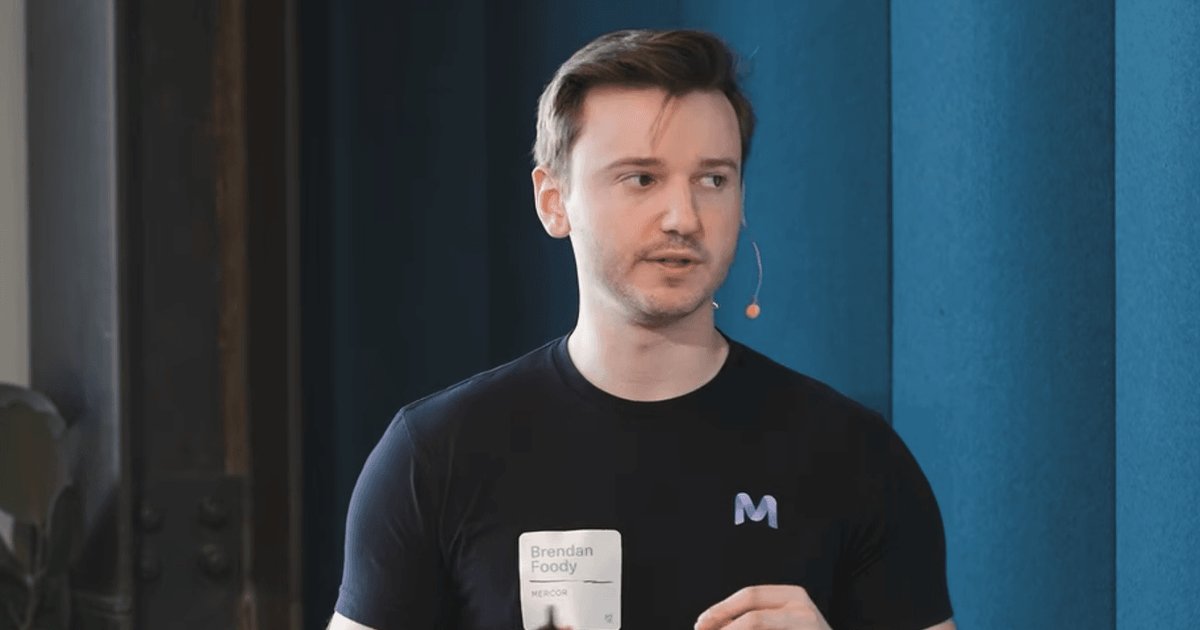
Mercor's founders were 23 years old when the company's yearly revenue rate passed US$2bn in June 2026. Just two years earlier, it was only US$1m. The company has now announced a US$750m Series D funding round, giving it a value of US$20bn.
The San Francisco company pays doctors, lawyers, bankers and engineers to teach AI models how people do real jobs. It pays out millions of dollars to these experts every day.
Its customers include leading AI research companies. Reports have named OpenAI, Anthropic, Google and Meta. The company has survived a data breach and a pause in its work with Meta in early 2026. It is now growing quickly and expanding into more businesses.
Every job in the economy will need its own AI agents, and every company will need a way to train and test them using its own work
Brendan Foody, Mercor CEO
How the company grew
Brendan Foody (CEO), Adarsh Hiremath (Co-CEO) and Surya Midha (Co-Founder) started Mercor in 2023. It began as an online marketplace for AI-related recruitment.
The company found an opportunity when AI research labs needed real experts, rather than large groups of general workers, to create tasks, judge AI answers and build tools to check AI models after training. Brendan's view is simple: AI models are smart, but they have not yet learned how to do real jobs. Mercor now has more than five million experts in different fields in its network. By March 2026, it was paying these experts more than US$2m every day.
Mercor's yearly revenue rate passed US$1bn in February 2026 and US$2bn in June. These figures are based on the total amount billed to customers. Contractors usually receive 60% to 70% of that money. The Information reported that Mercor made US$614m in total revenue during the first half of 2026, an increase of 70% compared with the same period the year before.
Felicis led a US$350m Series C funding round in October 2025, which valued Mercor at US$10bn. Investors in its Series D, announced in November, include Benchmark, Felicis, Fundomo, funds managed by affiliates of Apollo, G Squared, General Catalyst, Glade Brook Capital, NVIDIA, Salesforce, Sapphire Ventures, StepStone Group, XTX Ventures and Zoom.
Mercor says it works with all five of the biggest AI research labs and six of the seven major US technology companies known as the Magnificent Seven. But regular businesses are also becoming an important part of its plans. Brendan says, “Every job in the economy will need its own AI agents, and every company will need a way to train and evaluate them on its own work.”
“We spent the last two years building that infrastructure with the frontier labs. Now we're bringing it to enterprises across the economy.”
Mercor in numbers
Revenue rate: Passed US$2bn in June 2026, up from US$1bn in February. These figures are based on total customer billings.
First-half revenue: About US$614m in total revenue during the first half of 2026, according to The Information in July 2026.
Company value: US$20bn following a US$750m Series D funding round in November 2026.
Expert network: More than five million experts in different fields as of July 2026.
Daily payments: More than US$2m paid to experts each day by March 2026.
Employees: More than 700 full-time employees in November 2026.
Acquisition: Agreed to buy Deeptune in July 2026. Deeptune had received US$43m in Series A funding from a16z.
What comes next
Mercor's next product is a training environment. This is a simulated workplace where an AI agent can practise doing a task and receive a score for its performance. In July 2026, Mercor agreed to buy Deeptune, a start-up backed by a16z. Deeptune has recreated hundreds of business software applications, including Salesforce, as practice environments. Its team is joining Mercor's growing office in New York.
In a post on X at the time, Mercor explained that teaching AI to do real professional work means covering all the different software apps, workplaces and tasks found across the economy. “We have built the largest expert network and have been a leader in creating worlds and tasks. Deeptune built the apps, having created hundreds of them for the leading AI labs,” the company said.
Mercor's APEX tests measure how well AI performs useful work that has real economic value. In October 2026, an AI system performed better than 12 licensed certified public accountants (CPAs) in the APEX-Accounting test.
Mercor is also working on research that is open to others. It used SkyRL to further train an open AI model with 397 billion parameters. SkyRL was built at the University of California, Berkeley, with Anyscale. The training improved the model's APEX-Agents score by 70% in relative terms. Mercor also shared datasets and records of the model's tests on Hugging Face.
Every company deploying AI needs to know whether it works, and the answer is different for each one
Adarsh Hiremath, Co-CEO at Mercor

However, Mercor has also faced serious problems. In late March 2026, a security breach involving its supply chain led to problems. According to WIRED, Meta paused all its work with Mercor while it investigated a major security breach that affected the start-up.
Mercor appears to have recovered and is now trying to grow beyond leading AI research labs and work with more businesses. “Every company deploying AI needs to know whether it works, and the answer is different for each one,” says Adarsh.
“A model can score well on a public benchmark and still fail on the systems, policies, and edge cases that define how a specific business runs. We build custom benchmarks with each enterprise to measure models against its own standards, and that benchmark becomes the starting point for post-training.”
Top technology partners
- Cognition: This company makes the Devin AI coding agent. It worked with Mercor to launch APEX-SWE, a test that measures how well AI handles software engineering. The test is part of Mercor's APEX family, which checks how well AI performs valuable professional work.
- Anyscale: Mercor used SkyRL, a tool built at the University of California, Berkeley's Sky Computing Lab with Anyscale, to further train an open AI model with 397 billion parameters. This raised the model's APEX-Agents Pass@1 score from 16.11% to 27.29%, a 70% improvement compared with its earlier score.
- Hugging Face: This platform hosts the datasets, model weights and testing records that Mercor released in September 2026. They are part of its open research into using reinforcement learning to train AI agents for complex professional work.
- Modal: Modal provides cloud computing services that run Mercor's AI agent tests in safe, separate environments. This gives Mercor the computing power it needs to test agents against tasks and training environments created by experts.
- Daytona: Along with Modal, Daytona provides safe, separate environments for Mercor's AI training work through SkyRL. These environments let AI models practise tasks with several steps, while checks written by experts score their results.