
Something keeps showing up in AI agent deployments

In August, I wrote about how teams building very different AI products often make similar choices about how to design their systems. I turned my research and conversations into nine practical rules. Since then, I have studied how banks, utility companies, manufacturers, retailers, and other businesses outside the tech industry use AI agents. Do those rules still work when agents do real jobs?
For the most part, yes. But these examples point to another important lesson. Getting AI agents ready for real-world use often requires companies to clean up their data, write down how their work is done, and improve their internal software systems. Agents are building on work that began long before the current AI boom. Most published results come from the companies or vendors involved, so we should be careful about trusting the numbers without question.
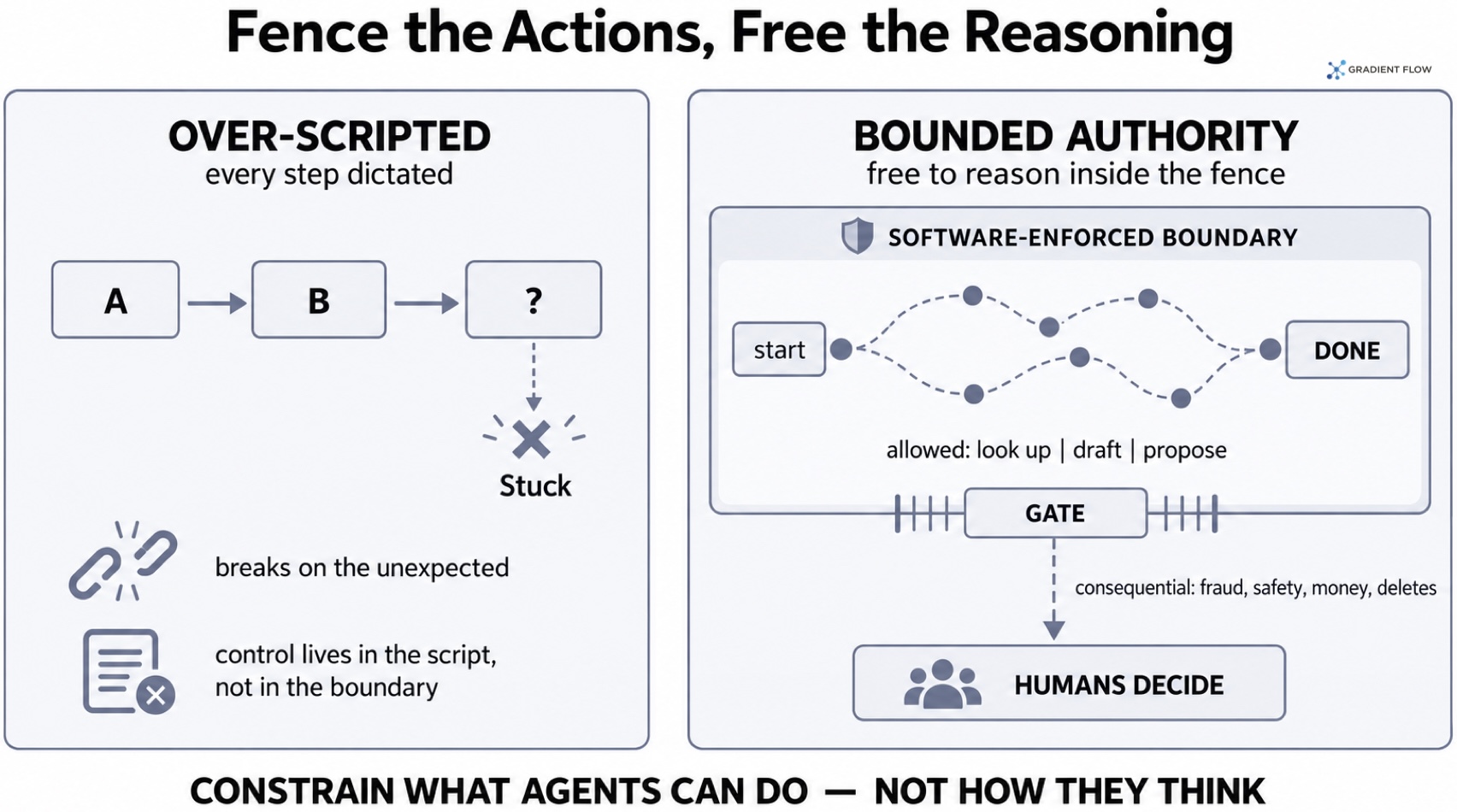
1. Set Limits on What Agents Can Do, but Not Always on How They Think
AI agents used in real businesses usually have clear limits, especially when mistakes could cause serious problems. At Duke Energy, agents organize engineering simulations that help plan the electrical grid. Engineers check the results and make the final decisions. DBS Bank uses groups of 70 to 80 specialized agents to help prepare credit reports. People are still responsible for the final analysis.
These examples support two of my earlier rules: use software to set firm limits, and give agents only as much freedom as their jobs require. But in a recent conversation with Nick Ung and Akshay Sharma at Lyft, Nick pointed out an important problem. If a workflow gives an agent too many step-by-step instructions, it may not know how to handle a situation that its developers did not expect. Lyft sends sensitive cases involving fraud or safety to people instead of telling agents exactly how to handle every possible situation. The important difference is between limiting what an agent is allowed to do and putting unnecessary limits on how it thinks through a problem.
2. The Company's Business Systems Matter More Than the Chatbot
The most useful business examples connect agents to the data and tools that companies already use. Trane Technologies connected an agent to live data from heating, ventilation, and air conditioning (HVAC) equipment. This lets technicians investigate problems by asking questions in everyday language. In an internal test, a task that normally took 20 minutes took about 20 seconds. The AI model did not replace the engineering systems underneath. It simply made those systems easier to use.
Look at HEMA, a Dutch retail company. Its assistant builds on years of work creating and maintaining a service catalog that connects teams, computer systems, and software interfaces called APIs. Tottenham Hotspur also spent about two years bringing customer records together and replacing disconnected systems before launching its agent to help fans.
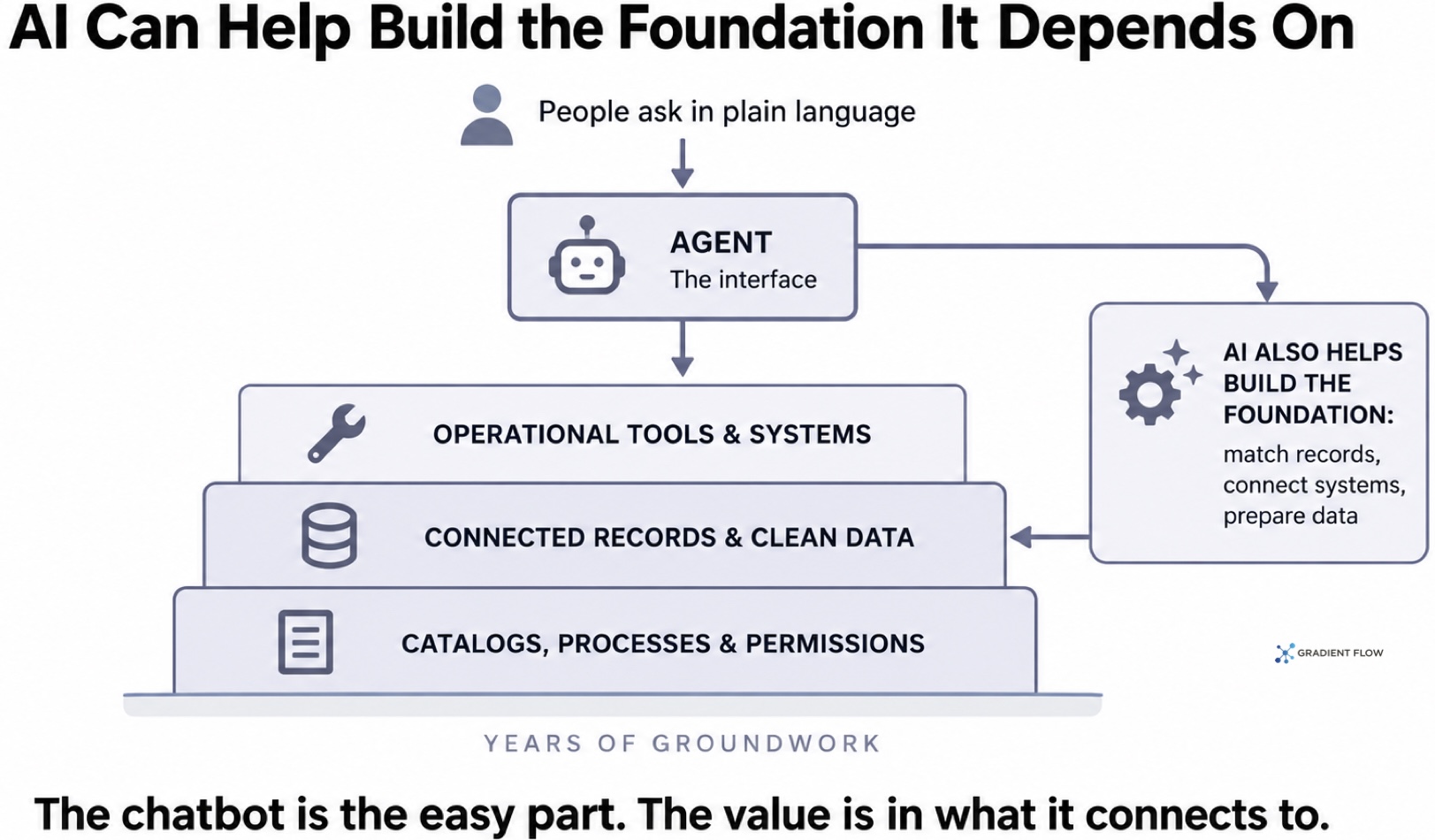
In an earlier conversation with Andrew Moore, we discussed how AI can help with this basic preparation work. One difficult task is matching records that refer to the same things across different computer systems. His team at Lovelace says it can shorten some data preparation projects from months to days. This adds a new point to my earlier rule to fix your data and knowledge before spending money on a bigger AI model. This work is still important, but AI can now help companies do it.
3. Companies Are Building Shared Systems for Agents, Not Just Individual Agents
This is one important change I did not give enough attention to in August. As more teams build agents, it becomes less useful for every application to have its own rules for access, monitoring, testing, and cost control. Companies increasingly need shared systems that many teams can use.
Wood Mackenzie found that 88% of its AI experiments, called proofs of concept, had never been widely used. Its APEX platform gives teams shared tools to build and run agents. Brazil's Itaú built IARA to manage who can use AI models, how much that use costs, and which AI rules must be followed. At MRH Trowe, about 400 employees got access to a managed agent platform during its first month in production. The reported cost was about $14 per user.
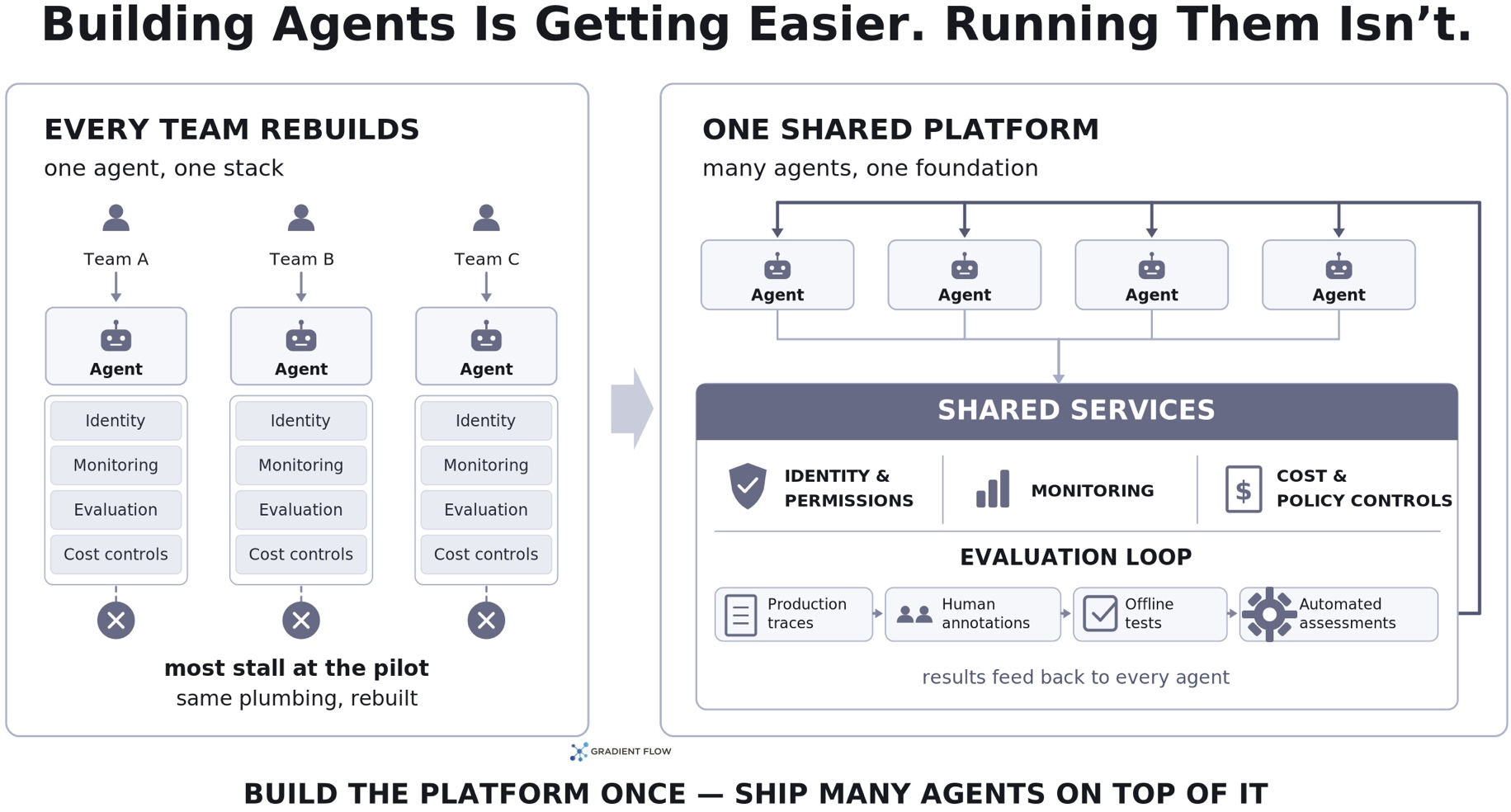
Lyft is another example. Its team treats testing as a shared service. It combines records of how agents behave in real use with tests run separately and automatic checks. Building one agent is becoming easier. But keeping many agents working reliably requires different skills and tools.
4. Experts in the Business Are Building Agents, but Engineers Still Manage the Platform
At Grand Isle Shipyard, an operations leader with no background in information technology built about 20 agents to help with vehicle and equipment safety and following rules. Agricultural equipment maker AGCO has about 2,000 employees in its community of people who build AI tools, and several hundred agents are already in use. People who understand the work are increasingly helping to automate it.
Lyft provides a useful example of how companies can divide the work. Experts who understand the business review customer-support messages and write instructions for agents that handle simple customer problems. Engineers provide the tools and safety checks. These checks can catch mistakes, such as an agent trying to use a tool that does not exist. Engineers also review the instructions before agents go live, while data scientists test how well they work. Technical teams still handle more complicated agent workflows.
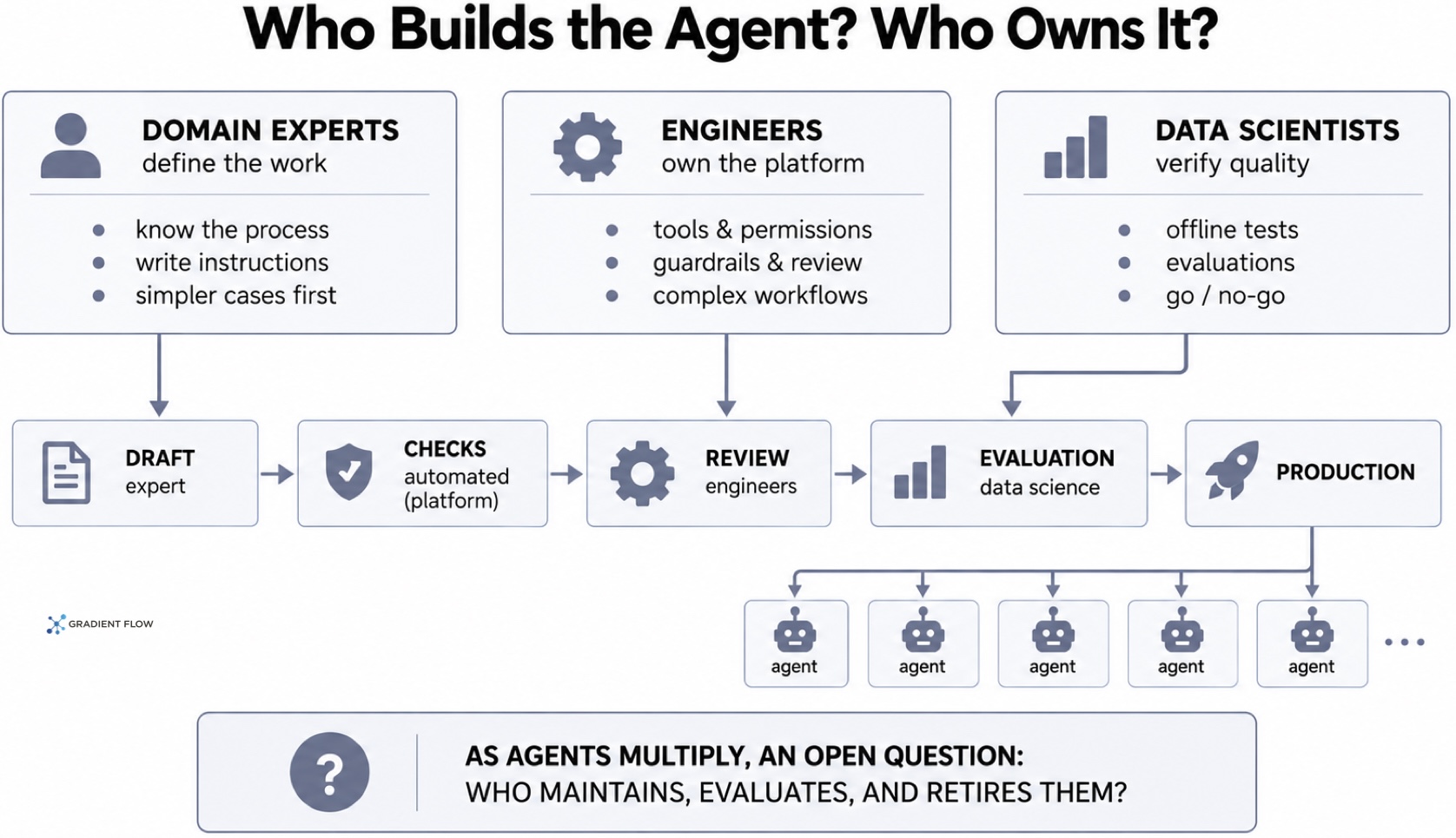
I think this division of work makes sense. Business experts understand the problems and how to solve them. Engineers make sure the agents work safely and reliably. But it raises another question: who will look after, test, and eventually shut down hundreds or thousands of agents built by employees?
5. Be Careful About What Agent Success Numbers Really Tell You
It can be hard to compare reported success rates because companies measure different things. Tottenham Hotspur says 86% of people engage with its fan-support agent, but only 20% of conversations are completed without help from a person. The TSA reports a 96% resolution rate, but that figure applies only to routine questions. A new anti-money-laundering agent at Amalgamated Bank is expected to save more than 90% of the time spent on certain tasks. But these numbers are predictions, not measured results.
These numbers can tell us useful things, but they often do not include mistakes, the cost of fixing those mistakes, or how much of the entire job the agent actually does. This brings me back to my earlier point that we must test both the AI model and the complete system around it. At Lyft, the team looks at an agent's trajectory: the full series of questions, tool calls, and decisions it makes. It does not just check the final answer. An agent might give the correct answer after looking in the wrong database or making a customer repeat information. If we check only the final result, we will miss these problems.
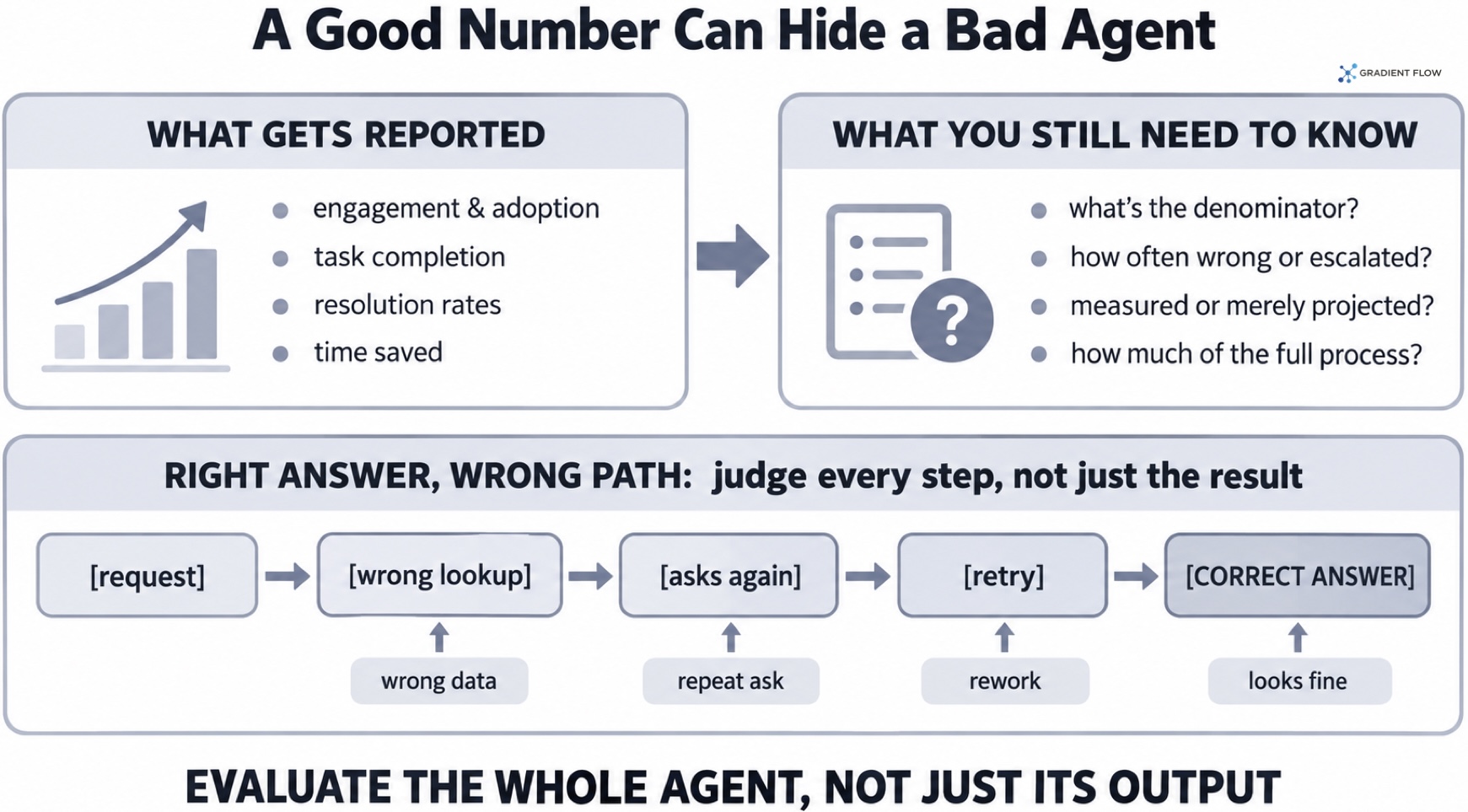
When looking at claims about agents used in real businesses, I would ask:
What exactly is being measured, and what total number is the percentage based on?
How often does the agent make mistakes or need a person to step in?
Who measured the results, and are they actual results or predictions?
How much of the complete process does the agent handle?
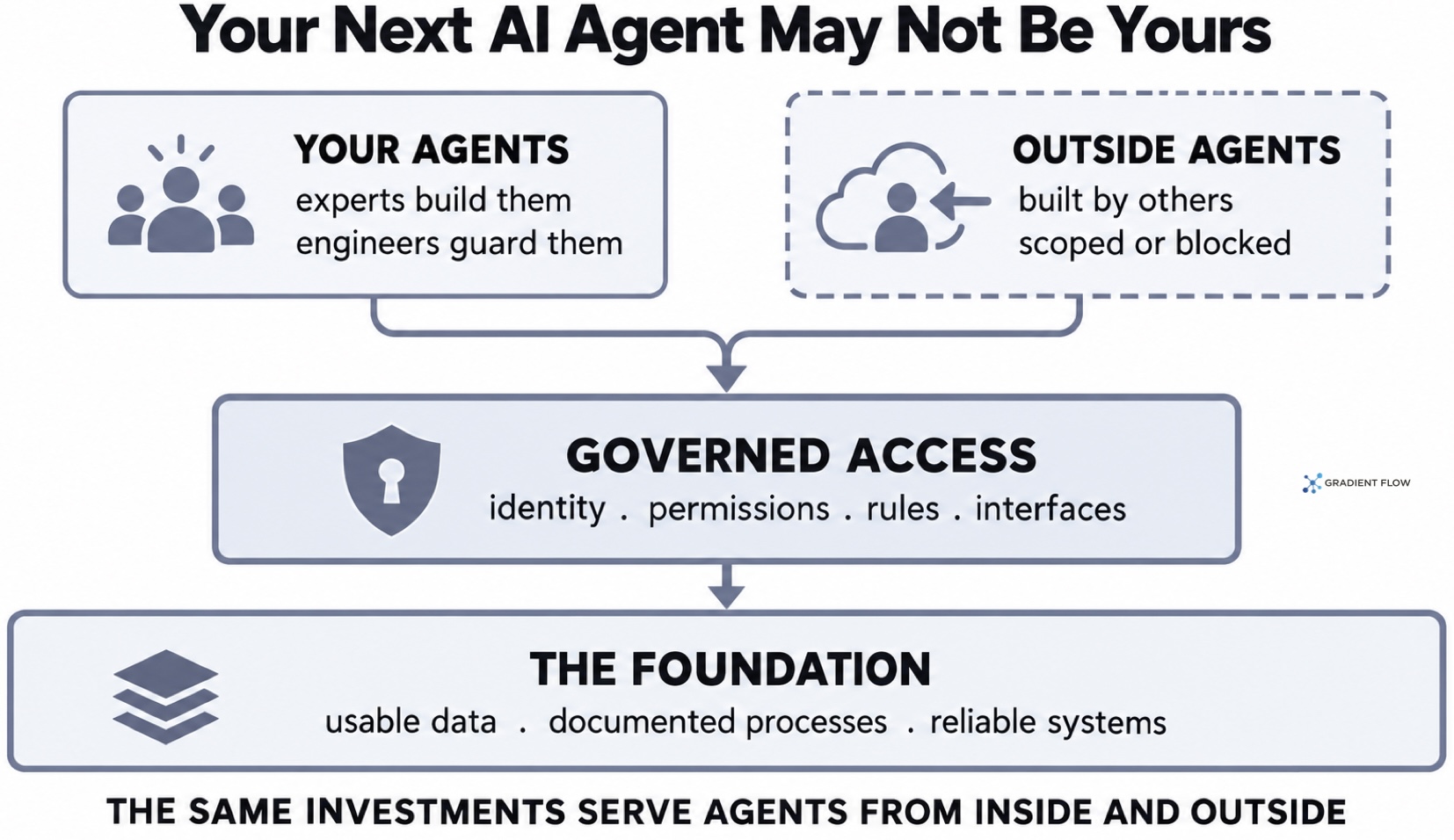
All these examples suggest that getting AI agents ready for real work tests a company's existing systems just as much as its AI skills. Building and managing agents is becoming a shared job for engineers, while experts in the business can also take part. Companies that already have reliable data, clearly written processes, and easy-to-use software systems have an advantage.
Another challenge is coming. JPMorgan is limiting outside agents' access to customer accounts, while HSBC is creating a controlled way for business customers' AI tools to connect to its systems. Companies will increasingly need rules not only for their own agents, but also for agents that come from outside. Good data, clear access rules, and reliable ways for software systems to connect should become even more important.