
Could AI help us develop vaccines against viruses that don’t yet exist?
Could vaccines designed by AI help us prepare for future pandemics? We asked the vaccine expert behind a new biotechnology company that uses AI what this technology could mean for vaccination.
- 17 November 2026
- 7 min read
- By Linda Geddes
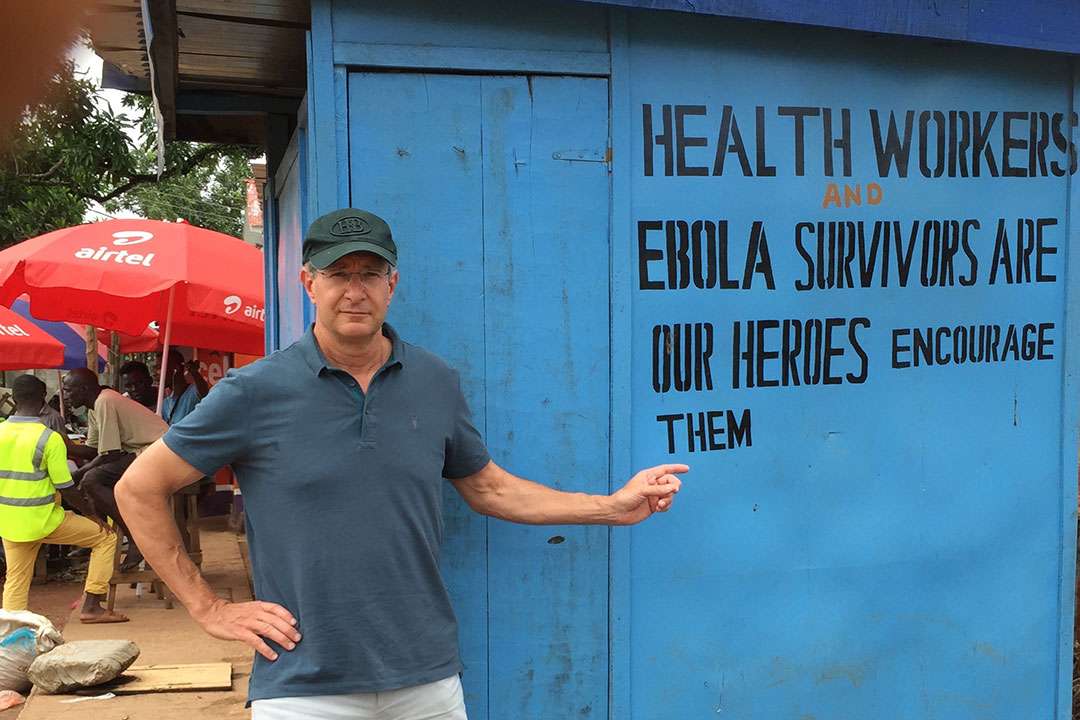
While working in Guinea during the 2014–2016 West African Ebola epidemic, Professor Jonathan Heeney became frustrated by how long it took to develop and deliver vaccines against new infectious diseases. This experience inspired him to rethink how vaccines are designed.
Today, he and his colleagues at DIOSynVax use AI to design antigens that can trigger a wide range of immune responses. He spoke to VaccinesWork about how this technology works and how it could help us stay ahead of viruses as they change.
AI is not taking the place of immunologists or vaccine experts. It helps us study huge amounts of biological information more quickly and explore many more possible solutions.
What is wrong with the way we currently design vaccines, and what are you trying to do differently?
Many vaccines have been extremely successful. Diseases such as measles, mumps and rubella are under control because the viruses that cause them change relatively slowly, so vaccines can keep protecting people for a long time.
The challenge is with RNA viruses that change quickly, such as influenza viruses and coronaviruses. Today's vaccines are usually based on a particular version of the virus that is spreading at the time. But viruses keep changing, so future versions may look quite different.
Credit: J.Garget/University of Cambridge
My goal is to change this approach. Instead of focusing on the parts of viruses that change most quickly, we use AI to design new vaccine antigens with the help of computer models. We study virus genetic information from around the world to find features that many different versions of a virus share, and then bring those features together.
We want to make vaccines that protect against not only the viruses we see today but also future versions of those viruses. They could even help protect us against future outbreaks.
What exactly is a synthetic antigen, and how could it be used in different types of vaccines?
Antigens designed by AI are genetic sequences that can be used to produce chains of building blocks called amino acids. For example, the spike protein sequence used to make COVID-19 vaccines represents one version of SARS-CoV-2. By contrast, our AI-designed antigens represent a much wider range of possible virus versions, based on what we know about viruses found in nature and in people.
By showing the immune system these shared features, we hope to make it produce antibodies and T-cell responses that can recognise and protect against a wider range of virus versions.
Our technology does not depend on one particular type of vaccine delivery system. This means we can put these antigens into different kinds of vaccines. The choice depends on what each vaccine needs to do and which groups of people we want to protect.
For example, some parts of sub-Saharan Africa do not have reliable systems for keeping vaccines cold during transport and storage. That is why we chose a modified poxvirus to deliver our vaccine against several haemorrhagic fever viruses. These viruses are relatively strong and stable as vaccine carriers. In other cases, we might choose an mRNA vaccine or a protein-based vaccine.
How does AI help you design these antigens, and what can it do that human researchers cannot?
Our AI-based platform, DIOSynVax, studies large numbers of virus genetic sequences at the same time. It looks for patterns and features that stay the same across many different versions. We then use it to help create new synthetic antigens that best represent the shared features found in viruses around the world.
A human researcher might compare dozens or perhaps hundreds of sequences. But AI can explore millions of possible combinations and find designs that would be very difficult, or even impossible, for people to discover through intuition alone.
Are humans still involved in the process?
AI is not taking the place of immunologists or vaccine experts. It helps us study huge amounts of biological information more quickly and explore many more possible solutions.
We still use our knowledge of biology and the immune system. We also spend a lot of time testing our antigens in experiments to check that they work and meet quality standards.
We might choose the 10 to 20 most promising antigens, make synthetic genes from them and test each one in the laboratory. We would then choose the best three to six and test them in animals to see what kinds of antibodies, T cells and wider immune responses they produce. After that, we would test those antibodies and immune cells against many different virus versions. This helps us see how well they respond and whether they can, for example, stop viruses from entering cells or neutralise a wider group of viruses.
Does broader protection mean weaker protection against particular viruses?
In theory, focusing only on features that stay the same across many viruses could lead to immune responses that protect against more versions but are less powerful against one particular version. However, we do not want to give up strong protection in order to achieve broader protection. Our aim is to design vaccines that provide both.
Our studies have given us encouraging results. We have repeatedly seen strong immune responses that also recognise many different virus versions. But we can only answer these questions properly through careful laboratory testing and, eventually, clinical studies in people.
Credit: J.Garget/University of Cambridge
That is why we are working to produce vaccines that meet the high manufacturing standards needed for human clinical trials. We are also working with regulatory agencies to move these vaccine candidates towards use in people.
Your latest study investigated immune responses to an AI-designed bird flu vaccine. What did it show?
The H5 group of bird flu viruses is continuing to change quickly as it spreads around the world.
We tested an AI-designed H5Nx influenza vaccine against several bird flu strains that were genetically different from one another and had appeared in different places and at different times.
The vaccine produced broad immune responses in mice and ferrets. It also protected them against virus versions that would normally be difficult for vaccines designed to match one particular strain to protect against. In several important areas, including the range of immune responses and how well the vaccine protected animals, it performed better than conventional bird flu vaccines that many governments keep in storage.
Those stored vaccines protected only around 50% of animals exposed to several different bird flu versions. By contrast, animals given our vaccine were strongly protected.
We have also developed vaccine candidates designed to protect against several types of seasonal influenza. We have also developed a universal influenza vaccine candidate that could protect against both seasonal flu and pandemic flu threats.
What other vaccine candidates have you developed, and how far have they progressed through testing?
We have several programmes developing vaccines that could protect against a wide range of viruses. Our most advanced programme in clinical testing is a vaccine designed to protect against several types of sarbecovirus, including SARS-related coronaviruses. These include SARS-CoV, which causes SARS, and SARS-CoV-2, which causes COVID-19.
This programme has already completed its first clinical testing in people successfully. The results showed that antigens designed using computer models could be given safely and could produce immune responses that protect against a wide range of viruses.
We have recently expanded this programme to include a vaccine that could also protect against MERS coronaviruses. This has resulted in a vaccine designed to protect against a broad group of betacoronaviruses. This is the coronavirus group considered most likely to cause future pandemics.
We have also developed a vaccine designed to protect against several haemorrhagic fever viruses at the same time, including Sudan Ebola, Marburg and Lassa fever viruses. Rather than waiting until an outbreak begins, identifying the exact virus and then developing a suitable vaccine, this broader vaccine could be given in advance to healthcare workers on the front lines and other people at high risk.
We are now increasing production so that this vaccine candidate can be manufactured before we begin Phase 1 clinical trials in the UK.
Could this new way of designing vaccines require a different approach to testing and approval?
It would clearly be impractical to carry out separate clinical trials to find out how well a vaccine protects against every possible virus version. Instead, vaccine developers are increasingly combining animal studies with tests of immune responses in people. These tests can help show how broadly a vaccine might protect people during an outbreak. Researchers use known signs in the immune system that can help predict whether someone is protected against a disease.
Influenza vaccines already provide a useful example. Updated flu vaccines are regularly approved without requiring a new Phase 3 trial to test their effectiveness against every new strain. I believe vaccines designed to protect against a wide range of viruses may eventually use a similar approval system.
What safeguards prevent AI from designing something harmful?
Safety is essential and cannot be compromised. Vaccines designed by AI do not go straight from a computer into people. Every candidate goes through extensive computer-based safety checks, laboratory testing and studies before human testing. It is also carefully tested in animals, step by step, and must go through a full review by regulatory agencies before any human trials can begin.
Importantly, these antigens are designed to encourage the immune system to produce protection against many viruses. They are not infectious viruses themselves. They cannot reproduce or cause an infection. They must meet exactly the same safety standards as other modern vaccines.
Could this approach make a difference in the next pandemic?
The biggest benefit may not simply be that AI helps us design vaccines more quickly, although it certainly helps with that. The real opportunity is to be ready before a pandemic starts.
Today, we usually begin developing a vaccine from scratch after a new outbreak appears. We hope to change that by developing vaccines that protect against a wide range of viruses in advance, testing them in early clinical trials and possibly keeping supplies ready before the next time a virus jumps from animals to people.
Author
Jonathan Heeney is Professor of Research in Vaccinology at the University of Cambridge, UK, and a founder and chief scientific officer of DIOSynVax Ltd.