
Stanley Druckenmiller Dumped AMD and Alphabet. His Next 3 AI Bets May Surprise Investors
Strong Growth With Heavy Spending
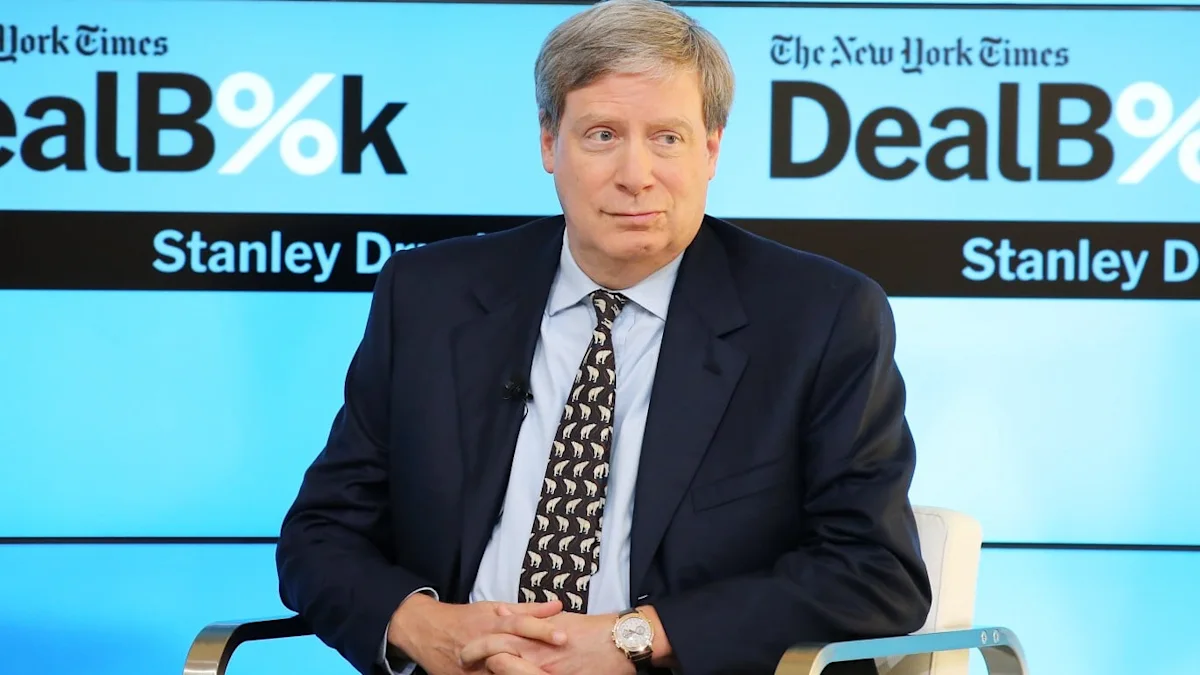
Stanley Druckenmiller is still investing in artificial intelligence (AI), but he is changing the kinds of AI companies he owns. Duquesne Family Office's third-quarter 13F filing shows that he completely sold his shares in AMD and Alphabet. It also shows that he started new positions in SpaceX, Palantir, and AppLovin, according to MarketWatch's review of the filing. The filing does not reveal the prices he received or the exact dates he made these trades. So investors cannot tell whether he sold at the best time.

Since then, AMD (NASDAQ:AMD) has fallen 22.35% from its October 6 closing price of $649.42. Since the end of the quarter, Alphabet (NASDAQ:GOOGL) has fallen 17.54%. Earlier this year, Druckenmiller said that stocks connected to AI looked "disturbingly heated." In an interview with Morgan Stanley, he explained what many people in the market believe: "The consensus right now for AI is something like: AI will be very deflationary, and it will lead to massive job losses."
Strong Growth With Heavy Spending
Both companies Druckenmiller sold were still growing quickly. AMD's revenue in the third quarter increased 44.7% to $13.38 billion. Sales from its Data Center business grew 97% to $8.55 billion. The company expects fourth-quarter revenue to be about $17 billion. Even with this growth, the stock is trading at about 191 times its earnings over the past 12 months. Its GAAP earnings per share (EPS) were $1.46 after the company recorded a $1,097 million charge related to customer warrants.
Alphabet's Google Cloud revenue increased 103% to $30.71 billion. However, the company spent $51.36 billion on investments in its business, and its free cash flow fell to negative $9.07 billion. This means the company spent more cash than it generated after covering its business and investment costs. Alphabet is now helping pay for its expansion with debt, sales of shares through at-the-market offerings, and mandatory convertible preferred stock. Its GAAP EPS was $2.12, below the expected $2.97. This also ended a run of 12 straight quarters in which the company had beaten earnings expectations.
Palantir's Commercial Business Passes Government Sales
Palantir Technologies (NASDAQ:PLTR) makes software that allows businesses and governments to use AI with their own data. In its third-quarter results, the company reported that revenue from U.S. commercial customers reached $984 million. That was higher than the $953 million it earned from the U.S. government for the first time. Its adjusted operating margin was 62%, and it raised its full-year revenue forecast to $8.53 billion. CEO Alex Karp said, "The Sovereign AI moment is purpose-built for Palantir."
There are also risks. Palantir's stock trades at about 228 times earnings. The total value of its contracts grew only 6% compared with the same period last year. Its shares have also fallen 11.81% since the beginning of the year.
SpaceX Adds AI Computing to Starlink
SpaceX (NASDAQ:SPCX) reported revenue of $14.60 billion. Its Super Intelligence business, which includes Grok and Cursor, brought in $7.60 billion. That was an increase of 830%. This business rents data center computing capacity to outside customers. It grew through the purchase of Cursor, a deal that valued the company's equity at an implied $60 billion. Starlink had 13.6 million consumer subscribers. SpaceX shares are trading at $141.48, down 12.1% from their first available closing price on June 12. On Tuesday, MarketWatch reported that Nvidia had shown confidence in SpaceX.
AppLovin Turns Its AI Ad Engine Into Cash
AppLovin (NASDAQ:APP) uses AI models to decide where to place advertisements. Its revenue increased 55.5% to $2.18 billion. Adjusted EBITDA reached $1.84 billion, giving the company an 84% margin. Adjusted EBITDA is a way to measure operating profit before certain costs are included. AppLovin also spent $1.4 billion buying back its own shares during the quarter. CEO Adam Foroughi said, "We believe this business can compound at roughly 30% annually over the long term."
At about 38 times earnings, AppLovin's stock is much less expensive by this measure than Palantir's. Its shares have risen 46.53% over the past month but have fallen 42.13% since the beginning of the year.
Four Signals to Track Before the Next 13F
These investments suggest that Druckenmiller prefers companies that use AI to deliver results through software, advertising, and internet connectivity. He appears to want less exposure to the cycle of spending on computer chips. Four developments will help show whether this change in strategy was well timed:
Whether AMD reaches its fourth-quarter revenue target of about $17 billion as it increases production of its Helios server racks.
Whether Palantir's fourth-quarter revenue reaches its forecast of $2.649 billion to $2.653 billion, and whether the total value of its contracts begins growing faster.
Whether AppLovin's results fall within its fourth-quarter revenue forecast of $2.365 billion to $2.395 billion.
Whether SpaceX completes its purchase of spectrum, which is expected to close in the first half of 2027.
The next 13F filing will show whether Druckenmiller kept these investments, bought more shares, or reduced his positions.