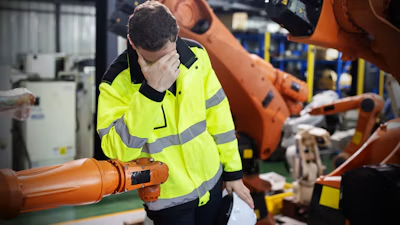
The fifth article in the “Real-Life AI” series looks at common mistakes manufacturers make when putting AI to work. These include spending money on tools they do not need and forgetting how important people are to the process. Here, six leaders from the manufacturing and technology industries explain what companies should think about again before using AI.
What is one thing manufacturers are getting wrong when deploying AI?
Responses have been edited to make them shorter and clearer.
One common mistake is failing to check what technology companies already provide. Before spending money on new AI tools, manufacturers should review their current digital systems. They need to find out what is missing, what they already have and whether they have the right people to put AI into use. In most cases, the quickest way to start and get the best results is to use AI that is already part of software teams know and trust. This is better than bringing in completely new tools that make work harder and slow things down.
Jacob Sanchez, Industry Solutions and Community Development,igus
Do not try to force a tool into a job it is not suited for. If a type of AI is popular but does not help your business or team, choose something else. Do not waste time, effort or money testing AI that your team does not believe in or care about. Also, remember that not everyone in a company needs to be an AI expert or leader. That is perfectly fine.
Whenever you introduce AI, you also need to think about redesigning the work processes that use it. Think about the process of getting an order and delivering it. The goal is to make sure that all the items ordered from suppliers arrive on time and that the company responds when something changes. AI can do much of this work, while people handle unusual problems that need attention. To make this work, companies must change how they operate. People should do less routine work and spend more time coordinating with AI.
Two common mistakes are moving too quickly and doing nothing at all. If you ignore AI, your company will miss out. But letting every employee start using AI tools and bots without proper control can be very risky for large companies that operate around the world. Start with small projects, help people adopt the tools, check that your data is suitable and show what works. You must also be very careful about which tools you install. Think about who owns the data, whether it could become public and how data tools work with GDPR rules. A global company cannot simply install a tool like “co-work” and assume its data will stay inside the company.
One mistake is believing that AI can completely replace people. Sensors can watch machines all the time, but eventually a person still needs to repair equipment, handle materials and feel them. A robot cannot learn everything, such as the smell of oil in a machine shop. It is a mistake to depend completely on a connected system that collects its own information and makes all its own decisions. I remember research I did as a student at MIT. At that time, Gillette razors were said to be the most stolen items in the world. I worked on a research project that tried to put RFID chips on every item sold in a Walmart store. But the cost did not make sense when we had to do this for millions of items. The same idea applies to sensors and connected AI. Companies must work out whether the cost is worth it in each case. They cannot simply install a sensor, build an AI model and then forget about it.
Giving large language models (LLMs) too much control over our thinking is a mistake. AI can be a great tool for discussing ideas, planning strategies and studying data from a factory. But we need to be careful about trusting its answers too much or making decisions based only on what it says. AI is useful for certain tasks, but trying to use it in every part of a business can cause more problems than it solves.
If you would like to share how AI has affected your business, contact Nolan Beilstein at [email protected].