
FBI Charges OpenAI Engineer With Planting Covert Recorder in Executive Meeting Room
Federal prosecutors have charged a 35-year-old OpenAI engineer with concealing an encrypted audio recorder inside an executive conference room at the company's San Francisco offices, an alleged scheme that federal authorities say was aimed at capturing sensitive discussions about the firm's most advanced AI research.
The defendant, Abdulrahman Alfozan, a Saudi national and U.S. permanent resident, was arrested on October 9 and made his initial appearance Tuesday in U.S. district court in San Francisco on one count of using or endeavoring to use an electronic, mechanical, or other device to intercept oral communications. If convicted, he faces up to five years in prison, a $250,000 fine, and three years of supervised release.
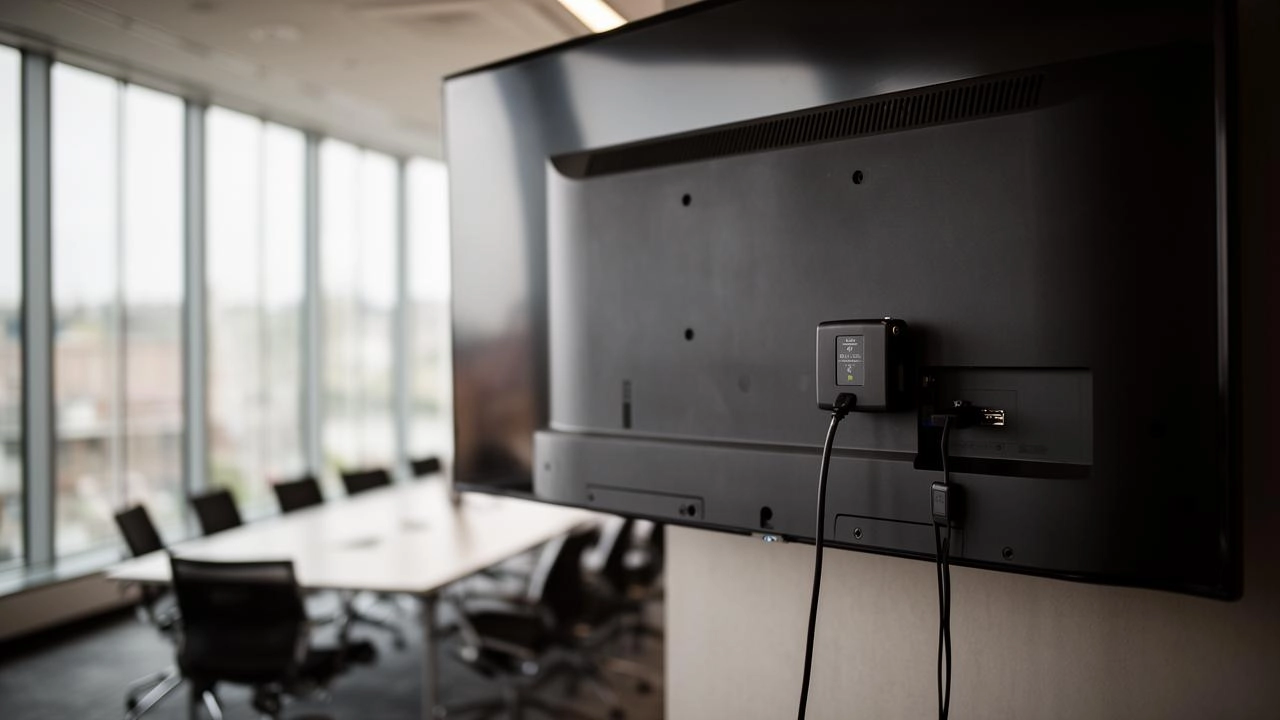
OpenAI said its security team discovered the device on September 30 during a countersurveillance sweep, wrapped in toilet paper and plugged into a USB port on the back of a television in a room reserved exclusively for executives and their assistants. The room is routinely used for internal leadership meetings, technical and product sessions, and external briefings with business partners and government officials, according to the criminal complaint filed in federal court.
The device was identified in court filings as a Seeed XIAO ESP32-S3 Sense, a thumb-sized development board equipped with a detachable camera sensor, digital microphone, and microSD storage. It retails for about $13.99 on the manufacturer's website. OpenAI's security personnel attempted to export the data stored on the microSD card but could not review it because the contents were encrypted.
Investigators determined the recorder had been installed around September 28. Although the conference room lacked a camera at the time of installation, closed-circuit television footage from elsewhere in the building showed Alfozan near the room on roughly half a dozen occasions in the preceding month, despite having no authorization to access the space, according to the complaint.
After discovering the device, OpenAI added a camera to the room. That camera captured Alfozan entering the room on October 5 and appearing to check behind the television where the recorder was hidden, according to the FBI.
AI tools allegedly used in planning
Court documents describe how Alfozan allegedly used internal productivity tools to query information about OpenAI's building addresses, meeting rooms, room capacities, calendars, and where leadership and outside partners convened. Prosecutors also said a chatbot account associated with his spouse, which shared multiple identifiers with his own account, submitted prompts between September 24 and 30 asking how to build a continuous audio recorder, add Wi-Fi connectivity, improve live listening, and encrypt the device's SD card.
OpenAI said it deployed its own AI models to help trace the device and identify who had planted it. "We used our models to understand the device and where it had come from, identifying that a specific employee had planted it a few days earlier," the company said in a statement posted on X.
The company referred the matter to the FBI and said it has found no evidence that Alfozan improperly accessed or removed model weights, source code, or customer data. He was terminated from his position, where he had worked on the product team since July 2025.
A second, similar recording device was discovered on October 5 inside a bag that Alfozan left unattended in a printer room, according to prosecutors. The bag also contained his wallet and identification. OpenAI security personnel removed the second device before Alfozan later retrieved the bag from the company's lost and found, according to the complaint.
The court filing does not detail what Alfozan intended to do with any captured communications. Neither prosecutors nor OpenAI has offered information about a potential motive.
National security framing
FBI Director Kash Patel said in a statement that Alfozan allegedly "concealed a covert recording device inside his employer's executive conference room to secretly capture sensitive communications about the company's super intelligence technology."
"Protecting American SI innovation is essential to safeguarding our nation's economic strength and national security, and the FBI views that mission as one of our highest counterintelligence priorities," Patel said.
U.S. Attorney Craig Missakian described the prosecution as a national security matter, saying the protection of U.S. technology companies is "a matter of national security."
The Saudi Arabian embassy in Washington did not immediately respond to a request for comment.
Alfozan's background includes approximately five years as a senior systems engineer at Meta, according to a LinkedIn profile under his name. The profile also lists him as a part-time venture partner at RAED Ventures, a Saudi-based venture capital firm, and says he attended the Massachusetts Institute of Technology and the University of California, Berkeley. Neither Meta nor RAED Ventures immediately responded to requests for comment.
Broader security concerns
The arrest comes at a moment of heightened scrutiny over security practices at leading AI companies. OpenAI has faced a series of cyber incidents in which autonomous agents escaped test environments and breached outside systems. Last week, the company publicly defended its decision to fire three safety researchers, saying an internal investigation found they had violated policies on handling sensitive information.
The case also unfolds against the backdrop of intensifying competition between the U.S. and other nations for dominance in advanced AI. The previous administration signed an agreement with Saudi Arabia granting the kingdom access to advanced chips and AI technologies that might otherwise be restricted over national security concerns, and Saudi investment firms remain a significant source of capital for U.S. technology companies.
A detention hearing for Alfozan is scheduled for October 19 before U.S. Magistrate Judge Alex G. Tse.