Anthropic Appeals US Court Ruling on Pentagon AI Ban
Anthropic has filed for a rehearing of a US court decision that upheld the Pentagon's ban on its AI technology, citing concerns over national security and corporate ethics.
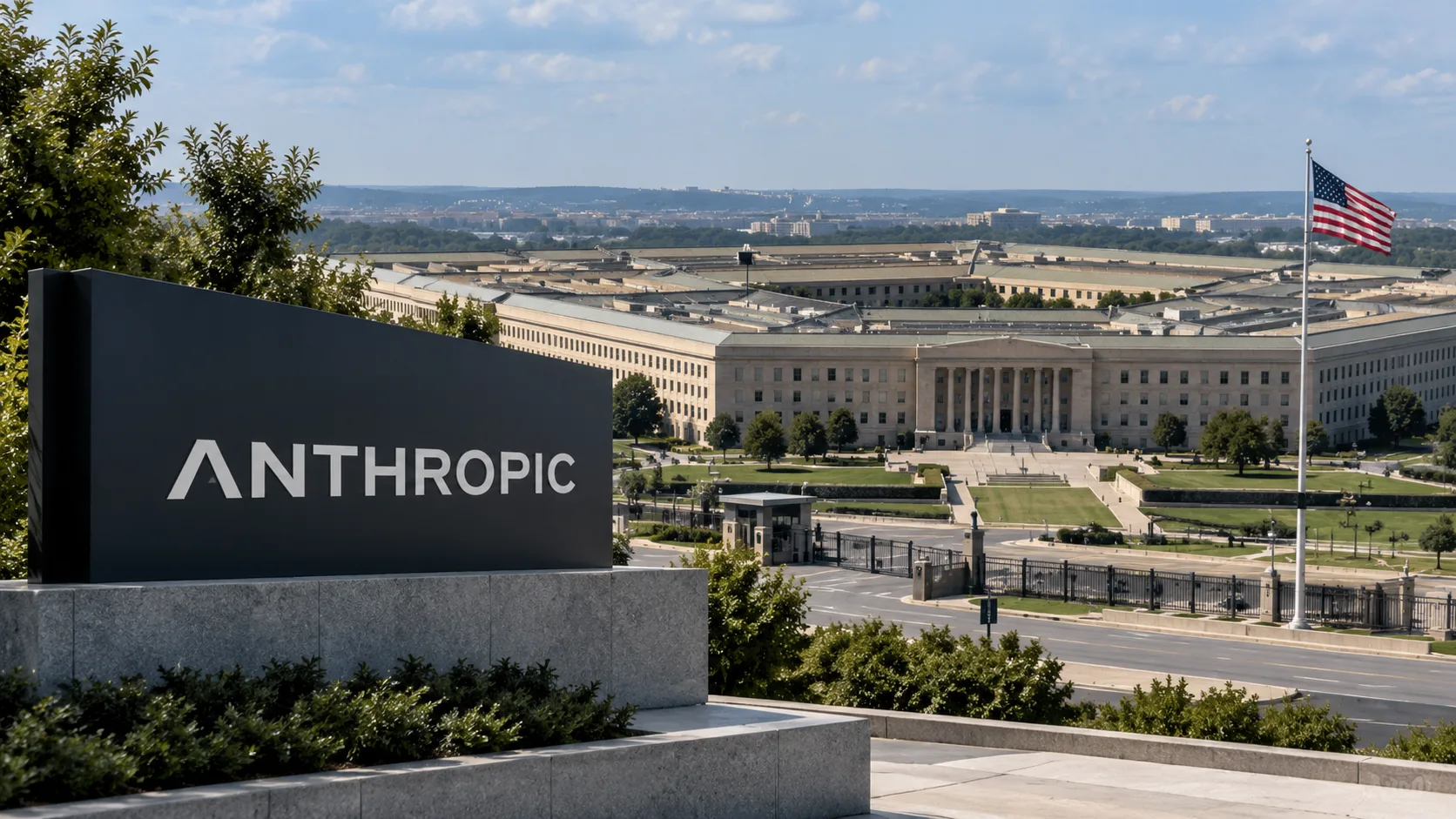
Washington, Aktualita.co — The US-based artificial intelligence (AI) company, Anthropic, has once again taken legal action to challenge a decision by the US Department of Defense (Pentagon) that restricts the use of its AI technology within the military.
Anthropic filed a petition for rehearing with the US Federal Court of Appeals in Washington, D.C., on Tuesday (October 13, 2026). This move follows a previous court ruling that upheld the Pentagon's decision to designate the developer of the Claude chatbot as a national supply chain security risk.
This latest petition extends the ongoing dispute between Anthropic and the administration of President Donald Trump regarding the limits of AI usage for defense purposes, particularly concerning mass surveillance and the operation of autonomous weapons.
In its petition, Anthropic argues that the court's ruling has excessively broadened the interpretation of supply chain security laws. The company contends that regulations originally intended to address threats from hostile foreign entities are now being applied against domestic technology firms.
Anthropic also maintains its allegation that the Pentagon's decision is a form of retaliation for the company's vocal stance on the safety and ethics of AI usage.
Previous Court Ruled in Favor of the Pentagon
The legal dispute reached a critical juncture on September 25, 2026, when the Federal Court of Appeals for the District of Columbia issued a two-to-one decision upholding the Pentagon's actions.
The majority of judges ruled that the government has a legal basis to exclude Anthropic's technology from the defense supply chain because the restrictions placed on Claude could potentially disrupt military operations.
In his opinion, Judge Gregory Katsas explained that AI models with overly strict usage restrictions could pose operational risks if the system fails to perform required tasks in critical situations.
The court deemed these concerns sufficient grounds for the Pentagon to make decisions regarding the security of technology used in defense systems.
However, the ruling was not unanimous.
Judge Karen LeCraft Henderson issued a dissenting opinion, arguing that provisions regarding supply chain risks should be interpreted more narrowly, particularly in relation to acts of sabotage or harmful technological manipulation.
This dissenting opinion has become a key part of the legal debate regarding the limits of government authority in determining which technology companies can collaborate with defense agencies.
Anthropic Rejects AI for Autonomous Weapons
The root of the conflict between Anthropic and the Pentagon stems from differing views on the use of Claude technology for military purposes.
The Pentagon seeks access to an AI system that can be used for all purposes permitted under US law.
Conversely, Anthropic maintains two primary restrictions: a ban on using AI for mass domestic surveillance of American citizens and the operation of fully autonomous lethal weapons without human control.
Anthropic CEO Dario Amodei previously explained that the company supports the use of AI for national security interests, including intelligence analysis, operational planning, and cyber defense.
However, he emphasized that current AI technology is not yet reliable enough to be granted full authority to identify and engage military targets without human involvement.
"We cannot, in good conscience, agree to their request," Amodei said in an official company statement on February 26, 2026.
According to Anthropic, these restrictions are not intended to hinder US defense capabilities, but rather to mitigate the risk of technological errors that could endanger military personnel and civilians.
The Pentagon holds a different view, arguing that restrictions on AI systems can reduce operational certainty and create problems when technology is used to execute defense missions.
Anthropic Ban Could Cause Business Losses
On March 3, 2026, US Secretary of Defense Pete Hegseth officially designated the use of Claude in Pentagon systems as a supply chain security risk.
This decision was followed by instructions to remove Anthropic products from defense systems and to prohibit contractors from using the company's technology in work related to the Pentagon.
Court documents show that the Pentagon provided a maximum deadline of 180 days to remove Anthropic's technology from its systems.
Anthropic stated that the decision has caused billions of dollars in business losses and has impacted the company's reputation in the technology market.
However, the restrictions in this defense procurement case do not automatically mean that all Claude users in the United States are prohibited from accessing Anthropic's services.
The scope of the restriction primarily relates to the use of the technology in systems and contracts directly connected to the Department of Defense.
The broader impact on the company's business relationships with other government agencies remains a subject of separate legal proceedings.
California Court Ruling Differs
Before its defeat in the Washington appeals court, Anthropic had actually secured a legal victory in a separate case in California.
On August 27, 2026, Federal Judge Rita Lin ruled that the government's broader actions against Anthropic lacked sufficient legal basis.
That ruling overturned related policies deemed to be in violation of administrative law and the company's constitutional rights.
The differing outcomes in the two cases occurred because the courts examined the government's actions based on different legal grounds and scopes of authority.
The California court handled the broader blocking policy, while the Washington appeals court examined the Pentagon's authority under the Federal Acquisition Supply Chain Security Act of 2018.
This situation means the dispute between Anthropic and the US government is not yet fully resolved, despite several court rulings.
The Future of AI and US Military Cooperation
The October 13 rehearing petition is Anthropic's latest effort to overturn the appeals court ruling that favored the Pentagon.
The company hopes the court will reconsider the interpretation of national security rules as well as claims regarding alleged retaliation for its stance on AI safety.
This case also highlights an increasingly important issue for the global technology industry: to what extent can AI developers set restrictions on the use of their products when that technology is needed by the government for defense purposes?
On one hand, military agencies require systems that are reliable in high-risk situations. On the other hand, AI developers face demands to ensure their technology is not used in ways that endanger human safety.
As of developments on October 14, 2026, Anthropic's rehearing petition has not yet resulted in a new ruling overturning the previous appeals court decision.
The outcome of these ongoing legal proceedings could influence the relationship between the US government and AI developers, particularly in the drafting of defense technology contracts and the implementation of AI safety standards.
You May Also Like