
Nubin "AI, Bio"Reorganizing the Pharmaceutical Industry... 韓Biotech is also beneficial."
 사진 확대
Nubin Asset Management, Artificial Intelligence (AI) BioIt released a market commentary stating that it was reorganizing the economic structure of the pharmaceutical industry. Nubin is managing assets worth 2.6 trillion dollars (about 4008 trillion won).
Nubin predicted that companies with excellent engineering capabilities but relatively weak capacity to discover new drugs, such as Korean biotech companies, will benefit.
The healthcare industry generates vast amounts of data, from discovery of new drugs to clinical care, but relies heavily on manual and time-consuming procedures.
Nubin Says AI Introduction Is Still In Early Stage, But Already BioIt is said that it is changing the economic structure of the pharmaceutical industry and expanding its influence on healthcare services as a whole.
Analysts say that the development period is shortened and capital efficiency is increasing as the industry as a whole shifts away from linear and relying on trial and error to a data-based rational new drug design method.
Industry experts estimate that the introduction of AI can reduce overall R&D costs by 25-60% and shorten the search period for new drugs from about 4.5 to 1.5 years.
As a result, annual savings are expected to reach $15 billion to $28 billion in the research sector and $13 billion to $25 billion in the clinical development sector. Nubin explained that it creates a virtuous cycle structure, a so-called flywheel effect.
Lower costs per candidate can reinvest the savings into more new drug programs, as this leads to expanded pipelines and increased approved treatments.
Even in the discovery and clinical development stages of new drugs, AI is automating critical scientific decision-making. Some companies have shortened the time it takes to identify protein structures from six months to several hours.
Through AI-based patient segmentation, the success rate of phase 1 clinical trials has been increased from an average of 55% in the past to 80-90%. However, human expertise is still essential as AI predictions must be verified through wet-lab, a physical experiment.
Willis Tsai Nubin, head of Global Stock, said, "AI can provide conditions for companies with excellent engineering capabilities like Korean biotech companies but relatively weak new drug discovery capabilities to compete equally."
He added, "This is because these companies can enter the clinical stage of the treatment by combining world-class manufacturing capabilities with new drug targets discovered by AI."
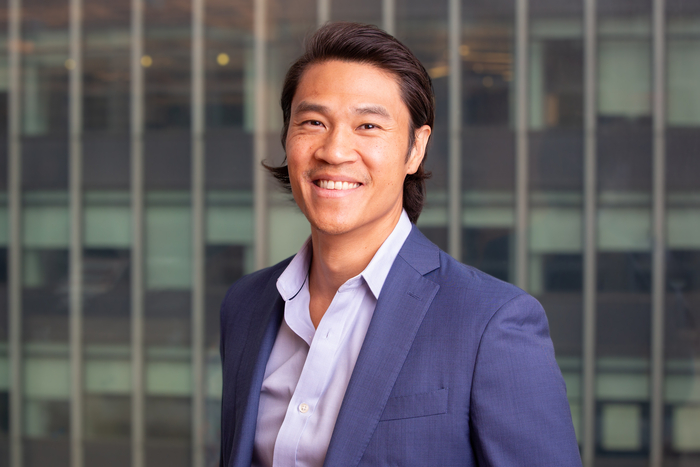 사진 확대
Nubin's AI is bioWe positively evaluated the long-term impact on pharmaceuticals, life science tools, and the MedTech sector. It is observed that early skepticism also seems to be gradually easing.
This is because AI is building a new workflow paradigm from discovery of new drugs to clinical development in the field of life science tools and pharmaceutical services, and in the field of Medtech, diagnosis, monitoring, and treatment are being efficient.
Nubin predicted that AI will deepen and accelerate the discovery process of new drugs, and wet experiments will increase rather than replace them.
Due to the fast and complex pipeline, the clinical volume is expected to remain at the current level or increase.
CEO Tsai said, "Ultimately, the more sophisticated the AI model is learned, the more data and verification work required will not decrease, but will increase."
"This means AI is bio.""We support our outlook that the net effect on pharmaceuticals, life science tools, and the MedTech sector will be consistently positive in the long run," it said.