
Does your AI agent need an LLM to decide what to do next?
Say “good morning” to an AI agent, and it might search its long-term memory before saying hello. Somewhere in the system, a service searches for meaning to decide whether your greeting requires it to know what drinks you like. Even if you care a lot about your coffee, that seems like a lot of work for just two words.
Does this request need a more powerful model than the usual options? Is the memory it found actually useful? Should the process stop and ask a person for help?
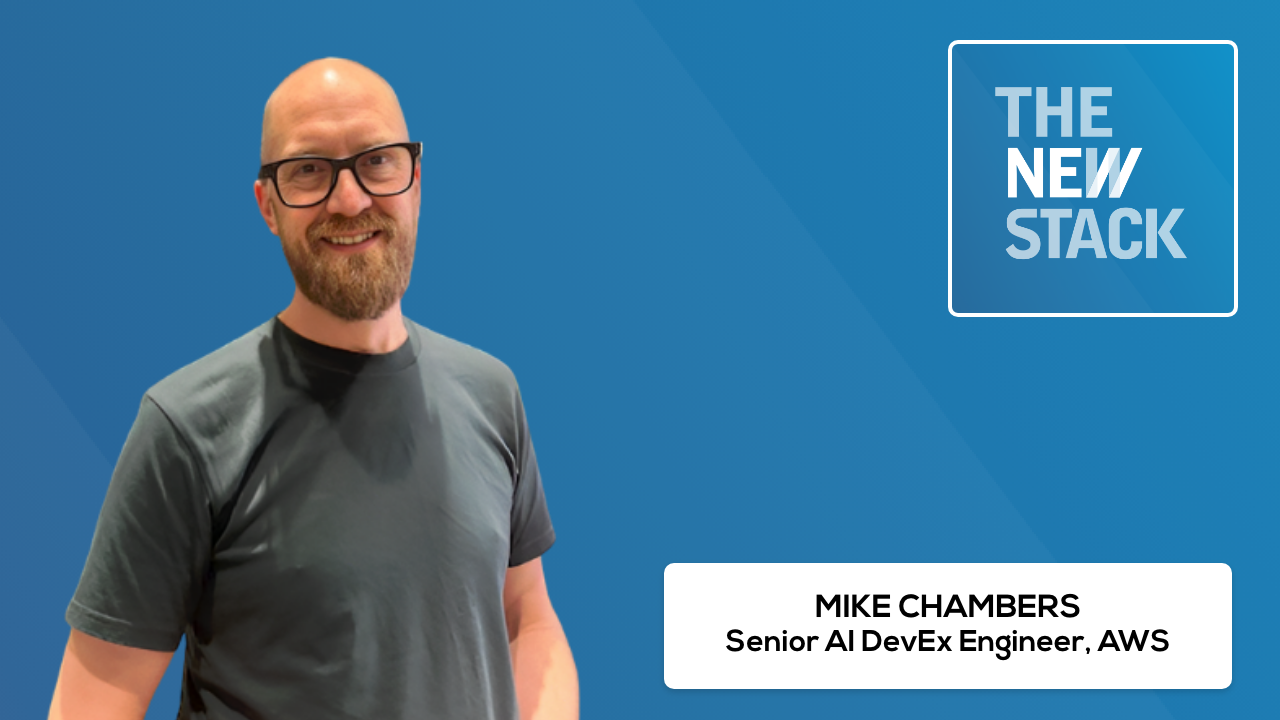
This wasted effort and difficulty making decisions are where Mike Chambers, a senior AI DevEx engineer at AWS, sees an opportunity. In a conversation last month at AGNTCon + MCPCon North America 2026 in San Jose, California, Chambers explained to The New Stack Editor-in-Chief Nick Lucchesi how developers can use decider models to handle the many small decisions an AI agent must make.
Decider models, also called decision models or System One models, are special AI models that choose from a set of fixed options or give an input a score. They return probabilities that show how confident they are, rather than writing open-ended text. Made popular by TypeSafe AI’s Jev, these models help software and AI agents make quick decisions with clear confidence scores. On October 1, AWS’s Strands Labs released its own open-source decision model, called Strands Decider 2B. It has 2 billion parameters.
An if statement that understands language
Chambers describes the idea as “a little bit like having an agentic-powered ‘if’ statement inside of your code.”
Developers have used classification tools for many years. But Chambers told The New Stack that today's decider models offer something new. Because they are first trained on large amounts of general information, developers can try them on new classification tasks without first building and training their own model. They provide background information in everyday language, ask a question about it, and receive a number that their software can use to choose what happens next.
In the models Chambers describes, the score is returned in one processing step. The model does not need to generate a series of words or tokens. This can make decider models useful when a decision must be made quickly for every request. For example, a model router can use a score to send simple requests to a smaller model and save a more powerful model for harder tasks. This can save money both by making the routing decision quickly and by reducing the amount of work the larger model must do.
When an agent can skip searching its memory
Chambers tested this idea using the open-source Strands framework and Amazon Bedrock AgentCore Memory. He placed Strands Decider before the memory search. Its job was to decide whether a new message needed information from earlier conversations. A simple greeting could go straight through without a search. But a request that depended on something the user had said before could still start a search.
He also tested a decider after the memory search. A memory service can find the closest matches to a question, but some of those results may not be useful for the current task. A decider can give each result a relevance score before the agent adds it to the information sent to the main model. The first decision can prevent an unnecessary service call. The second can keep unrelated information out of the model's context.
Predictable results still need testing
A number returned in a predictable JSON field makes it easy to connect a decider model to an application. But developers still need to test whether that number can be trusted. “Will the number be correct? That’s for your testing to be able to go and figure out whether that’s the case or not,” Chambers said.
Chambers says his memory experiment is still experimental. The interview also looks at what happens when decisions have bigger consequences. Forgetting a user's preference might lead to a poor coffee recommendation. But an AI agent that is about to spend money creates a much bigger risk. Chambers says developers should use safety checks outside the agent's decision process and ask a person to approve decisions that are difficult to undo.
Watch the full interview on The New Stack’s YouTube channel to see Chambers explain his memory experiment and discuss how developers are using open-source decider models in new areas, including document processing and robotics.