
Amid Heckles and Hurrahs, Anthropic Rings In a New Era
On Thursday in Times Square, tourists tried to find Madame Tussauds, while people dressed as Elmo adjusted their furry headpieces. At the same time, trading began in what was the largest I.P.O. in history. Anthropic, an A.I. company that openly wants to change how all other companies do business—and reshape the whole economy—received strong demand for its stock, called ANT. By the end of the day, the company was worth more than $1.7 trillion.
That morning, inside Nasdaq headquarters on Forty-second Street, Anthropic C.E.O. Dario Amodei was getting ready to ring the opening bell. Outside, a small but determined protest was taking shape. Jose Gonzalez, from a group called New York Communities for Change, had organized the event with progressive groups such as Stop Funding Billionaires and the Democratic Socialists of America. Wearing a brown parka and blue jeans, he handed out protest signs from a blue IKEA bag. The signs said things like “Stop Tech Oligarchy!” and “Freeze AI!”
Ian Lund, a thirty-one-year-old co-founder of the New York Tech Accountability Project, described the feeling that the end was near: “History could look back at this moment as an incredible failure of the regulatory system to let a company that sincerely believes that its product is going to end humanity go public.”
Gonzalez was more focused on practical concerns. He worried that an A.I. bubble could hurt the economy, especially the pensions of working-class Americans. “We don’t have any choice but to be focussed on the dollars and cents,” he said. “I think the annihilation moment is so abstract.”
People began chanting: “Why are you doing an I.P.O.? This A.I. bubble’s about to blow.” A group of French teenagers stopped to watch before walking toward the M&M’s store.
Anthropic's I.P.O. has a structure unlike any the market has seen before. It is designed to limit how much power shareholders have over the company. The seven co-founders control 50.1 per cent of the voting power, while a separate trust controls most of the board. This gives them control over a technology that Amodei believes has a twenty-five-per-cent chance of making the future go “really, really badly.”
At Nasdaq, Amodei posed for photos with shareholders. Anthropic employees handed out souvenir pins on cards that said, “What we make of this moment, will make this moment.” One person who attended described the atmosphere as “surprisingly hopeful.” The person added, “It was one of those moments where they really believed they were going to use this to cure cancer.”
By some estimates, the I.P.O. made four hundred Anthropic employees worth at least one hundred million dollars each. Together, all the employees now have personal wealth of around a quarter of a trillion dollars.
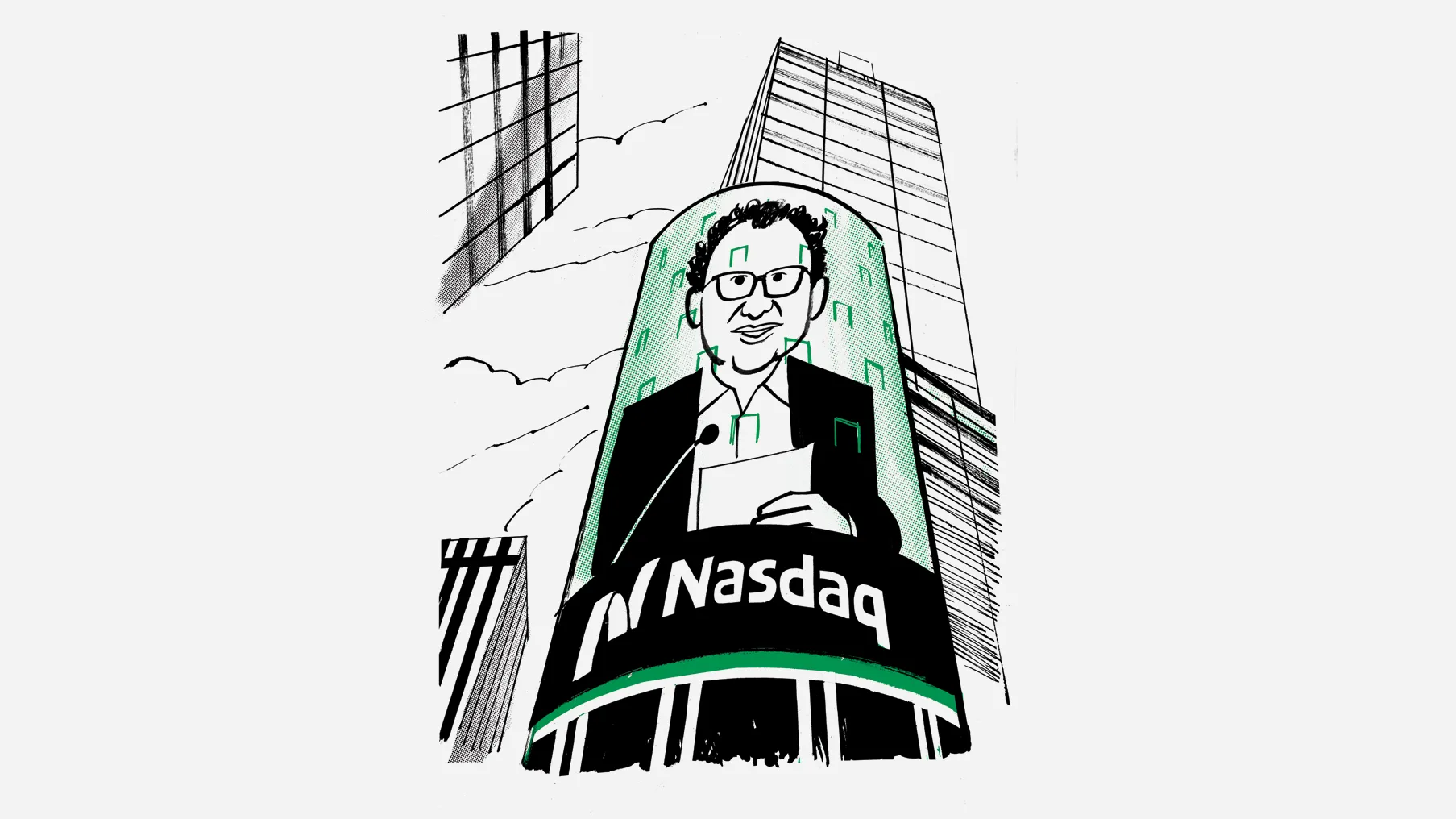
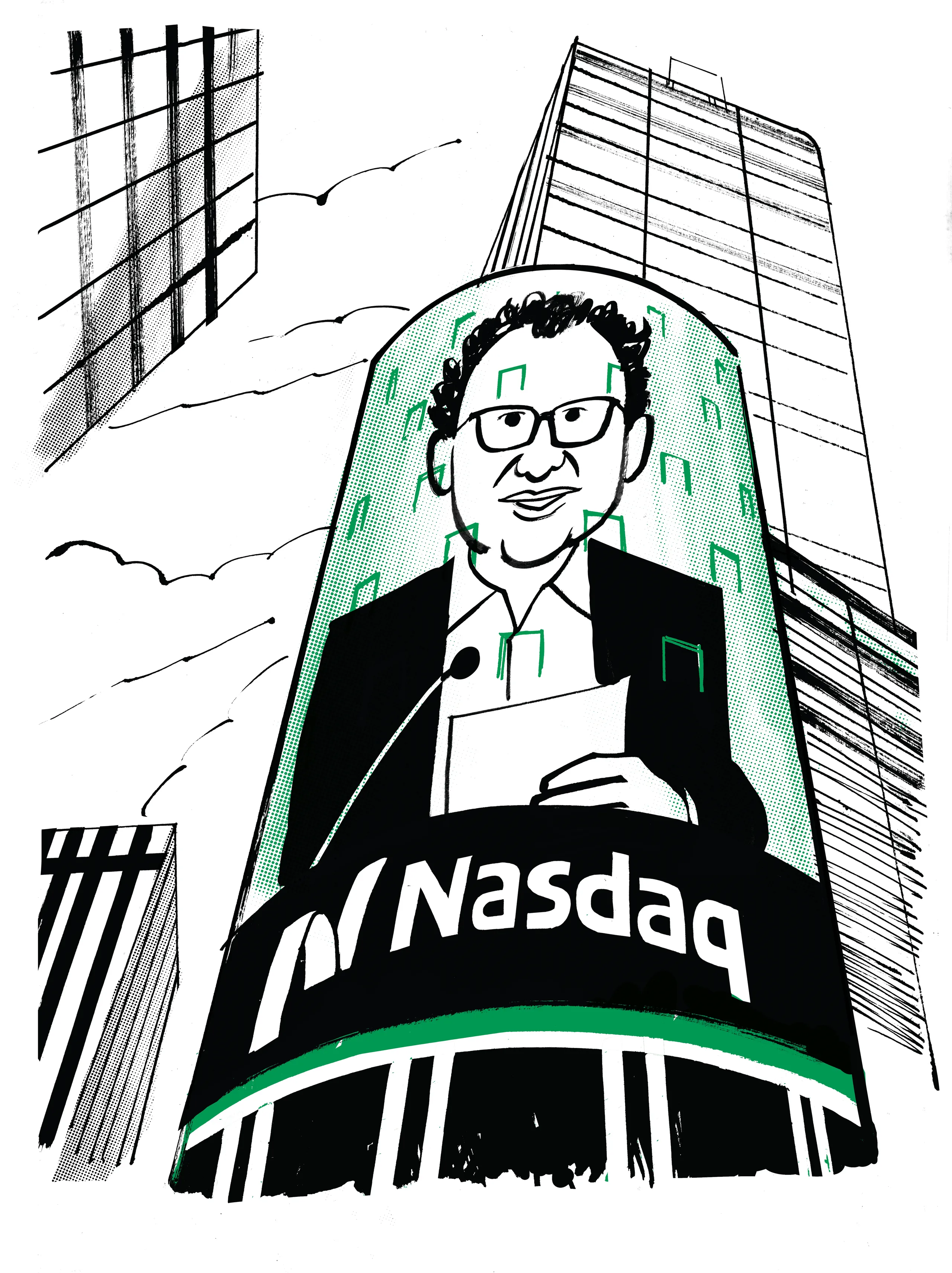
On the street, protesters looked up at Nasdaq's huge, 120-foot-tall screen to watch Amodei. James Inniss, who wore a Black Panthers hoodie and seemed to be leading the protest, warned about the dangers of technology without rules by referring to popular movies. He mentioned “The Terminator”: “Sarah Connor was in a mental institution because she said A.I. was going to take over the world.” He also mentioned “I Am Legend”: “This is the same Times Square where Will Smith walked down the avenue!”
Nearby, Aber Kawas, a newly elected state senator from Queens and a member of the D.S.A., said she was worried about the U.S. military's use of A.I. in the war with Iran. Jes Vesconte, an artist wearing a leather jacket, was concerned about the effect data centers could have on the climate.
On the big screen, Amodei could be seen reading from a piece of paper: “I believe sufficiently powerful A.I., working in concert with humans, could compress a century of scientific and medical progress into a decade.”
A young protester wearing strong work pants said that the risks of A.I. seemed bigger than everyday problems people discuss at the kitchen table. “Talking about pension plans and an economic bubble are obviously important,” he said. “But these aren’t really corporations just trying to get money. They’re trying to create a technology so powerful that it can overhaul government systems. This isn’t just, like, a company going public. It is the beginning of tech feudalism.”
A few investors were also among the protesters. They were so excited about the money they expected to make that they wanted to be there in person. The protest did not bother them much, although one stocky man in an overcoat shouted at an activist, “Get a job!”
Dingsheng Li, a thirty-nine-year-old professor of environmental health from Reno, Nevada, stood quietly. He wore a hat and jacket with the SpaceX name on them. He explained that he had invested in SpaceX as well as Anthropic. He felt positive about the company's future. “I think it’s going to pop,” he said about ANT. “If this is going to replace me, I’d better own it now.”
Jan-Paul Beukema, a Dutch television producer who had invested five hundred euros in Anthropic early on, thought the protesters might have a point. “It’s going to be the end of humanity in some way, right?” he said. He added that once his job no longer existed, he and his friends planned to open a bar. For now, he was on his way to Disney World. ♦