
OpenAI rewrites ChatGPT Business Hub terms after legal language raises concerns
By Sara Guaglione • November 20, 2026

Ivy Liu
OpenAI has changed the terms for its new ChatGPT Business Hub just days after launching it. The change came after Digiday reported that lawyers thought the original wording might stop businesses from making certain legal claims against the company.
Launched last week, the Business Hub gives businesses with verified accounts direct information about how their websites appear in ChatGPT. This includes mentions, profile views, clicks and topics that help people discover them. For publishers, this is the first time they can see this activity directly instead of having to estimate much of it.
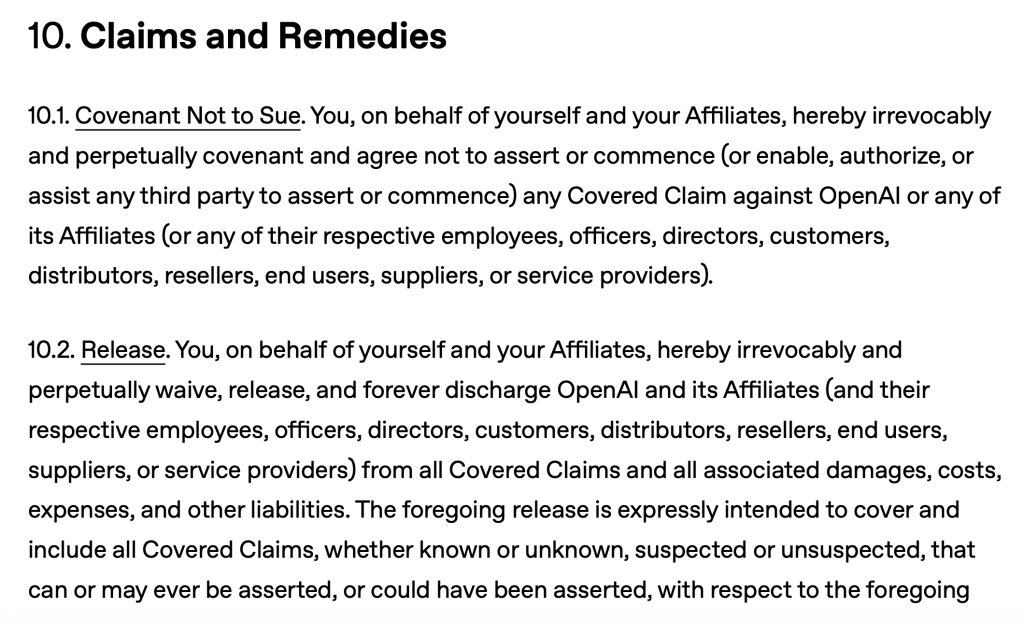
Before the changes, Section 10 of OpenAI's business terms appeared to require companies using ChatGPT to give up certain legal claims against OpenAI, lawyers told Digiday. They said this wording could cover claims about content that businesses had published on their websites before signing up.
Alan Chapell, a privacy expert and founder of Chapell and Associates, said publishers who signed up for ChatGPT's Business Hub and accepted its terms might have faced limits on how they could bring these claims against OpenAI.
Chapell said the terms required businesses to use arbitration and gave up their right to join class-action lawsuits. This could mean that businesses had to settle disputes one at a time and outside the normal court system. He explained that the wording was broad enough to cover some claims that began before businesses accepted the agreement.
Businesses had 30 days to choose not to use arbitration. But if they did not opt out, they might have faced limits on their ability to get evidence, appeal decisions and set legal examples through public court cases, Chapell added.
This could have made things much harder for publishers who are still trying to work out how to protect their content and make money from it in the age of AI. It might also have limited their ability to bring copyright cases against OpenAI in the future.
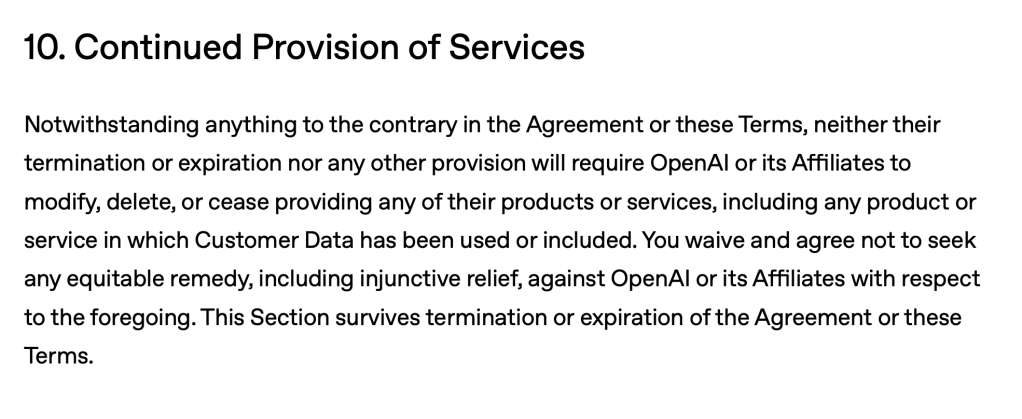
Just hours after Digiday first contacted OpenAI on Nov. 18, the company changed the terms. The new version includes a waiver of businesses' rights to ask a court for an order stopping OpenAI from using certain customer data, according to a lawyer who works with intellectual property and technology law. The lawyer spoke anonymously.
“There are still some restrictions here but they don't leave a customer completely without recourse. A customer could still, even if not entirely practical, sue for monetary damages,” they said.
An OpenAI spokesperson said the earlier version of the terms “were not intended to cover this scenario” when Digiday asked the company for comment. The spokesperson confirmed that OpenAI changed the terms on Nov. 18.
“We continually evaluate the language in our Terms to make sure they are as clear as possible,” the spokesperson added in a statement. “The updated terms replace the separate ‘covered claims’ provision with language in Section 5.2 that ties the release to claims arising from a business's Business Agent, including the use of customer data with that agent.”
An executive in the industry, who asked not to be named, told Digiday that they had advised publishers' legal teams to be careful about the possible effects of OpenAI's business terms after the original version was published on Nov. 10.
Although OpenAI has changed the terms, several lawyers who spoke to Digiday said they thought the original wording was probably intentional.
“This is certainly not an oversight because they put these terms out there,” said Gary Kibel, a partner at law firm Davis+ Gilbert, which advises media and advertising companies. “It was incredibly intentional, and they were seeking to use this opportunity to get a release and waiver for any of these claims. It seems to be quite aggressive to do that.”
Kibel said the new terms still make businesses give up certain legal claims connected to their use of ChatGPT Business Hub and its AI Business Agents (which are basically chatbots made for individual businesses). However, the waiver no longer covers unrelated legal disputes with OpenAI.
OpenAI's changes come only a few weeks after Meta faced strong criticism from publishers over its new business terms. Those terms would have allowed Meta to collect information from the websites of people using Meta Business accounts. The proposed changes led publishers, industry groups, government officials and regulators around the world to work together to oppose them. In response, Meta said it would pause the rollout so it could explain the changes to important partners and other groups.
OpenAI's change also comes after growing disagreements between publishers and AI companies about how published content is used. Documents made public in The New York Times' lawsuit against OpenAI and Microsoft two months ago showed that major technology companies were treating published content as free material for AI products. These products could threaten the future of the publishers whose content they use.
Whatever caused OpenAI to change its terms, the move may do little to reduce publishers' wider concerns about how AI companies use their content and the rules attached to new tools built around that content.